
When the Instrument Finally Matches the Musician
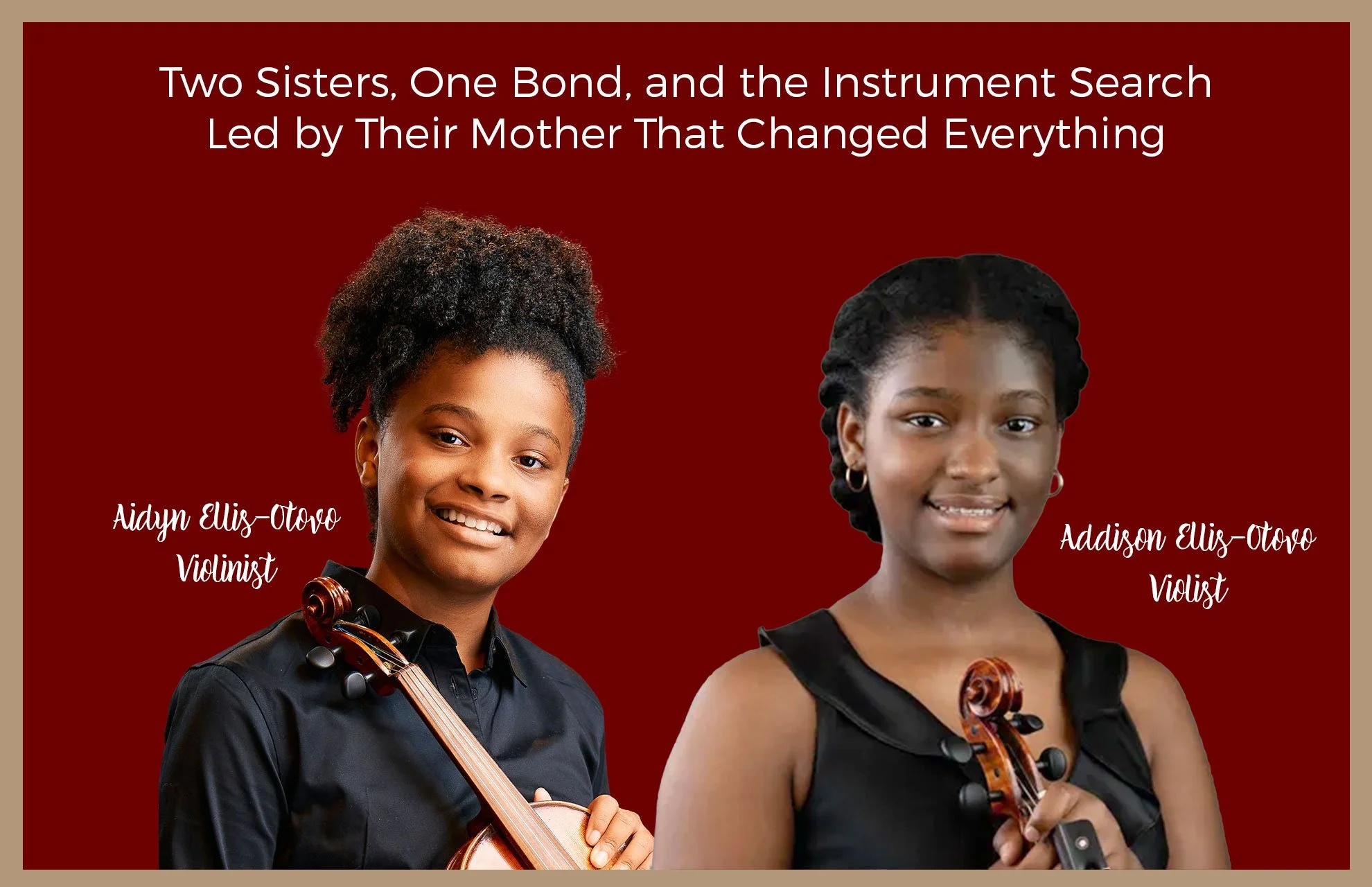
Loving Parents and Their Two Daughters — One Violin, One Viola, and the Decision That Changed Everything
There is a quiet power in the way music weaves itself into the fabric of a home. For Meshia, a government employee and mother of two, music was initially a practical choice—a way to bridge therapeutic needs with a blooming potential. With her partner’s steady support behind the scenes, Meshia took the lead in tracking down the instruments that would finally match her daughters' talents.
Today, their daughters—Aidyn (15, violin) and Addison (14, viola)—are commanding stages, winning international competitions, and showing the world that music belongs to anyone brave enough to pick up a bow.
This is the story of how a mother’s dedication, two sisters' unbreakable bond, and a workshop in Vermont collided to change the trajectory of a musical journey forever.
There is a quiet, powerful kind of parental determination—the kind that spends late nights researching and refuses to accept standard answers for their children.
Meshia Ellis is that parent. Aidyn (violinist) and Addison (violist), had been playing since age five. By the time they found V. Richelieu™, they had survived a years of dedication, cheap online purchases, and a growing frustration that their gear was holding them back. When they finally tried V. Richelieu™ instruments in a performance hall at the Peabody Institute, the transformation wasn't subtle. As Meshia describes it, it was like watching a light switch turn on.
Growing Up With Music
Aidyn and Addison grew up in the DC metro area surrounded by music — not as something that played in the background, but as something they were pulled toward from the beginning. Both enrolled in the DC Youth Orchestra Program as very young children.
Aidyn found her way to violin almost immediately. Addison had hoped for cello, but joined viola when the spots ran out. She settled in. Then she fell in love.
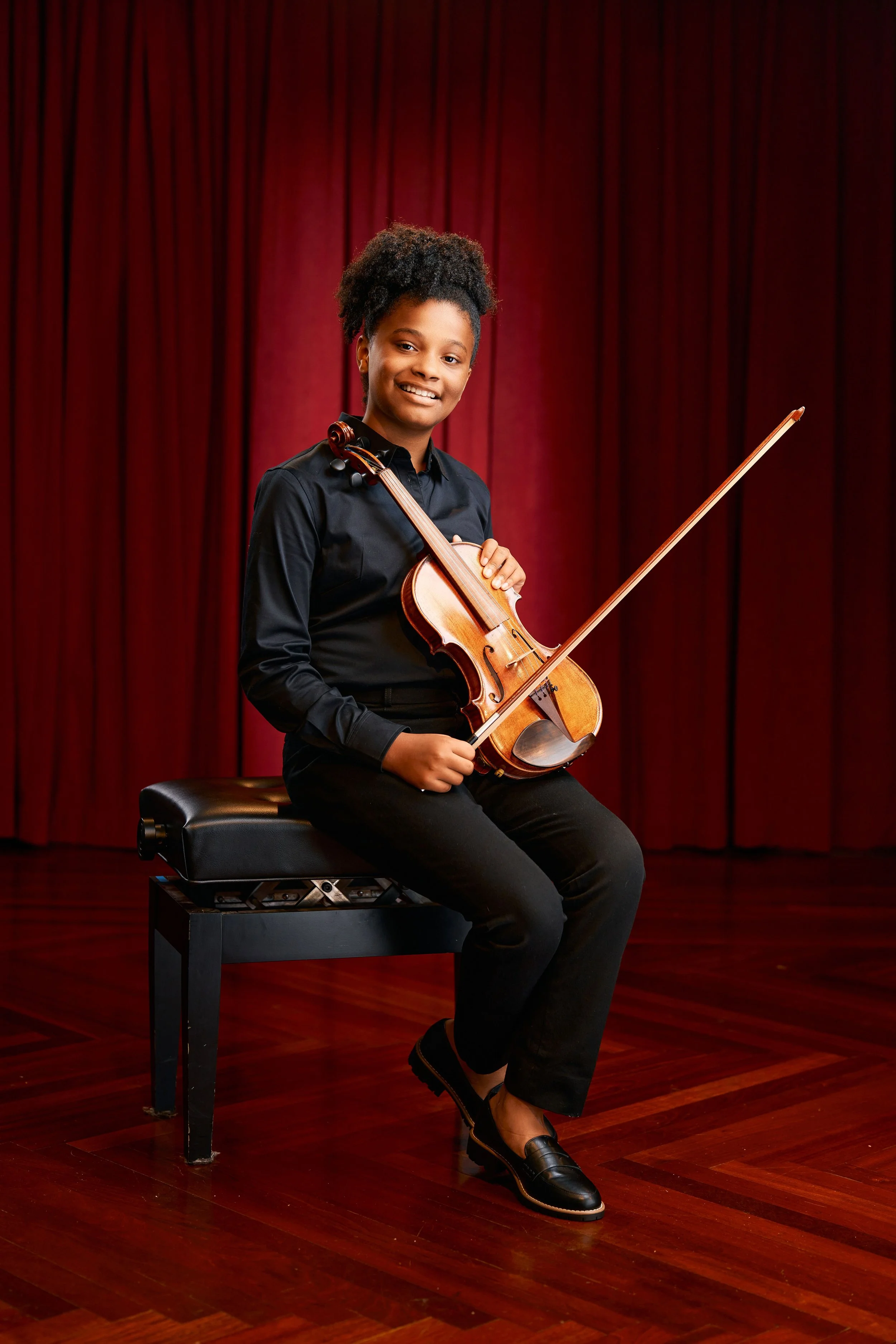
"Even from the beginning, I just fell in love with the instrument. It became more than a hobby. It became an essential part of my life."
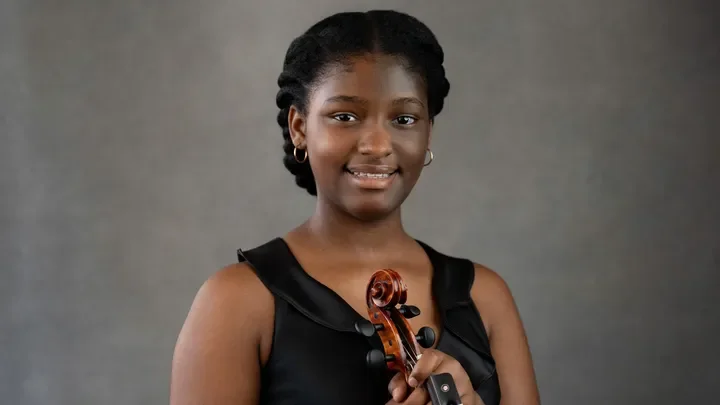
"I ended up loving it."
By thirteen, Aidyn was performing with the Baltimore Symphony Youth Orchestra and studying in chamber groups at the Ninth Street Chamber Ensemble in Virginia. Addison, meanwhile, had achieved the rare distinction of being selected as a National Symphony Orchestra Youth Fellowship student back in the seventh grade—a highly competitive, solo and chamber-focused program with only a handful of openings each year. Her trajectory only accelerated from there: her duo won the Misbin Family Memorial Chamber Music Competition, she was also a part of the Peabody Youth Orchestra, and she began preparing for her first international competition—the American Viola Society Solo Competition, where she would ultimately take third place against players from around the globe.
Neither of them, it should be said, planned to become professionals when they started. Music was an extracurricular. Then it became a calling.
The Problem No One Was Talking About
Meshia had been watching her daughters grow as musicians. She was also watching the instruments fail to keep pace.
She is candid about where they began.
"We started off trying a bunch of different things. I'm ashamed to say, even the online specials — trying to figure out what would work."
Those instruments didn't last. But the deeper problem wasn't the cheap online purchases — it was the broader ecosystem. For Addison specifically, the challenge was both concrete and persistent: fractional violas that weren't really violas. At her size and stage of development, the options were converted violins with viola strings attached, instruments so acoustically compromised that teachers and shop owners counseled patience rather than solutions.
"We were told: there are no fractional violas that can produce the sound that you want, so it's just not going to happen. You just have to accept that."
Meshia did not accept that.
She started researching. She found an article — connected, she believes, to a festival, possibly AVS — that mentioned a company making small violas with genuine viola acoustics and favorable reviews from teachers who had tried them. She reached out. A conversation with Kathy, V. Richelieu's founder, followed. Through an introduction from a representative of Concerts for a Cause, both daughters received instruments.
The first time they tried them was in a performance hall at the Peabody Institute. Meshia didn't need data after that.
"When they were presented with these instruments — I knew just based on trying them in that instance — that it was like reigniting a spark in both of them. It felt like they no longer had to try to figure out how to get the sound from their instrument. They could just focus on the music."
The Moment Everything Changed
For Aidyn, the experience in that hall is one she still returns to.
“The V. Richelieu™ projects so well, even on the D and G string, where most violins struggle to get a deep, warm sound. In a resonant room — the sound just explodes. It’s gorgeous. When I first tried it, I felt like I was playing like a soloist. That’s when I knew this was going to be my instrument.”
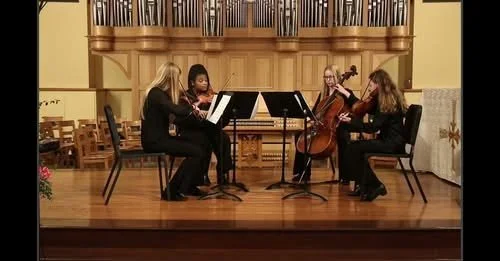
For Addison, the shift was equally immediate. She had grown attached to her smaller fractional viola — emotionally, if not acoustically. The V. Richelieu™ she was handed that day reset her reference point entirely.
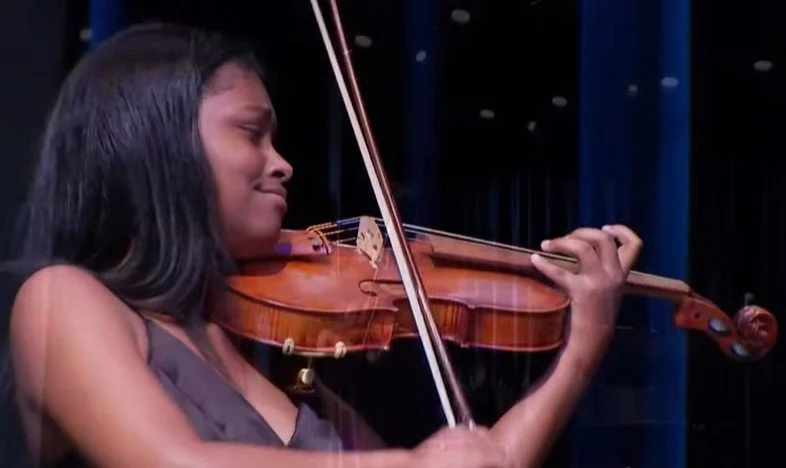
“I saw the huge difference from the V. Richelieu™ versus my old instrument. I was able to play a lot better. My sound was a lot better. I felt more comfortable playing it. And I was like — why didn’t I start playing these earlier?”
What a Real Instrument Does for a Young Musician
Any teacher who has watched a student struggle against their own instrument will recognize what happened next.
The question of instrument quality is rarely framed honestly in the early years of musical education. Parents are told to wait — to invest later, once the child has proven their commitment. What that advice misses is that commitment, for young players, is built in direct proportion to what they can hear themselves produce.
Aidyn and Addison have both seen this pattern in their peers.
"I have friends who used to play but didn't really have good instruments. Because of that, they thought playing was too hard, or they didn't like how the instrument felt on their shoulder, which ultimately led them to quit. I believe if they had started on a better instrument, they might still be playing."
"In my high school's cello class, which I joined last year, students played on instruments provided by the school. I think that kind of made a lot of the students less confident in their abilities. It also made it harder for us to interact with each other, because we couldn't really hear the tone. Low quality created limitations for all of us."
Aidyn articulates the technical dimension of this with a precision that many experienced players will find familiar.
"With a high-quality instrument, you can learn to produce a bigger sound, and you'll be used to the more comfortable setup. A quality instrument teaches you how to use both speed and pressure. It also gives you a bigger sound and allows you to hear your progress."
The shift in confidence was visible to everyone around them — and it wasn't subtle.
"For Addison, her confidence kind of flew off the charts as a violist. I heard from everybody who worked with her previously — within a matter of months after switching instruments, her entire personality as a musician changed. More outgoing, more confident, willing to take risks, looking to play more advanced repertoire. It was like a light switch."
"Aidyn is more motivated because of the instrument. She likes her sound more. That leads to successes. As we move up in the orchestra, we're proud of our audition results, we're in this seat. I think it absolutely gives them the confidence to know that if they work hard, they will be able to achieve the sound they want to achieve."
— Meshia Ellis
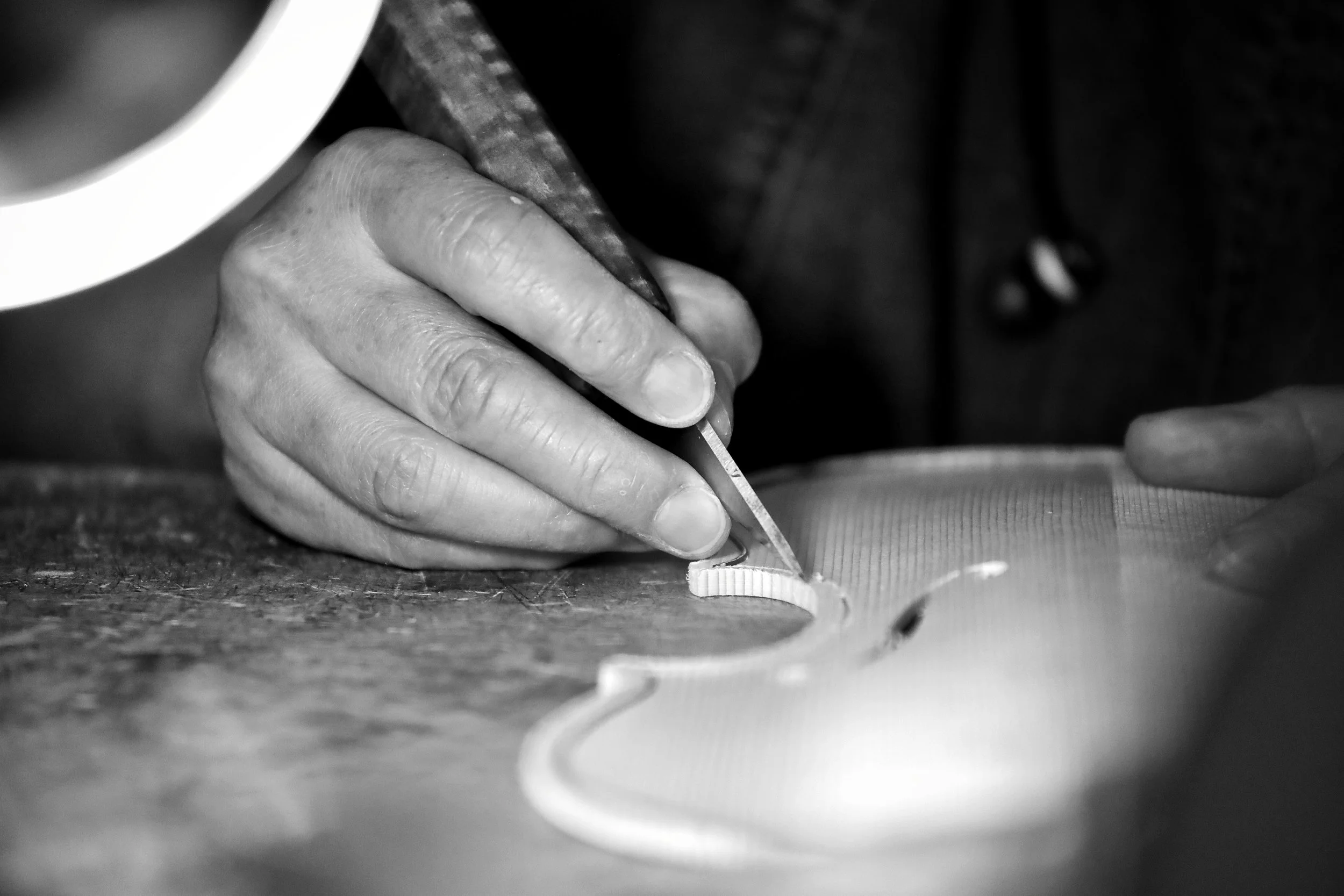
Photo Courtesy: Nikray Kowsar
Two Instruments, Two Voices — Playing Together
One of the quieter pleasures of this family's story is what happens between the sisters.
Aidyn and Addison regularly play duets at home — for fun, for upcoming performances, because it is what naturally happens when two musicians live under the same roof. This past year, they performed together at a National Stadium event, playing the national anthem and God Bless America as a duet in front of more than 40,000 people.
They are thoughtful about how the two instruments relate — not just technically, but expressively.
"The violin and viola are similar in position and technique, but the sounds are completely different. The viola is very dark and ominous. The violin is bright and happy. I think they contrast each other beautifully."
"With a V. Richelieu™, you can learn to produce a bigger sound. It's a real viola sound, not something approximated by a different instrument."
This is, in fact, precisely what drew V. Richelieu's™ founder Kathy into instrument making: the absence of true small violas for young players. As a violist herself, she experienced firsthand the compromises young students were forced to accept — converted violins, flattened tone, instruments that bore the name of a viola without delivering its voice. The small viola line she developed was designed to solve exactly the problem Addison encountered.
On the Instrument Itself: Sound, Craft, and the Details That Matter
Addison's V. Richelieu™ viola features a Sonowood fingerboard — an ebony alternative — and a scalloped scroll, an intentional design choice to reduce weight in an instrument already demanding on smaller arms and frames. The response she gets from the room is consistent.
"I get a lot of compliments from people who have never seen a fingerboard like that. And a lot of compliments on the back of my instrument, the scroll — it's just striking."
For Aidyn, the instrument's behavior in the upper register is the detail that stays with her.
"Something about the way the V. Richelieu™ is made makes playing high notes easier. You don't have to press on the string as hard to get a clear sound. The high notes sound not just higher, but more clear. In a room like a concert hall, it would be very hard to make a scratchy sound."
She connects this directly to her most significant performance on the instrument—the Baltimore Symphony Youth Orchestra Concerto Competition, where she performed her solo piece on stage with a collaborative pianist.
"I just felt like a soloist. I felt like I sounded amazing — and all the mistakes I was worried about, I just couldn't hear them. I let myself go. It was beautiful. That performance reminded me that I can do this."
— Aidyn Ellis-Otovo
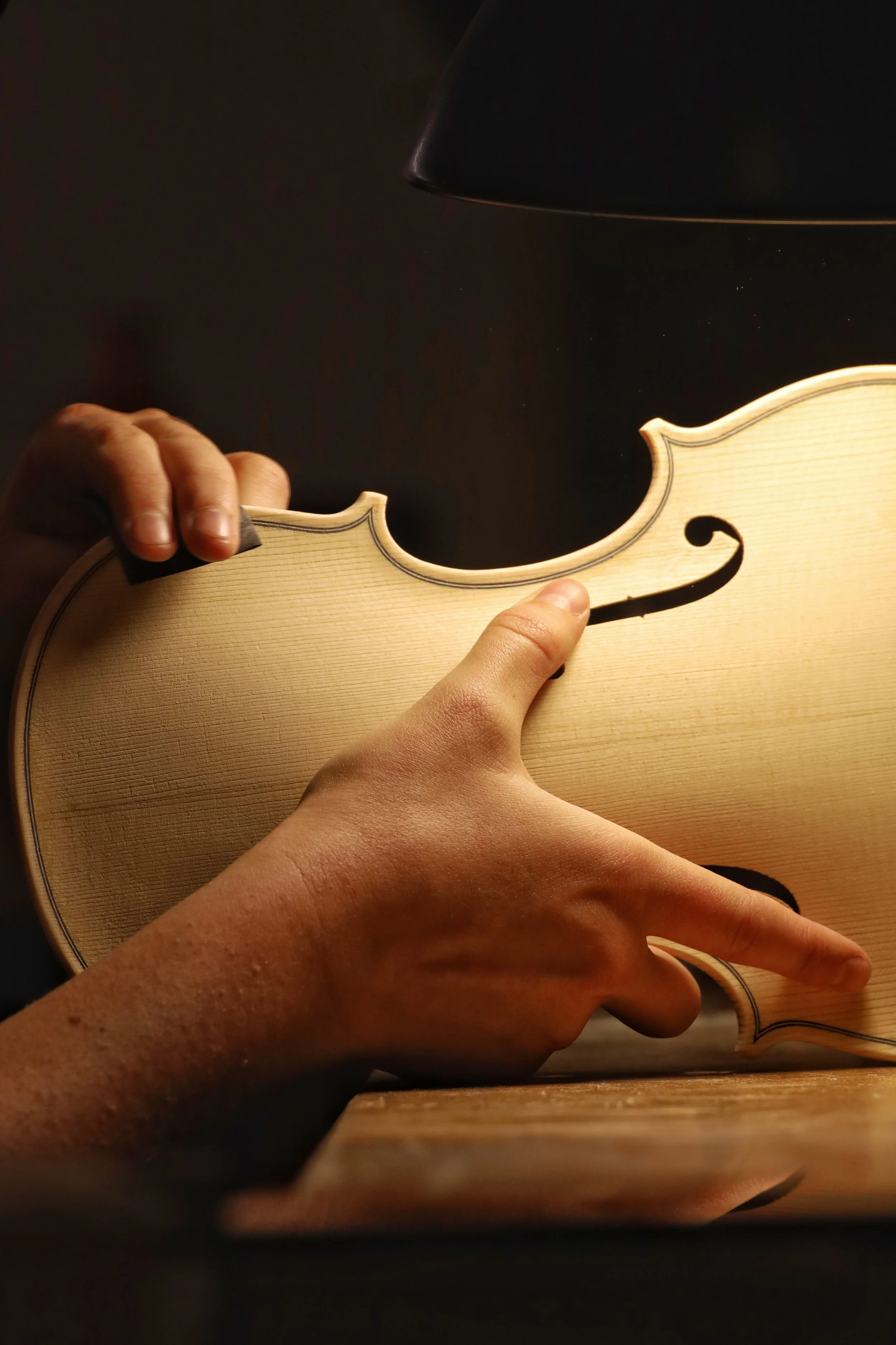
Photo Courtesy: Nikray Kowsar
Music as Anchor: Playing Through the Hard Seasons
Both Aidyn and Addison speak about music the way people speak about something they could not function without. Not as a discipline imposed from the outside, but as an internal resource that holds steady when everything else shifts.
A few months ago, the family faced a devastating event: their house burned down, and they were living temporarily in a hotel. For a period of weeks, the instruments were out of reach.
“I couldn’t really play music during that time, which made me really sad. But then when we got into a temporary house, I played Schubert every day. That really helped me feel better about my situation.
What motivates me the most to continue is the idea that one day I could use my music to help heal others, like it helped me. Even in the worst moments of my life, there was always one thing I could count on to cheer me up. It was music.”
Aidyn, preparing to leave home this fall for a semester arts immersion at Kinhaven Music School/Burr & Burton Academy in Vermont, speaks about music's role in the same register — not as career or credential, but as identity.
What a Parent Actually Wants
Meshia is measured, articulate, and honest about what she was really trying to accomplish. She wasn't chasing prestige. She was trying to remove a barrier.
"I didn't think that putting this instrument in their hands was magical. It's not going to make them play levels above their current ability. But I wanted to find something that didn't inhibit them. I wanted to see them grow without feeling like their instruments were restricting them."
Three things drew her specifically to V. Richelieu™: the strength of teacher testimonials; the effort to deliver genuine quality at an accessible price point; and the brand's commitment to environmental sustainability — a value the family brings to its other decisions as well.
The rental program mattered in a concrete way. Two government employees, two serious string students, lessons, chamber fees, summer intensives, orchestra tuition — the financial architecture of giving both daughters what their musicianship required was not simple.
"The lessons and the tuition for orchestras and chamber were already cost-prohibitive. But I didn't want that to be a factor in their learning."
If you are a parent sitting at the kitchen table, wondering if you should buy a cheap factory-made instrument online or invest in a premium rental program. Her advice to other parents navigating the same early decisions is direct.
"More expensive is not always better. We've tried larger instruments and Addison still can't produce the sound she wants on them. She is so used to the sound of her V. Richelieu that nothing else compares. We've been telling other folks that there is a middle ground — and there is so much room for growth with this instrument."
The Quiet Moments
When asked for a private memory — something small, not the National Stadium, not the competition stage — Meshia pauses before she answers.
She describes Addison's last Kennedy Center performance, at the Millennium Stage, before she leaves for Walnut Hill School for the Arts this fall. As a young child, Addison used to crawl under tables before performances. Stage fright was real and present.
"To see a child who quite literally used to crawl under tables before a performance step onto the Millennium Stage of the Kennedy Center — her saying very confidently, we're here — it meant a lot."
— Meshia Ellis
Then there is the memory from the summer she spent watching Aidyn at Kinhaven Music School — her daughter surrounded by peers who shared her passion and understood her intensity, belonging entirely.
"We saw how happy and excited she was to be in this environment with people who were pursuing the same interests and who understood her passion. That was special."
— Meshia Ellis
What They Would Tell Anyone Just Starting Out
Both sisters were asked what they would say to someone standing at the beginning of their own musical journey.
Aidyn's message is about staying in it.
"Even if you don't want music to be a big part of your life, keep it somewhere in your life. For people who feel like they're not improving — keep going. Everyone always improves every single time they pick up an instrument and play"
Addison's is broader — about what music teaches beyond music.
"Even if you don't want to do music as a career, you should still learn an instrument. Playing an instrument teaches you hard work, dedication, and time management — things other extracurriculars might not teach you. Keep it in your life somehow. It will give you valuable skills you'll use everywhere else too."
Meshia closes with what she would have wanted to know earlier, and what she hopes other families find before they make the same missteps.
"We don't want kids to be stagnated and have to reset. Why should we only find out later that the instrument really does matter from the very beginning? The word is out. And we love to share it with other people."
Closing Notes
The Ellis-Otovo family's story holds something that goes beyond instrument choice. It is a story about the cost — and the meaning — of refusing to compromise. Of keeping the search alive when every shop and teacher said to accept less. Of staying in the performance hall even when the early years are noisy and uncertain and expensive and hard.
Both Aidyn and Addison are at inflection points this fall. Aidyn heads to Kinhaven Music School/Burr & Burton Academy for a semester arts immersion. Addison begins high school at Walnut Hill School for the Arts in Massachusetts. They are, by any measure, serious musicians — the kind who will almost certainly spend the rest of their lives with instruments in their hands.
And they are still playing the instruments that changed everything.
V. Richelieu instruments are well-crafted and meticulously set up by the luthier team at Vermont Violins. If you are a teacher looking for an acoustically true fractional viola for an advancing student, or a player seeking a responsive, workshop-built violin supported by an accessible fractional rental program, discover the collection.
V. Richelieu instruments, available for rental and purchase through Vermont Violins. If you are searching for a genuinely high-quality fractional viola, a workshop-crafted violin, or a rental program that meets your family where you are financially, we would love to help you find yours. We also offer wonderful financing options up to $25,000 for up to 60 months.
Visit Vermont Violins in South Burlington, VT or West Lebanon, NH. Or reach us at info@vrichelieu.com.

V. Richelieu viola are 100% made in Vermont. Hand-split spruce tonewood is imported from Italy and Switzerland; maple comes to us from Bosnia. Together, these woods form a viola of unique distinction offering fine instrument quality at very affordable prices.Our child-sized violas are true violas: modeled after a 16” model, scaled down for children. Finally, a fractional viola that actually sounds like a viola! Most small violas are modeled after violins, and the resulting instruments never perform…our V. Richelieu violas sing with the resonance a viola is meant to have: from the soaring highs of the A string to the haunting lows of the C.Each instrument is hand-graduated by our senior luthiers. The oil-based varnish is hand painted by an accomplished oil portrait artist. Each instrument is unique, but each offers a tonal quality perfect for the advancing student, conservatory student or professional player.
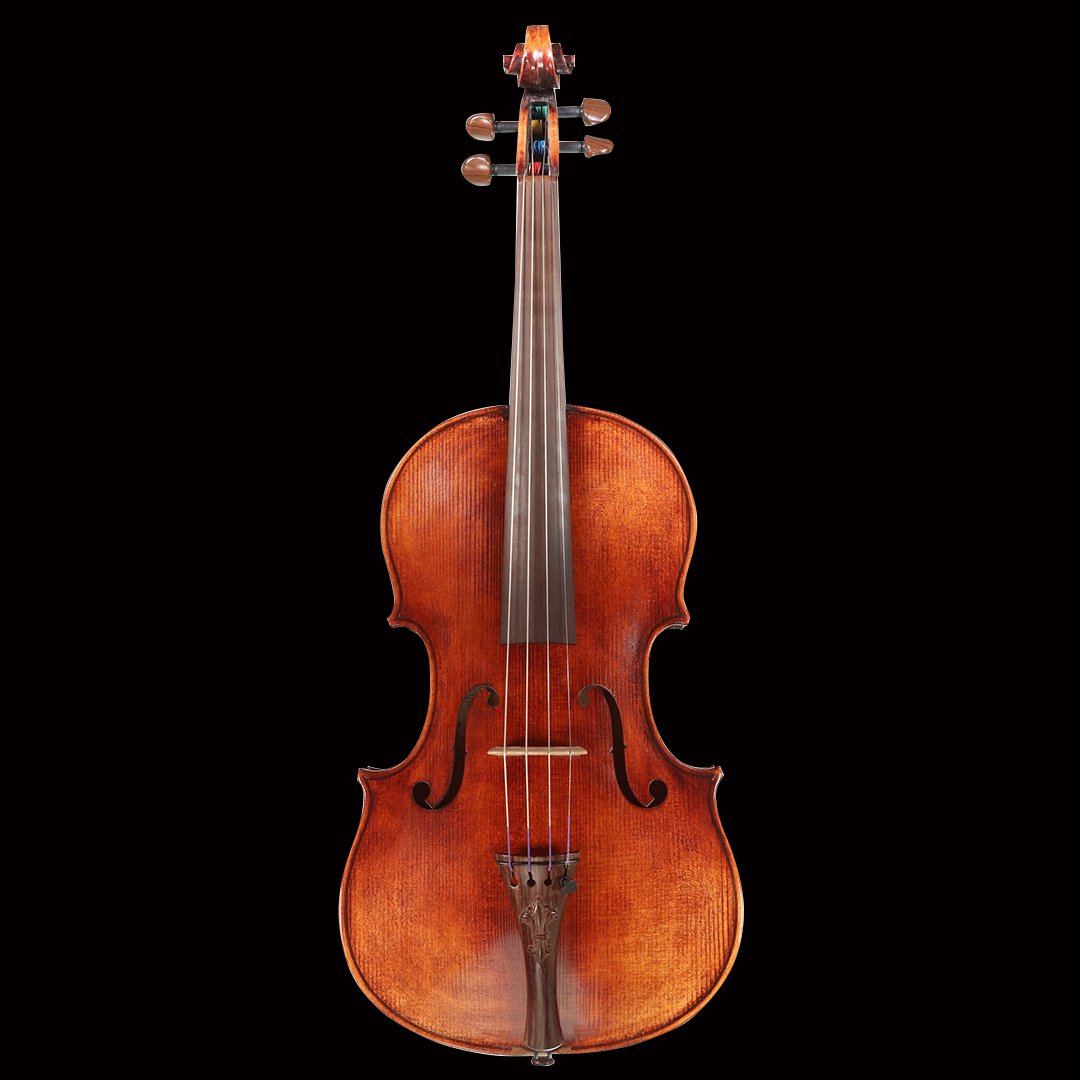
V. Richelieu viola are 100% made in Vermont. Hand-split spruce tonewood is imported from Italy and Switzerland; maple comes to us from Bosnia. Together, these woods form a viola of unique distinction offering fine instrument quality at very affordable prices.Our child-sized violas are true violas: modeled after a 16” model, scaled down for children. Finally, a fractional viola that actually sounds like a viola! Most small violas are modeled after violins, and the resulting instruments never perform…our V. Richelieu violas sing with the resonance a viola is meant to have: from the soaring highs of the A string to the haunting lows of the C.Each instrument is hand-graduated by our senior luthiers. The oil-based varnish is hand painted by an accomplished oil portrait artist. Each instrument is unique, but each offers a tonal quality perfect for the advancing student, conservatory student or professional player.
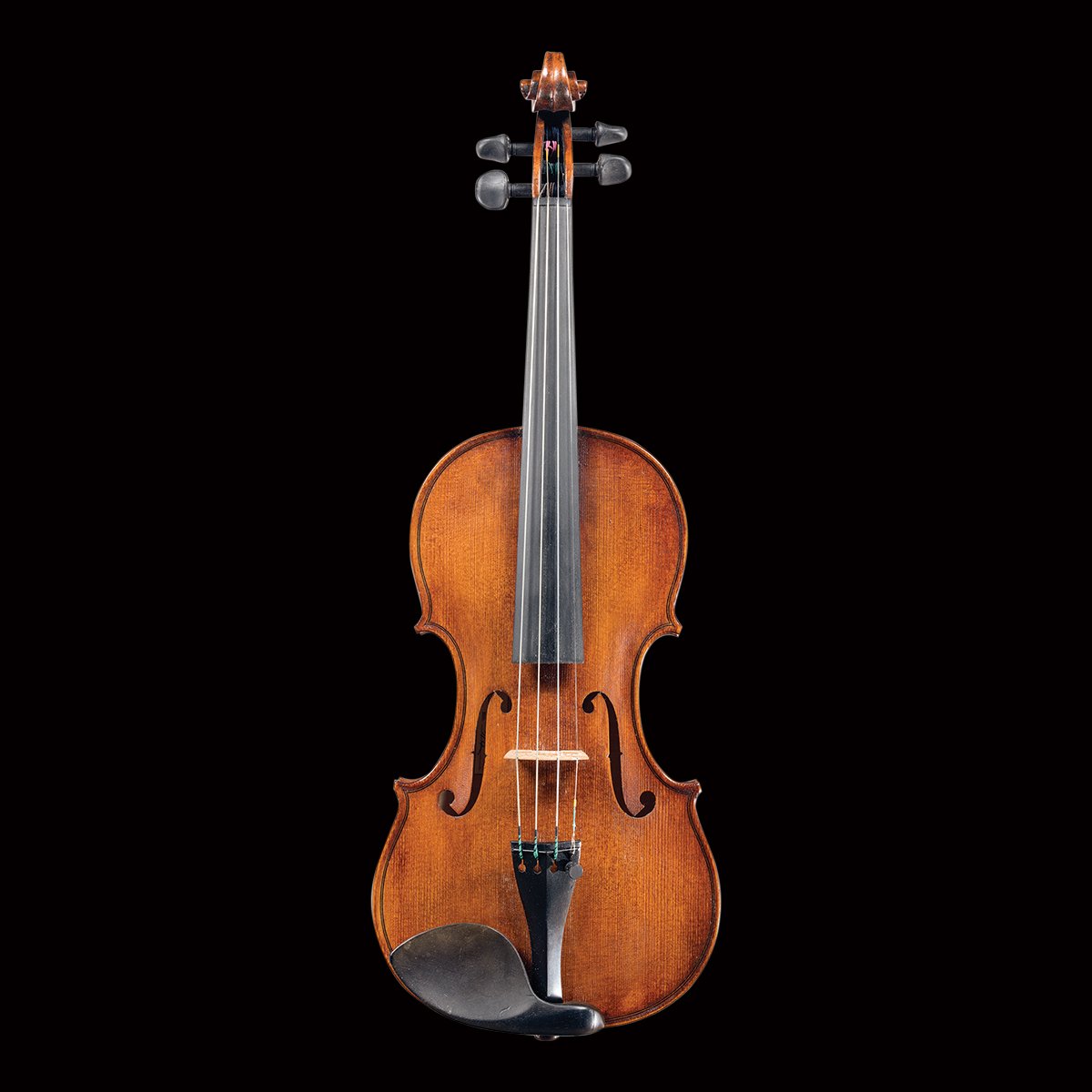
V. Richelieu violins are 100% made in Vermont. Hand-split spruce tonewood is imported from Italy and Switzerland; maple comes to us from Bosnia. Together, these woods form a violin of unique distinction offering fine instrument quality at very affordable prices.Each instrument is hand-graduated by our senior luthiers. The oil-based varnish is hand painted by an accomplished oil portrait artist. Each instrument is unique, but each offers a tonal quality perfect for the advancing student, conservatory student or professional player.