Dylan Kole Is Rewriting the Rules of Bow Making.
Bending Tradition, Now He's Taking Pre-Orders.
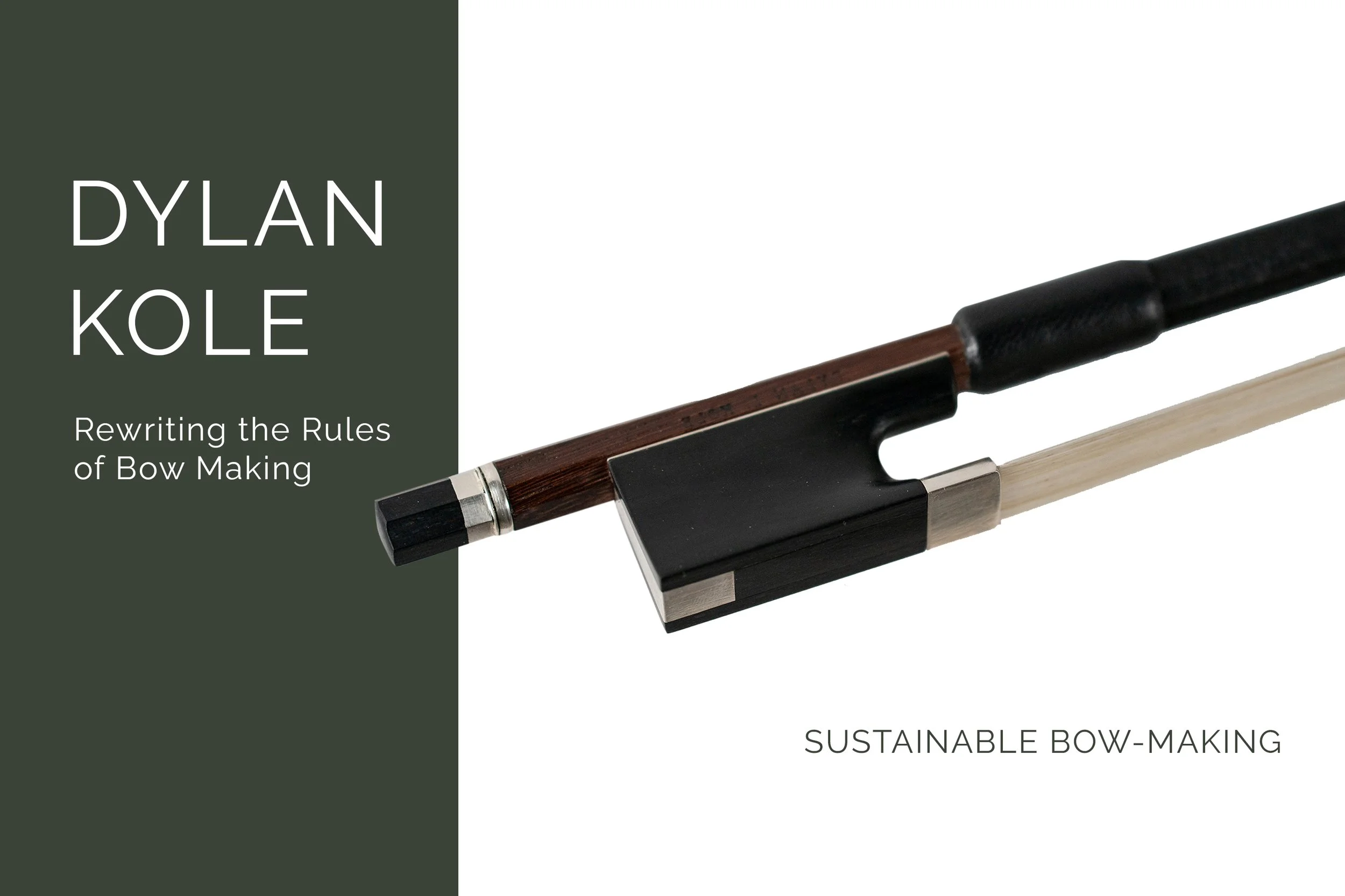
Dylan Kole has been making bows for eighteen months. In that time, he's built something that experienced musicians can't tell apart from Pernambuco — out of a sustainable wood most of them have never heard of. Here's his story, and why this bow might be exactly what you've been waiting for.
Dylan Kole at The Chicago Luthier Cooperative is watching a musician playing one of his bows for the first time. They stop mid-phrase. Look down at what's in their hand. Then look up.
"Wait — what is this made of?"
It happens every time.
The bow isn't Pernambuco. It's katalox — a tropical hardwood he has sustainably sourced that most players have never encountered. It was made by Dylan Kole, an up and coming bow maker from a material he first picked up on a hunch. And the reaction he keeps getting from players is the same one, over and over:
"They're always surprised it's not Pernambuco. Because it's got qualities they thought you could only find in Pernambuco."
That kind of response doesn't happen by accident. So we sat down with Dylan to find out exactly how he got here — and what makes these bows worth paying attention to.
First things first — who is Dylan Kole?
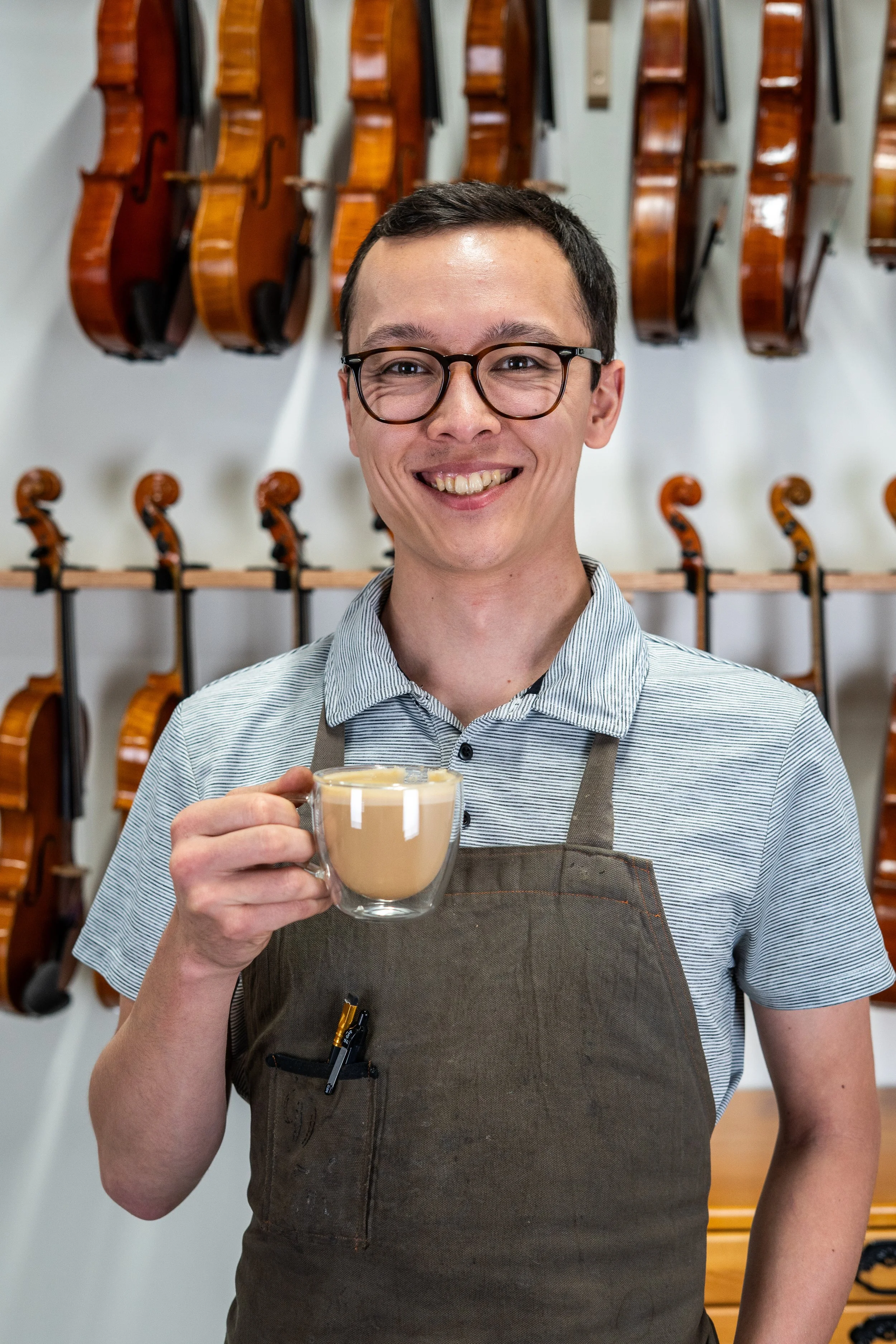
Dylan Kole
Dylan grew up in Grand Rapids, Michigan, and found his way into lutherie through the violin. He trained at the Chicago School of Violin Making, graduated in 2019, and has been building and repairing stringed instruments in the Chicago area ever since. About a year ago, he and a colleague named Claire co-founded the Chicago Luthier Cooperative — a shared workshop space that has quickly become one of the more interesting corners of the city's instrument-making scene.
Bow making wasn't part of the original plan. But when you run a full-service shop, somebody needs to be able to do bows. Dylan learned the basics from a friend, and then one day that friend said: let's just build one together, start to finish, so you really understand it.
"Once I did that, I was hooked."
Eighteen months later, he has a waitlist.
So why Katalox & Ebonprex? Why not just use Pernambuco like everyone else?
Honestly? A few reasons — and they stack up in a pretty compelling way.
When Dylan first started making bows, he didn't want to spend serious money on Pernambuco until he knew he could do it justice. That's a level of respect for materials you don't often hear from someone just starting out. So he began experimenting with alternatives, and katalox — a dense hardwood sourced with full traceability documentation — landed on his bench. Another alternative he tried was Ebonprex.
The moment he started working with these materials, something clicked.
"I kept thinking: this is a very lively material. Very elastic, very flexible — but still with really good strength."
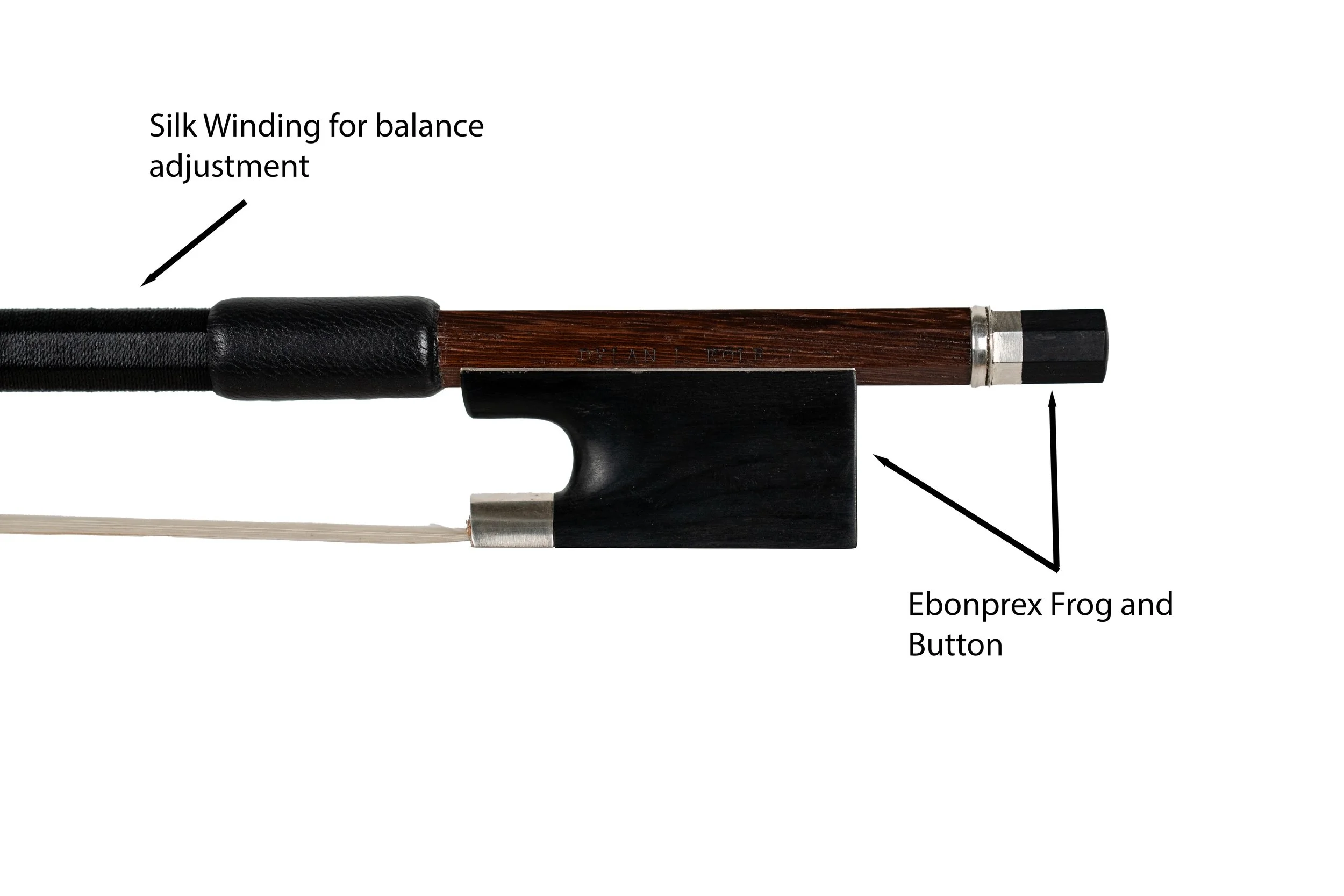
Photo credit Rebeca Kole
In bow making, 'lively' isn't just a nice word. It's the whole game. A lively stick is one that has real elasticity — it works with the player, gives back energy, responds quickly. That's what separates a great bow from a functional one. Finding that quality in a sustainable, non-regulated wood was not something Dylan had been promised. It was a genuine surprise.
There was a bonus too: katalox produces far less dust when worked than a lot of other materials. Small thing, maybe, but when you're spending hours at the bench every day, your lungs will thank you for it.
What about the sustainability angle — does that actually matter for a musician?
More than most players realise. Here's the practical side of it.
Pernambuco is a CITES-listed species. That means travelling internationally with a Pernambuco bow can get complicated — different country documentation requirements, CITES permits for international commercial sales. Those complications are only going to increase as regulations tighten.
Katalox is a fairly common tropical hardwood. The frog is made from another sustainably sourced wood product called Ebonprex. Layers of sustainably sourced European beech are layered with a thermosetting resin to create another ebony look-alike. This particular option works for bow frogs and looks like ebony. A musician can travel with this bow anywhere with documentation showing the materials are legal and sustainably harvested.
"You'll never have any issues travelling with these bows. Everything is documented and all the paperwork is readily available"
Beyond the practicalities, there's also just the bigger picture. Pernambuco has been the gold standard for so long that the industry has been slow to reckon with the fact that it can't be that standard forever. Dylan doesn't frame this as doom and gloom — he frames it as an opportunity.
"I really feel like Katalox and Ebonprex are probably the most promising materials right now. It has everything we're looking for in a practical tool — with the added benefit that it's sustainable."
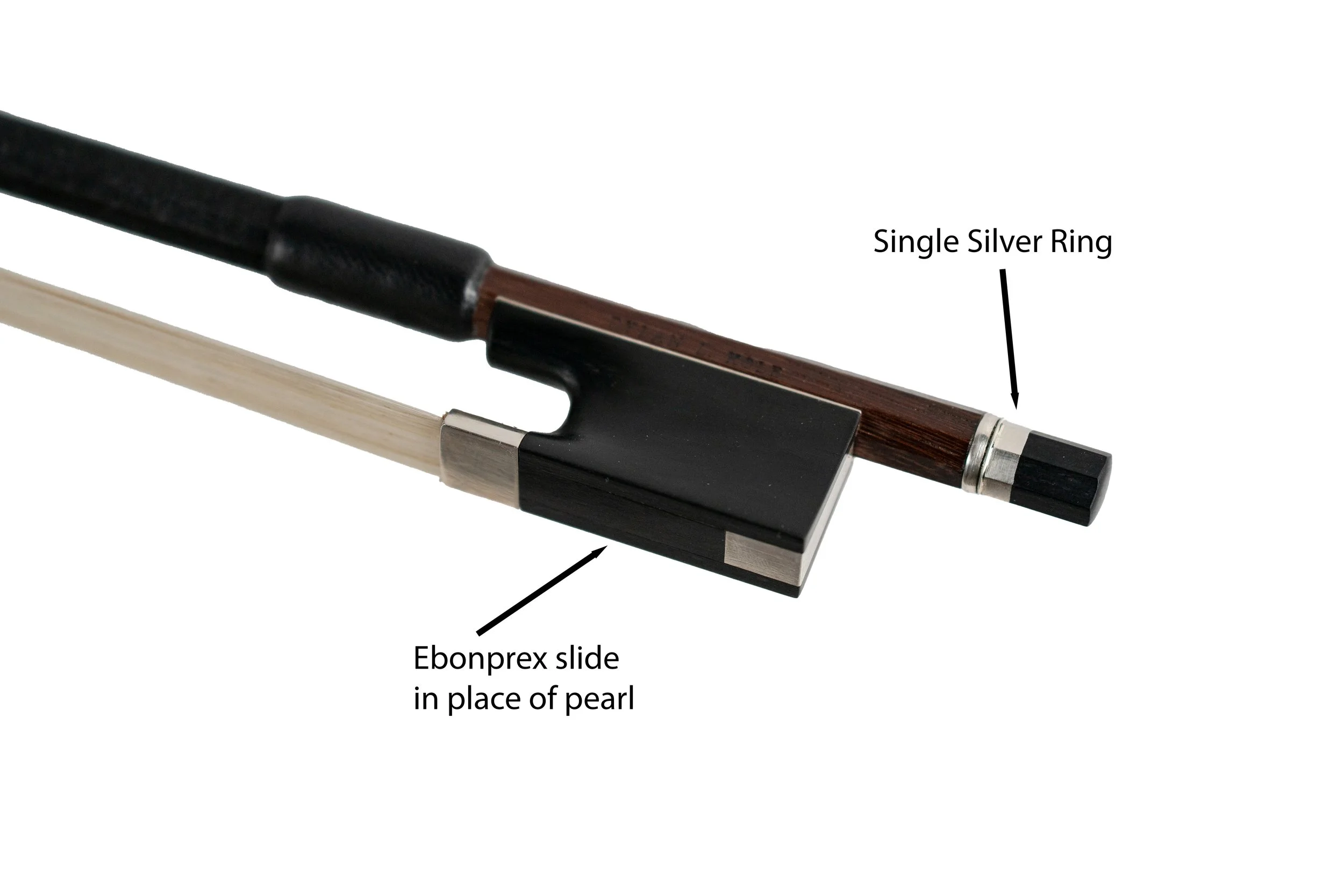
Photo credit Rebeca Kole
Okay, but how does it actually play?
This is the part that keeps coming up in every conversation Dylan has with musicians who try the bow.
Most alternative-material bows — and Dylan is honest about this because he's made some of them — tend to sound soft. Warm, in the polite sense of the word. Not particularly clear, not particularly responsive. They get the job done, but they don't excite.
These bows are different.
"There's more overtones being produced. It's a very lively sound, a very full sound. And they have a very fast attack — a fast response."
That fast response matters enormously in real playing. It's the difference between a bow that anticipates the phrase and one that drags behind it. Dylan has been taking these bows to shops, to the Chicago School of Violin Making, to essentially anyone who will pick one up — and the consensus has been consistent.
"Everybody is very impressed with it. For these bows to perform as well as they have has been eye-opening — even for people who work on the sales side of shops, who've seen a lot of bows."
And the versatility? Dylan doesn't think these bows suit only one style of playing. He thinks they work for everyone.
"I think everybody in any genre — if you want to fiddle, if you want to play in the middle of the section, if you're a soloist — I think they're doing great so far."
Tell me about the bow itself — what am I actually getting?
Dylan's katalox violin bow weighs 59.5 grams — right in the sweet spot for violin (the target is 60g, with a tolerance of plus or minus two grams). The balance has been meticulously dialed in through a set of very deliberate design choices.
The fittings are made from Ebonprex — a wood composite that, as Dylan discovered, still feels like wood when you work it. It has grain structure and directionality. It machines like real ebony but comes with none of the sourcing complications.
"I got excited when I realised Ebonprex is still kind of emulated regular ebony — it still has grain structure and directionality. I wasn't just working on a piece of plastic. This is a wood composite, but it still feels like wood."
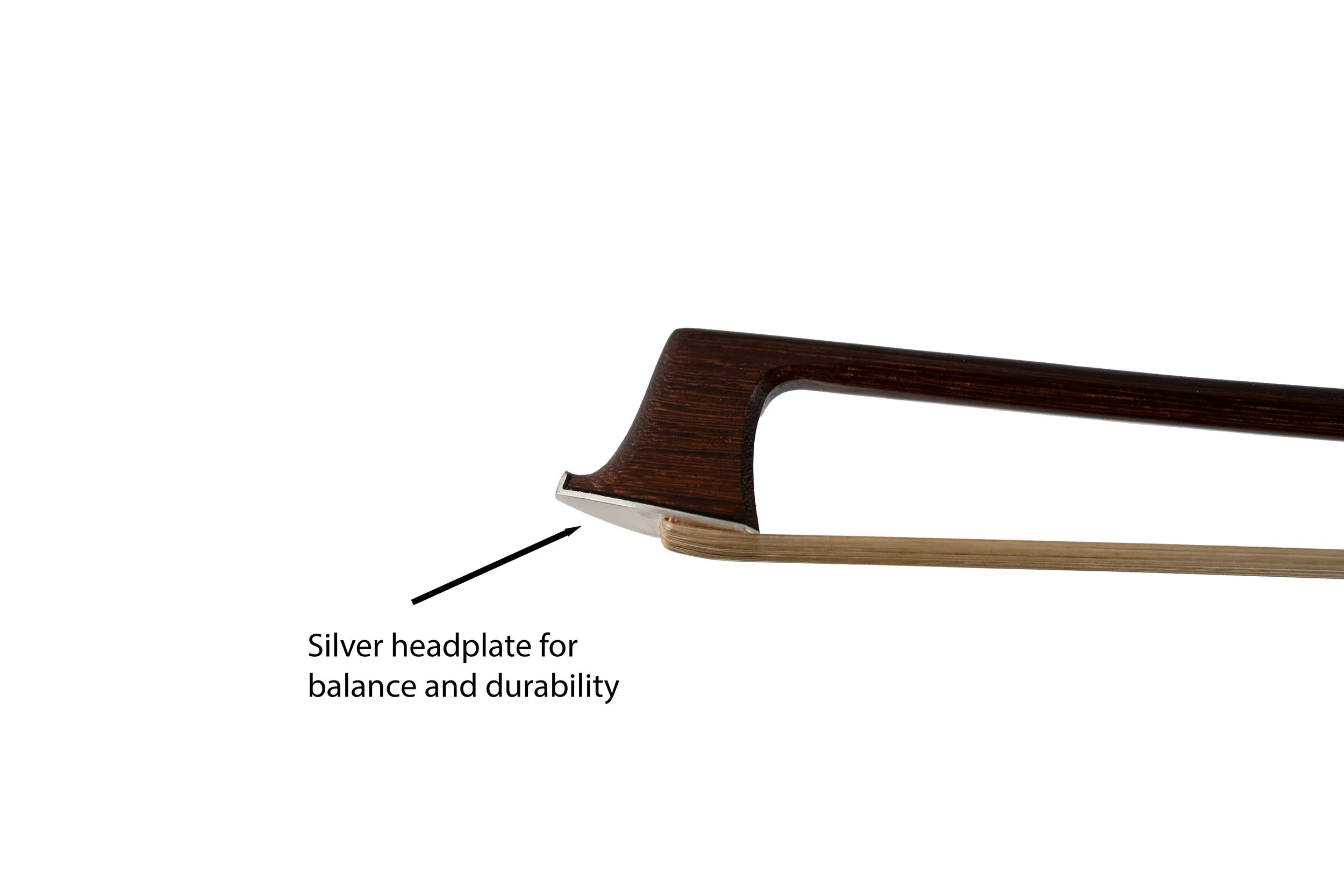
Photo credit Rebeca Kole
Because Ebonprex is denser than conventional ebony, Dylan made thoughtful adjustments throughout: a single silver ring at the button collar to keep weight down, a silk winding for fine balance control, and a silver head plate at the tip. That last choice also shifts the balance point slightly toward the tip — exactly where experienced players want it — and sidesteps any materials that could raise a custom official’s eyebrow.
The aesthetic outcome of all these practical decisions? A sleek, stylish bow — black fittings and winding — with a single silver accent and a silver tip. Clean, distinctive, and entirely unintentional.
"I was waiting on synthetic opal and got impatient. So I just went all black — and then I was like, yeah, I don't think I'm going to change this. I think this looks cool just like this."
It does.
How do I get one?
Dylan is currently taking pre-orders for his katalox violin and viola bows, with cello bows in active development. When he's fully focused on bow making, he can complete a bow in approximately two weeks from start to finish — and he's scaling back other work this summer to put more of that focus here.
There's already a waitlist forming, so if you're curious, now is the time to get on it. These bows are being made in small numbers by a single maker who cares deeply about every detail — that's not going to change, and neither is the availability.
"I've made a bow that is as fun for them to use as it was for me to make. That's the rewarding part."
If you want to try before you commit, Dylan's bows are also making the rounds at select shops in Chicago. His invitation to skeptics is simple and characteristically straightforward:
"Just give it a shot. Take it for a spin. You might be pleasantly surprised when you're not focused on what you're holding and just using a bow as a tool."
Dylan Kole is a luthier and bow maker based at the Chicago Luthier Cooperative, Chicago, IL.
Contact us at info@vrichelieu.com to place your pre-orders.