
In Conversation With Daniel Longnecker
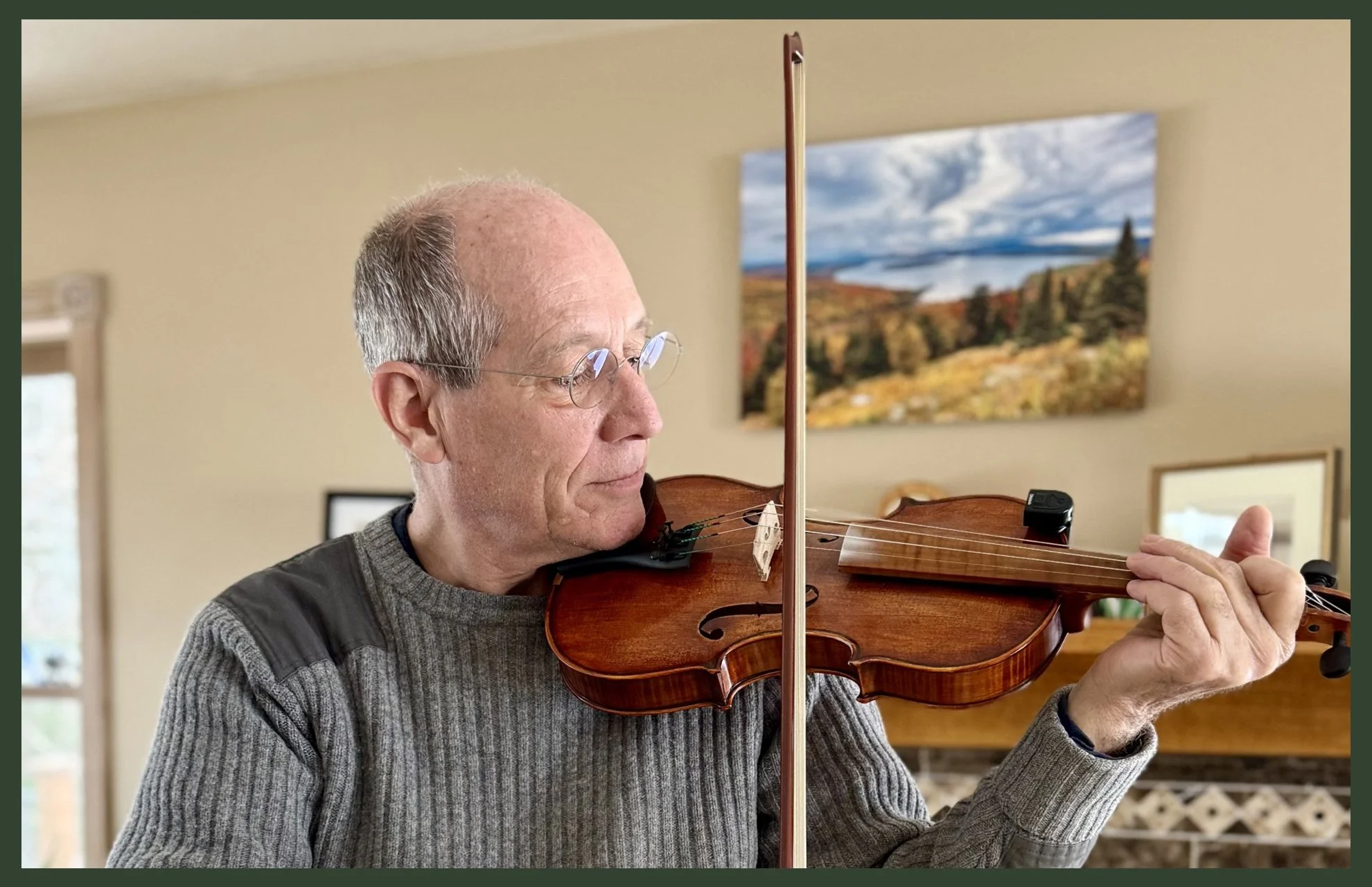
How Retirement Finally Gave Daniel the Time to Chase His Fiddle Dream
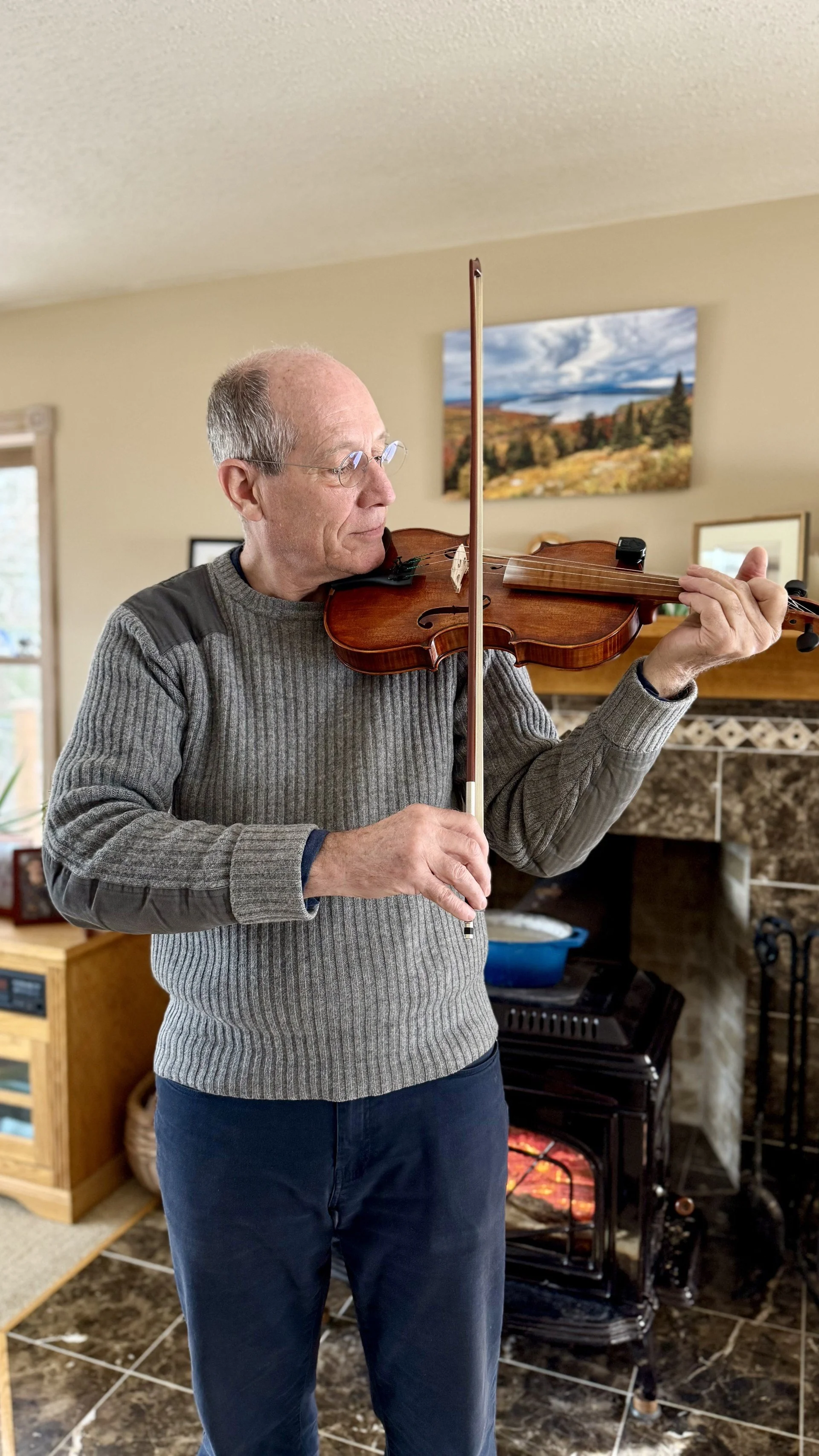
Some dreams don't expire. They simply wait — patient and persistent — on a wall, inside a case, through four decades of careers and obligations and carefully deferred intentions. For Daniel, that dream wore the shape of a fiddle he had purchased 25 years before he ever truly learned to play it.
Now retired after a long and successful career in information technology at Dartmouth College and Dartmouth-Hitchcock Medical Center, Daniel is doing something remarkable: he's coming home. Back to music. Back to languages. Back to the version of himself that first reached for a mandolin in college and never quite let go.
A Language Major Who Ended Up in IT — and Never Stopped Making Music
Daniel studied French and Spanish as a liberal arts undergraduate — a self-described language major who graduated into a landscape that didn't offer many obvious employment pathways. He pivoted to information technology, where opportunity was abundant, and built a career that spanned decades. But throughout those years, music remained a constant, if occasional, companion.
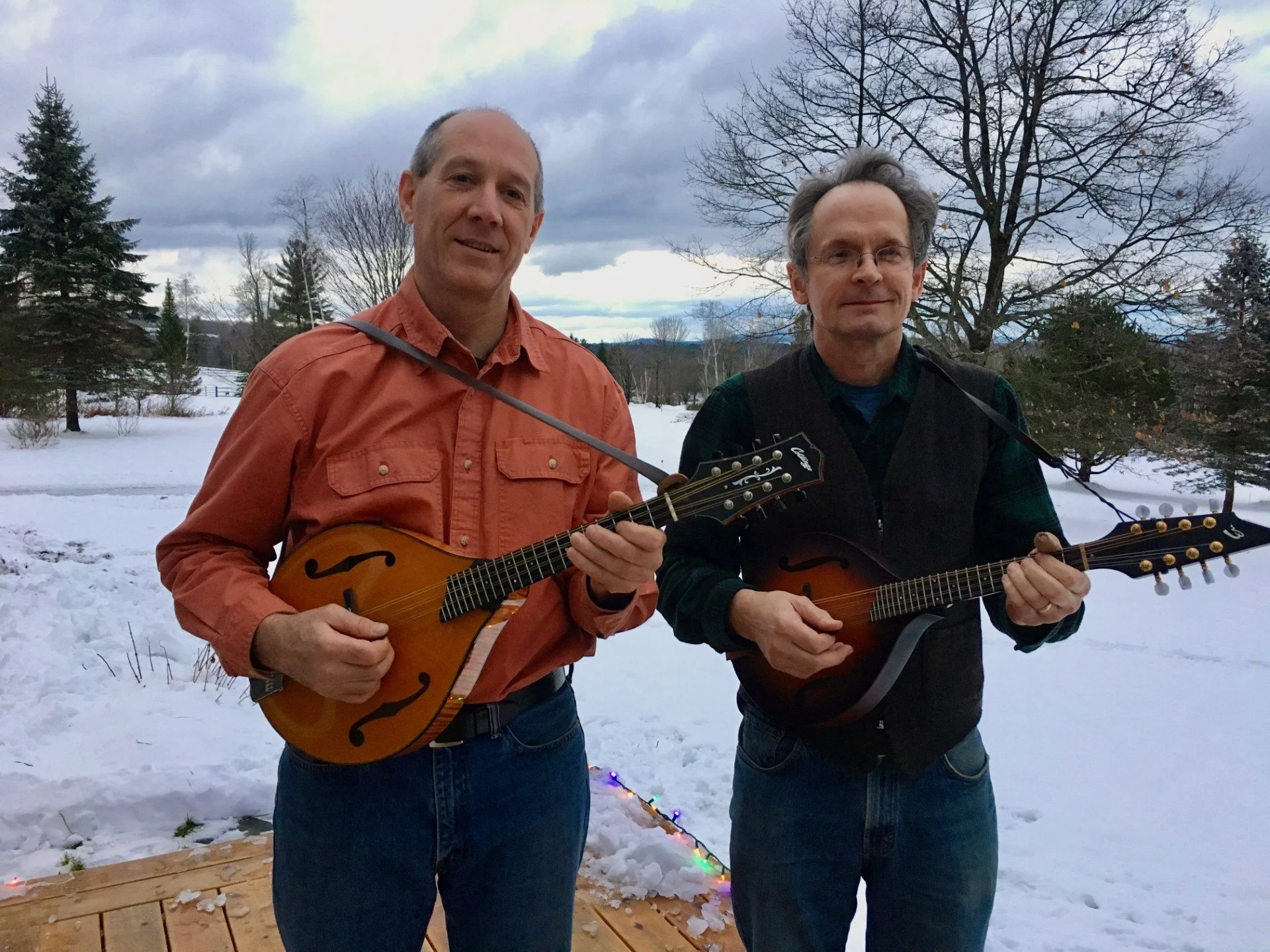
He played mandolin. He kept at it, even when life made the hours scarce. And somewhere along the way, he bought a fiddle — a purchase he held onto for 25 years, hung on a wall, and never quite unlocked.
"I owned the fiddle that I purchased 25 years ago. It's been in my possession and on my wall frequently, but I never got started with it. I couldn't make it sound good, and I just never went anywhere."
Retirement, he says, became the permission slip he had always been waiting to write himself. A chance to get back to the things he had initially loved — music, first and foremost, and languages alongside it.
Serendipity at the Powerhouse Mall
The moment that changed everything was, by Daniel's own description, pure serendipity. He and his wife happened to walk past the Vermont Violins location at the Powerhouse Mall in West Lebanon, New Hampshire. He stepped inside, intending only to look around. What followed was a conversation that quietly set the course for the next chapter of his musical life.
"The gentleman who was working there — named Josh — took time to really sort of educate me a little bit. He told me about Vermont Violins, mentioned the V. Richelieu line. It's made in Vermont, which intrigued me. But he also showed me the website and the resources on there — mainly the instructors."
That referral to the instructor listings proved to be the decisive spark. Finding the right teacher, Daniel realized, was his actual first step — and the Vermont Violins resources made it possible. Once that was in place, the rest began to fall into alignment.
He brought his old fiddle back to Vermont Violins for an honest assessment. Josh gave him exactly that: a fair evaluation, a candid summary of the instrument's limitations, and the measured observation that while he could learn on it, something better was within reach. Daniel listened carefully.
"He said, 'You could learn on this. There's nothing wrong with it.' But I could sense that I could do better. And I think as I pondered that, I realized I want my best shot. I want the best tools available."
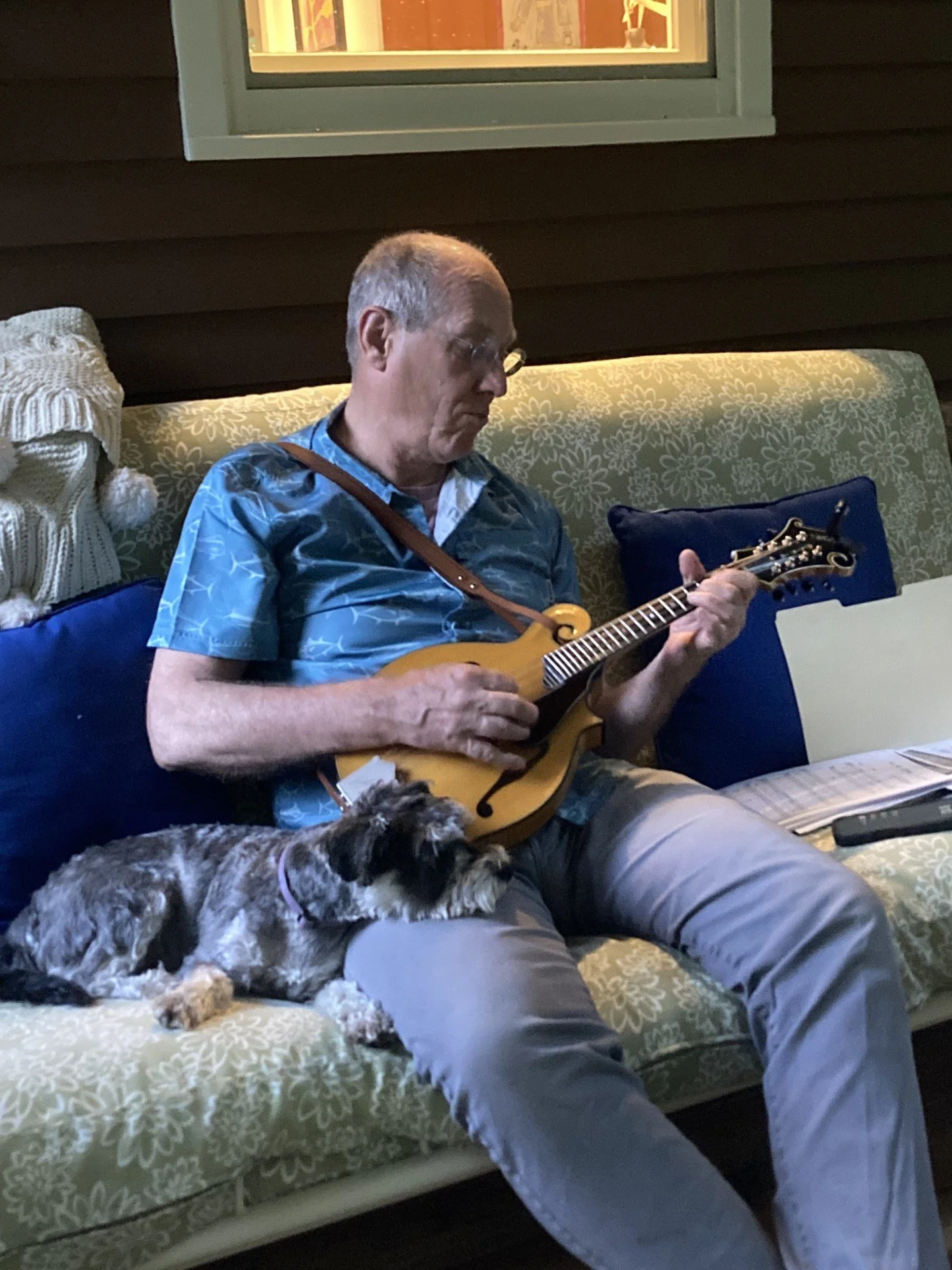
From Mandolin to Fiddle: The Joy of Playing Between the Notes
Daniel had spent decades with the mandolin — a fretted instrument he knows intimately. Moving to the violin meant surrendering the certainty of frets and learning to trust his ear and his muscle memory in entirely new ways. But it also unlocked something he hadn't been able to access before.
"I don't know if I'm using this term correctly, but microtones — the spaces between the frets. You slide into a note or you slide down to a note. On a fretted instrument, you can't do that. A mandolin with double strings is also very hard to bend. And I think a lot of what I was looking for was just the expression you can get out of an instrument when you can do those in-between notes, and slides and bends."
That expressiveness — the capacity to inhabit the space between fixed pitches — turned out to be precisely what Daniel had been searching for all along. The violin didn't just add a new instrument to his life. It answered a question he hadn't quite known how to ask.
"The violin has been just a revelation to me. There are so many possibilities that haven't been available before."
The Instrument That Surprised Him — And Kept Surprising Him
What began as a rental quickly became something more personal. Within a short period, Daniel purchased the V. Richelieu instrument he had been playing — a decision that came from an accumulating body of evidence heard through his own hands.
He still keeps his old fiddle. He'll bring it camping, to outdoor settings where he doesn't need to worry. But he knows the difference now in a way that goes beyond theory.
"When I play that instrument, it sounds wonderful. The other instrument is good for the mechanics — I can practice the technique. But even when I get everything right, it does not have the warmth and the richness. That puts it in a different level."
He describes the V. Richelieu's sound as rich, warm, and deeply gratifying to play — and more than that, he describes it as motivating. The instrument, he found, created its own feedback loop.
"There were times that it almost seemed like it was teaching me. There is a feedback loop. You do something and it's like — that was nice. Can I do that again? And eventually these things sort of become muscle memory, and all of a sudden I'm able to play songs, and it sounds very nice.
The Right Teacher Changes Everything
If the instrument was one pillar of Daniel's rapid progress, his teacher — Patrick Ross — was the other. A working musician with deep roots in the Vermont fiddle tradition, Patrick won the Vermont State Fiddler Championship at the age of 14, spent time in Nashville, and eventually chose to return to Vermont to build a life as a musician and educator.
"He's a working musician, and he teaches, but he also plays. So this is the real deal. When I went in and I was doing wild bow strokes and whatever, he was able to see that and say, 'You want to tame that a little bit?' He didn't squash my enthusiasm, but he said, 'Here's what won't work if you want to play faster. And here's what you can do.'"
That balance — nurturing enthusiasm while correcting technique — is exactly what a new adult learner needs. Daniel credits the combination of the right instrument and the right teacher with accelerating his progress in ways he hadn't anticipated.
"Having a teacher that can say, 'Here's what's going wrong here, or here's how you can do this better' — and come up with specific drills or things to practice that would work on those specific things — has been huge. I think that and the instrument have combined and really sped my progress."
Inside the Practice Sessions
Four and a half months in, Daniel's daily practice has taken on a structure that balances discipline and delight. He aims for two sessions per day — ideally one in the morning, when his energy is at its highest — though each lasts only about thirty minutes before his arm needs rest.
A typical session begins with scales to work on intonation — a skill that mandolin never demanded in quite the same way — then moves to arpeggios across strings, then to the eight or so songs he's been developing with Patrick. At the end, he allows himself some deliberately unstructured time: playing fast, getting sloppy, chasing speed and surprise.
Among the pieces on his list is the classic fiddle tune "Ashokan Farewell," made widely known by Ken Burns's Civil War documentary — a song Daniel had been attempting on mandolin for years, but that belongs, at its heart, to the fiddle.
"To put it on the fiddle now is one of the dreams that I had. That was one of my goals."
When the Fiddle Made an Old Song New
One of the most striking moments Daniel recounts is deceptively technical — yet it illustrates something profound about what happens when you approach a familiar piece of music on a new instrument.
He had been learning "The Crooked Road to Corinth" — a fiddle tune named for a town near where he lives — on mandolin for years. When he brought it to the violin, something wasn't working with the bow strokes. He brought the problem to Patrick, who thought carefully, played it through, and then offered a small but decisive insight: slide into the first note. A half-note grace slide on the opening.
"It never occurred to me on the mandolin. But it changes things — it adds a lot to the tune, but it also puts you on the right bow stroke when you need to be. After playing this tune for years on the mandolin and now playing it with this tip on the violin or the fiddle, it just explodes. It's like a new song. And I can now take some of that back to the mandolin and probably improve it there as well."
That cross-pollination — fiddle technique informing mandolin playing, and vice versa — has become one of the unexpected gifts of this new chapter.
A Redefined Sense of Success
Daniel's understanding of success has clarified considerably in retirement. It isn't measured in titles or deliverables. It's measured in the distance between who he was and who he's becoming.
"Success to me is being able to pursue the things that I really do have a passion for. I don't have specific mileposts that I'm necessarily fixated on. I think just the ability to express myself with this new instrument — that to me is success. I've got to where I want to be."
He has a dream that lives just beyond the horizon: walking into an Irish pub someday, fiddle in hand, and being invited to sit in on a session. It's the kind of goal that feels romantic and improbable and entirely achievable — if you just keep showing up.
"I'd like to be able to walk into an Irish bar sometime with my fiddle and get asked to get up and play with them. If I start now, that's a possibility. In five years, I may be there. It's at once a motivating goal I can work towards, but it also delivers on a daily basis."
What He Would Tell Anyone on the Fence
For anyone standing where Daniel once stood — dream intact, instrument gathering dust, life perpetually getting in the way — he has a remarkably simple message.
"Just do it. It's a gift to your future self. You will take some time to get there. But if you just keep showing up — practice a little bit every day — things start to fall into place. And before you know it, it will open up doors that lead to wonderful places."
He would add one crucial companion to that advice: find the right teacher. Someone who is a working musician, who plays as well as teaches, who can redirect your enthusiasm without extinguishing it. The combination of a quality instrument and the right guide, Daniel says, is what truly accelerates the journey.
He also speaks warmly and unprompted about Vermont Violins and the role Josh's patient guidance played in setting him on the right path — from the honest assessment of his old fiddle to the decision to rent and ultimately purchase.
"I've been to great music stores. I've been to wonderful places where the staff were very helpful. My experience with Vermont Violins has ranked with the top of that. I'm thrilled to be able to play an instrument that is sustainably sourced and built in the United States, built in Vermont. It just seems like a big success that I have found."
He told a friend recently that he wished he had started sooner. Not with regret — but with the particular clarity of someone who finally knows what he was missing, and who intends to spend every available hour making up for lost time.
Interested in starting — or restarting — your own musical journey? Visit Vermont Violins in South Burlington, VT or Lebanon, NH to speak with our team about renting or purchasing a V. Richelieu instrument. We'd love to help you find yours.
Contact us at info@vrichelieu.com to learn more.
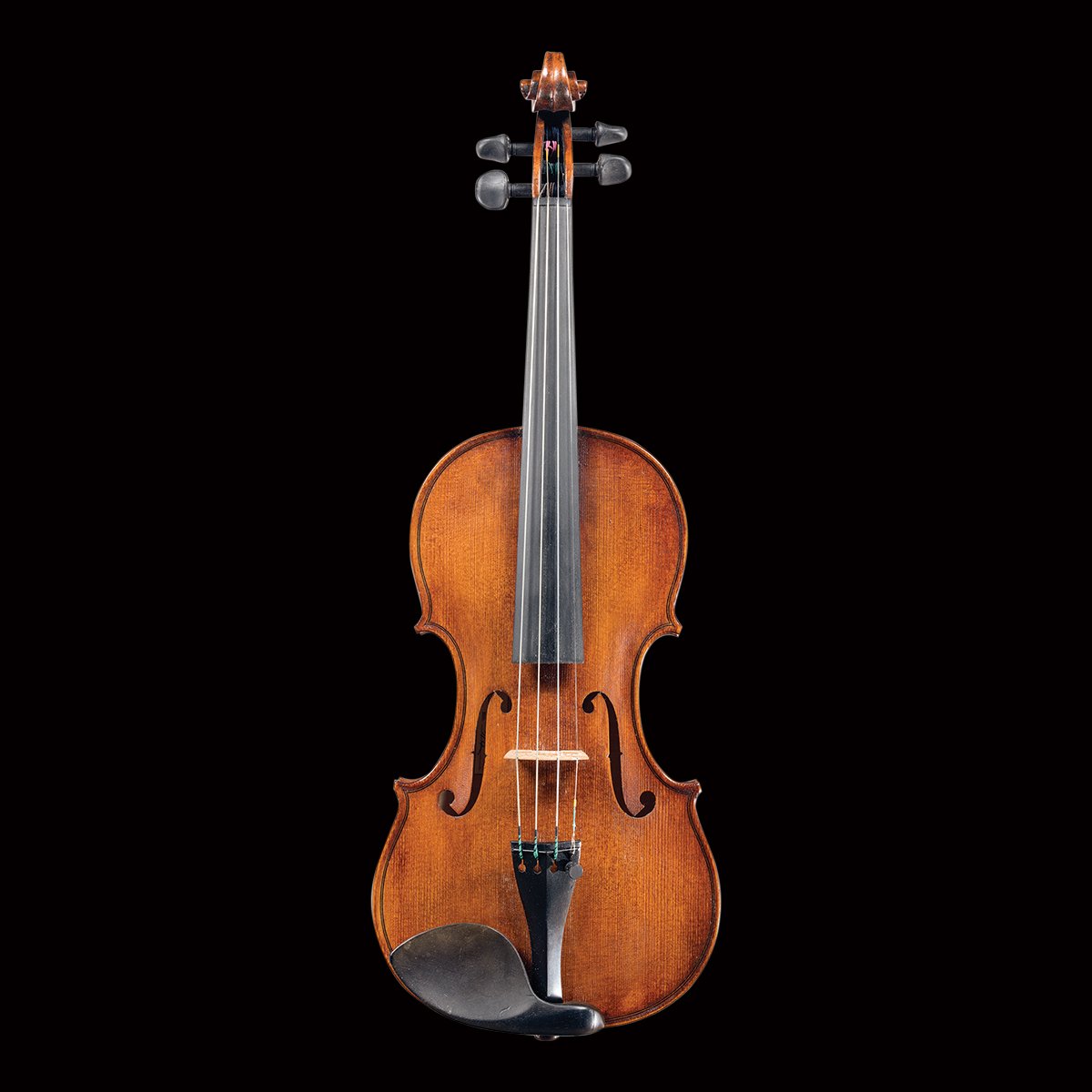
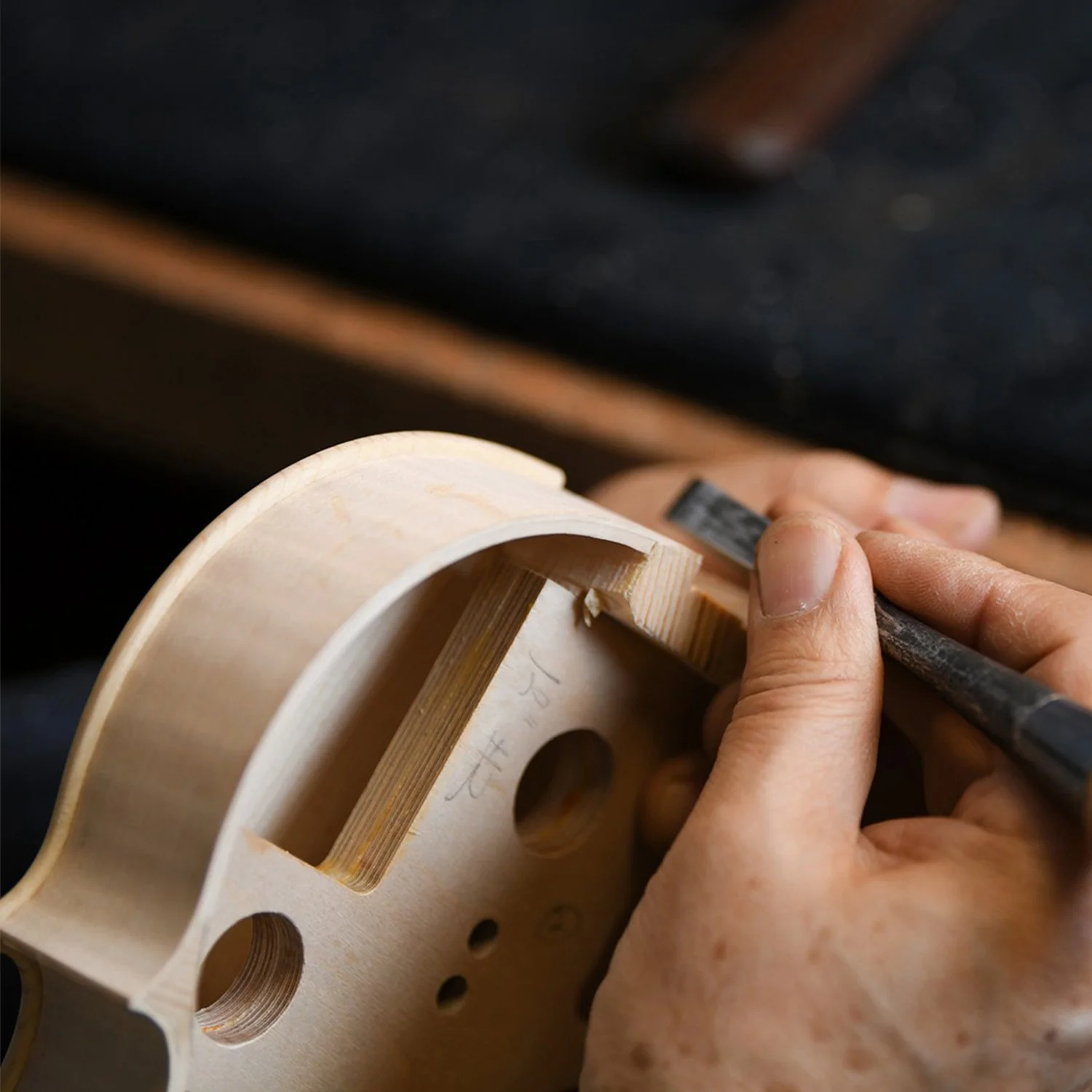
V. Richelieu violins are 100% made in Vermont. Hand-split spruce tonewood is imported from Italy and Switzerland; maple comes to us from Bosnia. Together, these woods form a violin of unique distinction offering fine instrument quality at very affordable prices.Each instrument is hand-graduated by our senior luthiers. The oil-based varnish is hand painted by an accomplished oil portrait artist. Each instrument is unique, but each offers a tonal quality perfect for the advancing student, conservatory student or professional player.