
The Impact of the Right Instrument on Musical Success
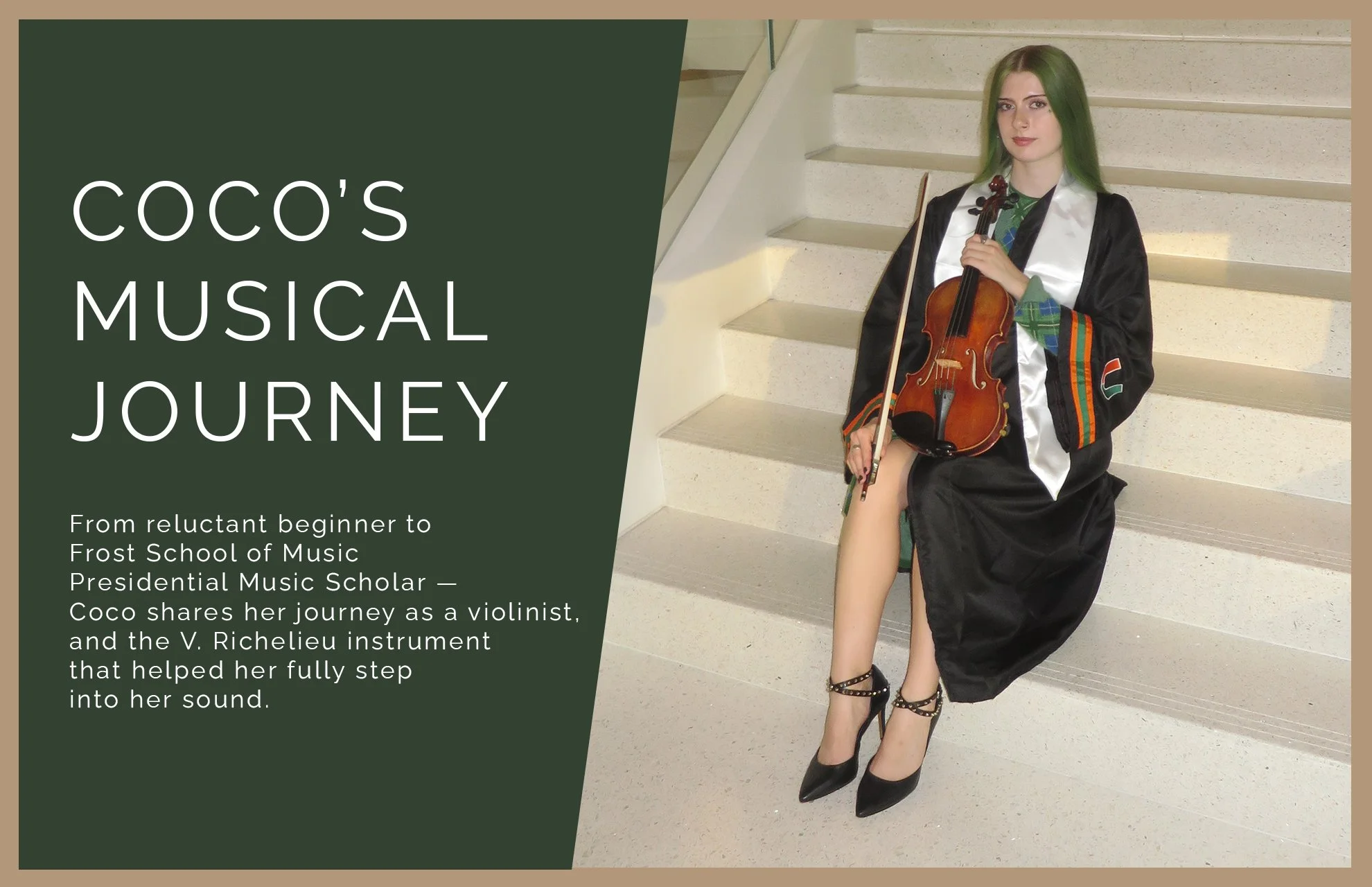
Not Exactly a Love Story — At First
Most musicians have a romanticized origin story — a transcendent concert, a beloved family member who played, a melody heard through an open window. Coco’s is a little more honest than that. Today, Coco is an accomplished musician who fills her life with performance, teaching, fiddle jamming, and professionally making her music heard. But her origin story might have predicted a different musical journey entirely.
Nothing really inspired me to play violin because my parents made all of my siblings learn violin. They were like, oh, you know, being a classical musician and learning violin will make you smart.
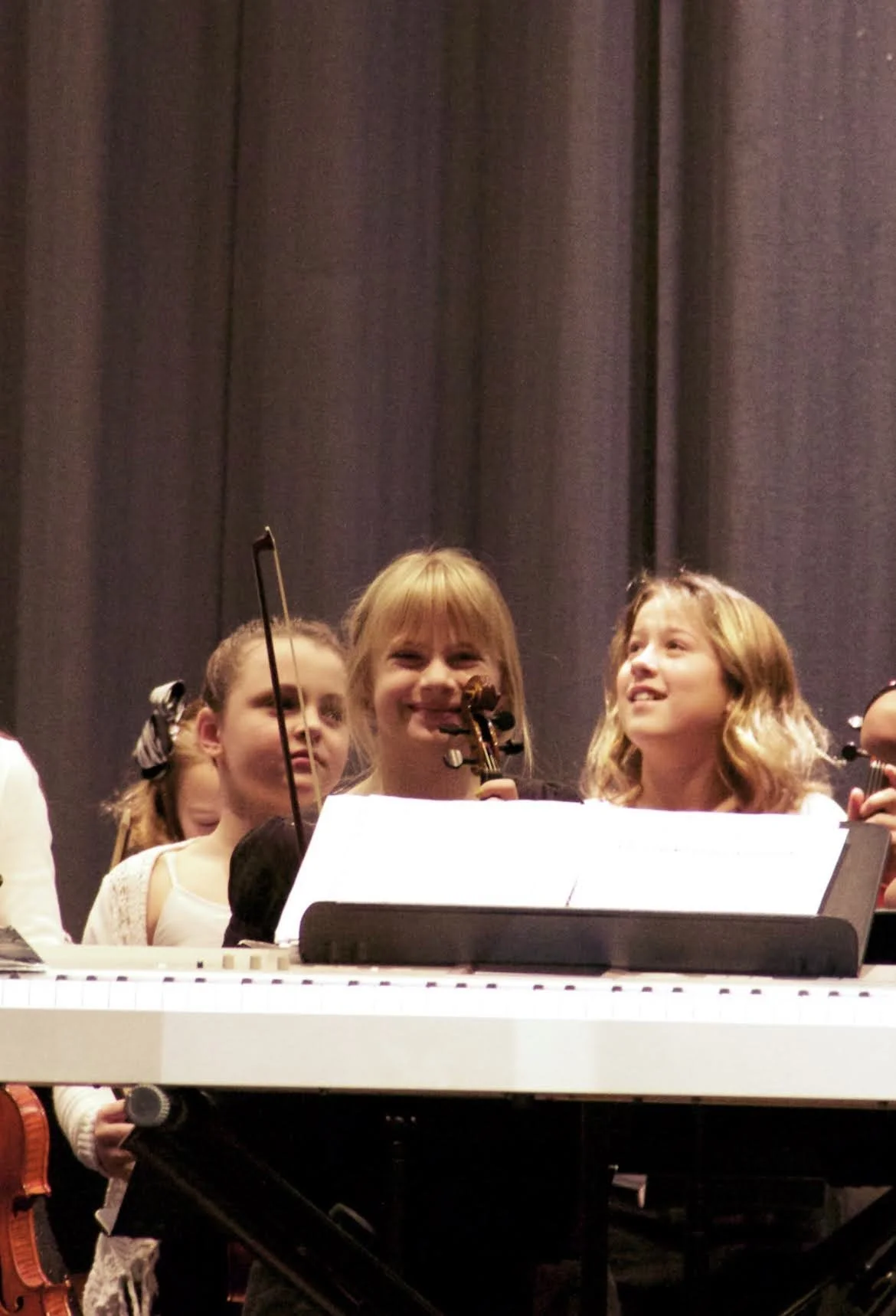
Elementary school orchestra concert led by Nick Wehr
She started at six years old. Not because she fell in love with the instrument, but because the decision had already been made for her. And for the first several years, she’ll tell you plainly: she was not good at it.
“I really didn’t like it, actually, until after like four or five years — because I was terrible at it. Like, no natural talent for it. I just sucked. But until I started to see improvements, that’s when I really started to fall in love with it, because then I was able to play things that I actually wanted to play.”
That shift — from obligation to ownership — is a thread that runs through everything Coco has become as a musician. It was never about prodigy-level talent. It was about the slow, steady accumulation of technique until the music she heard in her head could finally find its way through her fingers.
The Moment the Instrument Started to Matter
For years, Coco played on whatever was available — school rentals, a student-grade Yamaha her mother purchased in middle school. They were serviceable instruments that got the job done. But as her abilities grew, so did the gap between the music she could envision and what her instrument could actually deliver.
Her first teacher, Adrienne Walsh, was the first to name it directly: if Coco was serious about pursuing music at the next level, she would need a better instrument to keep up. That’s when Vermont Violins entered the picture.
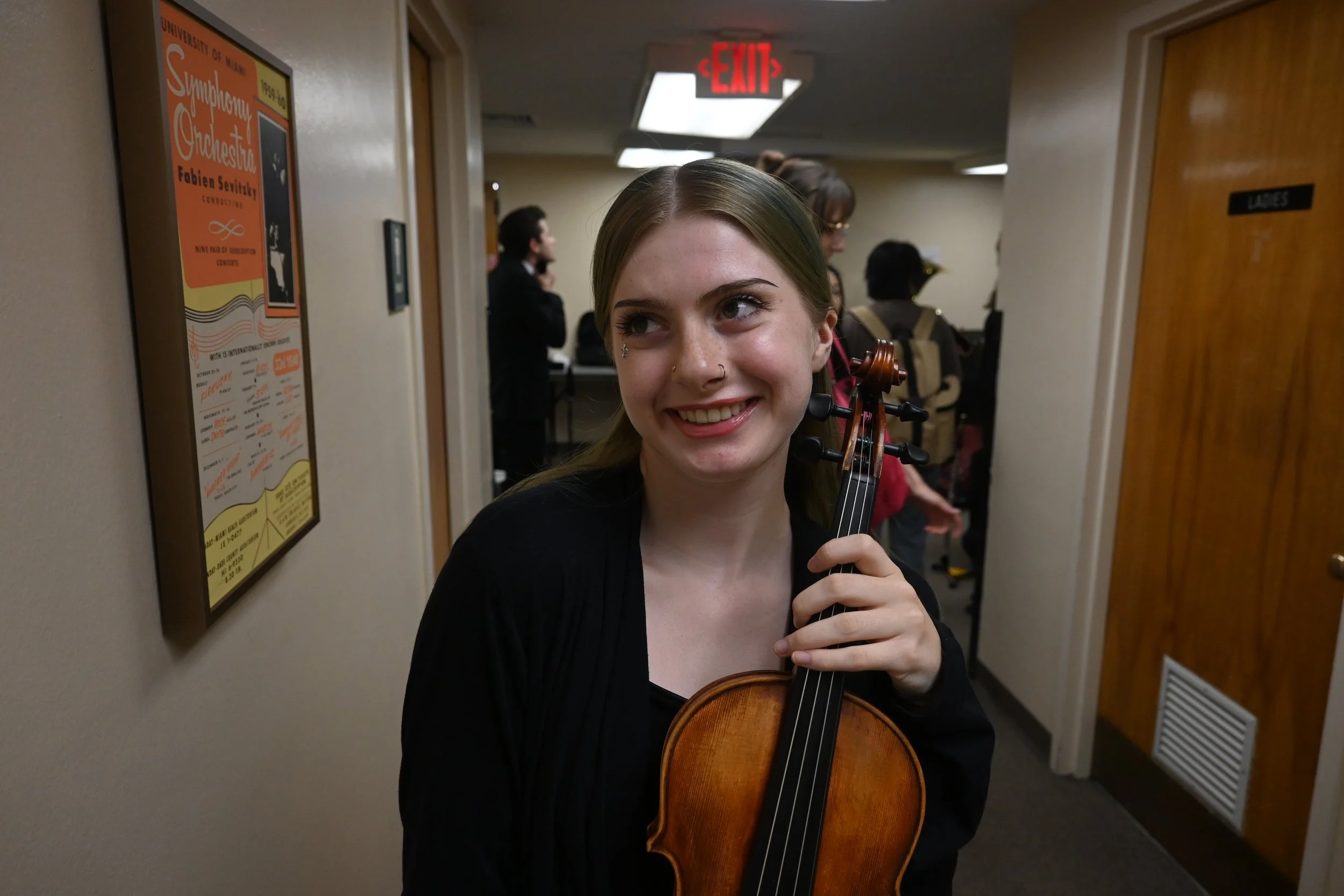
Backstage at a Frost Symphony Orchestra Concert
Around 2017, Vermont Violins visited Canal Music Studios, the music studio in the New Jersey area where Coco was studying. It was the first time she’d encountered the brand, and she tried several violins that day.
“When I was playing on it, I really liked it. And my parents, like most people, were scared by the price tag of buying an entire new instrument — especially a string instrument of a higher caliber. That’s so much money. So when they learned that there was a rental program, I think that was much more feasible for us. It was probably the most realistic choice at the time.”
The Vermont Violins rental program didn’t just solve a financial problem. It solved an access problem. A performance-grade instrument that might otherwise be out of reach for a family cautiously weighing costs became something attainable — month by month, with the flexibility to reassess, upgrade, or exchange along the way. Coco has been renting ever since. Even post-college. And because so much of the rental goes towards the purchase price, she’s well on her way to ownership.
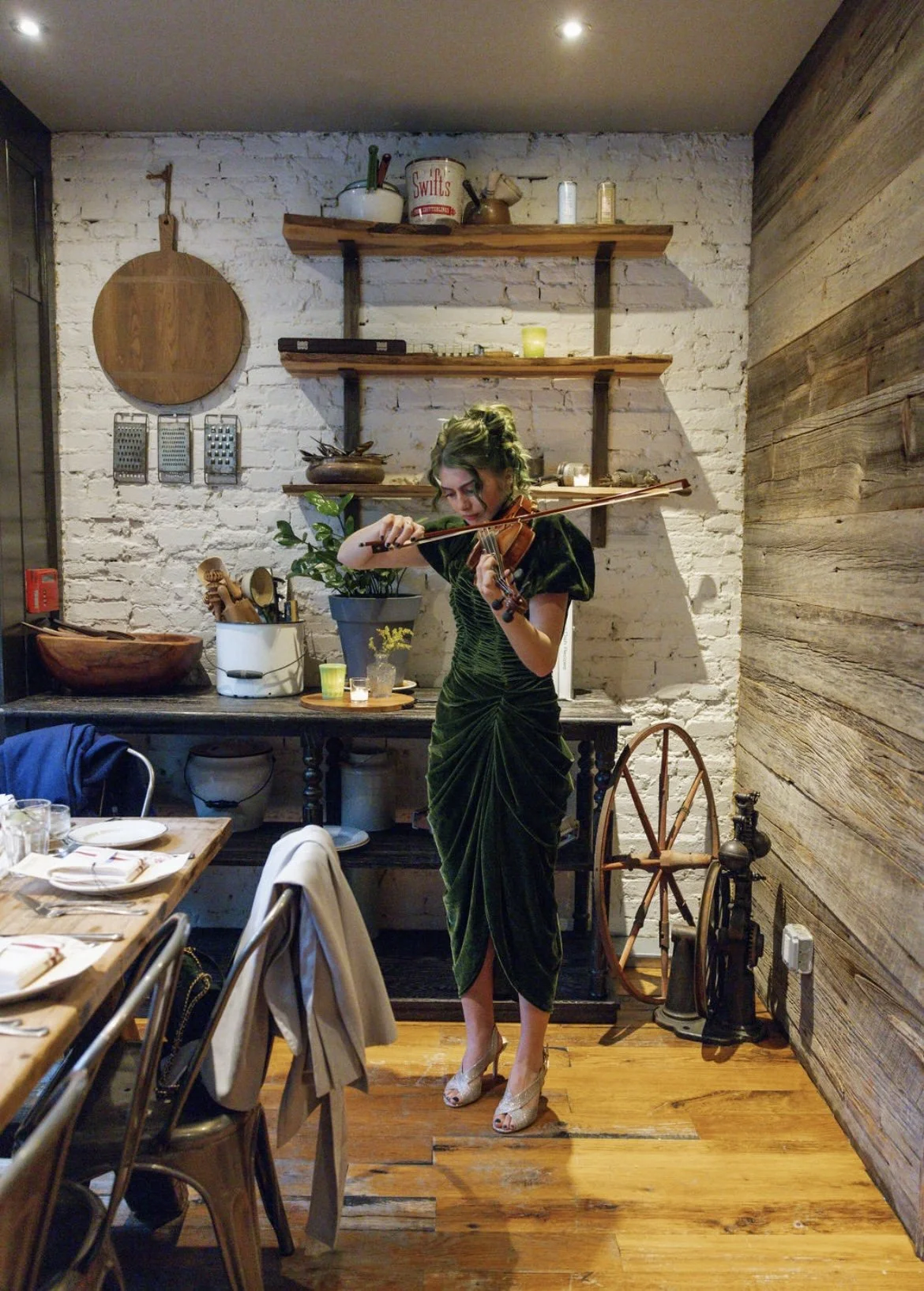
Coco performing at her sister's wedding
Stepping Into Her Sound
Ask any serious musician, and they’ll tell you: the right instrument doesn’t just change how you sound. It changes how you practice. It changes how you show up.
“When you’re playing on an instrument where you just like the sound of it, it makes you more inclined to practice and more inclined to play. I feel like one of the hardest parts of being a musician is having an idea of how you want to sound in your head and trying to actually execute that on an instrument. The better the instrument is, the easier it is to execute what you’ve envisioned.”
With a student instrument, Coco explains, there’s a ceiling. You can develop your technique, your ear, your musicality — but at a certain point, the instrument simply cannot keep pace with your artistic growth. It becomes a constraint rather than a canvas.
“With the V. Richelieu by Vermont Violins, I feel like I was really able to step into my sound more. And I’m still experimenting with my sound, too. It’s very nice.”
That phrase — “stepping into your sound” — is worth sitting with. It speaks to something beyond technique: the ability to hear yourself and actually recognize the musician you’ve been working to become.
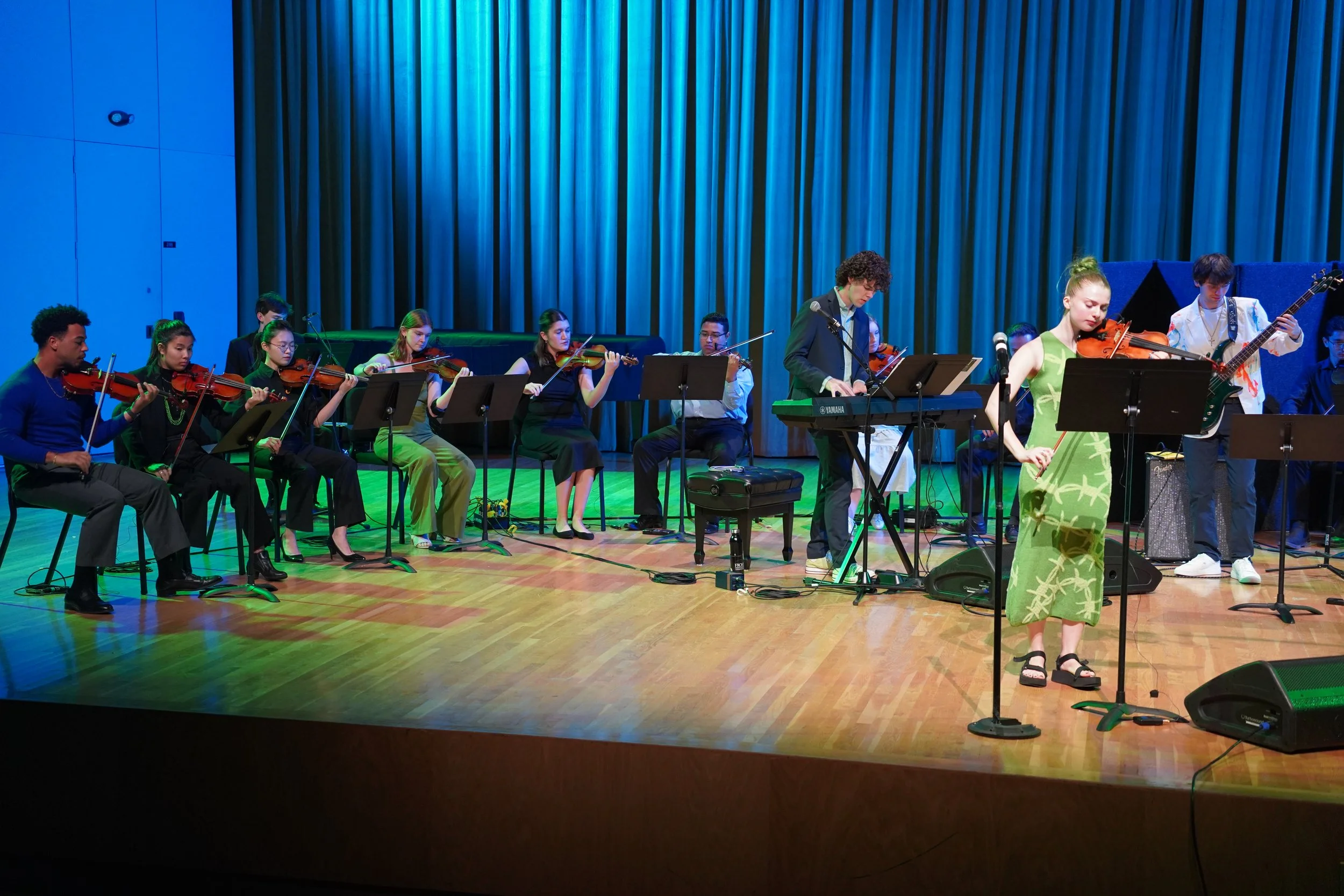
Lethal Orchestra Senior Recital
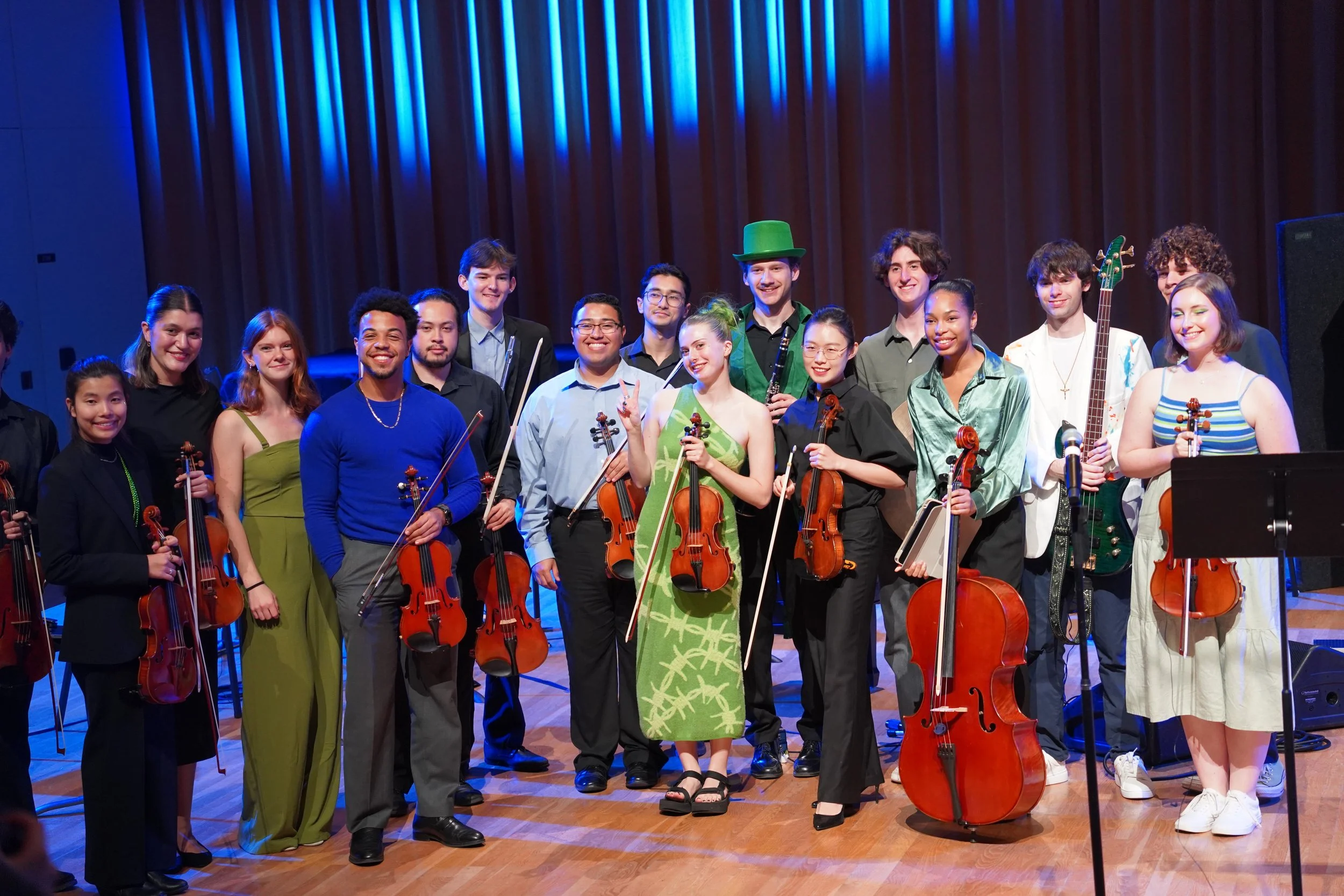
Lethal Orchestra Senior Recital
The Audition That Changed Everything
The stakes of having the right instrument became vividly real when Coco auditioned for the Frost School of Music at the University of Miami — one of the most competitive music programs in the country.
“That was a very memorable moment, because I had worked very hard up to that point. I’d taken lots of auditions throughout my childhood. I was in youth orchestras, I did competitions, all that kind of stuff. And so at that point, I had never wanted anything more in my life than to go to music school — and especially Frost.”
She arrived in Miami for the first time, prepared to the point of certainty. The repertoire she’d been studying for years. The faculty was kind. And something clicked.
“I played like the best that I’ve ever played in that audition. And then that ended up getting me a performance scholarship. Even though I didn’t apply as a performance major, they placed me as a performance major with a performance scholarship in the studio of Charles Castleman, a world-renowned violinist. That was a really great moment because it kind of dissolves some of that imposter syndrome — like, maybe I’m not good enough. I walked out and I was like, yeah, I ate that. You know.”
It’s difficult to overstate how much preparation, intention, and the right tools all converge in a single moment like that. The scholarship wasn’t luck. It was the product of years of deliberate growth — and an instrument that could hold every bit of it.
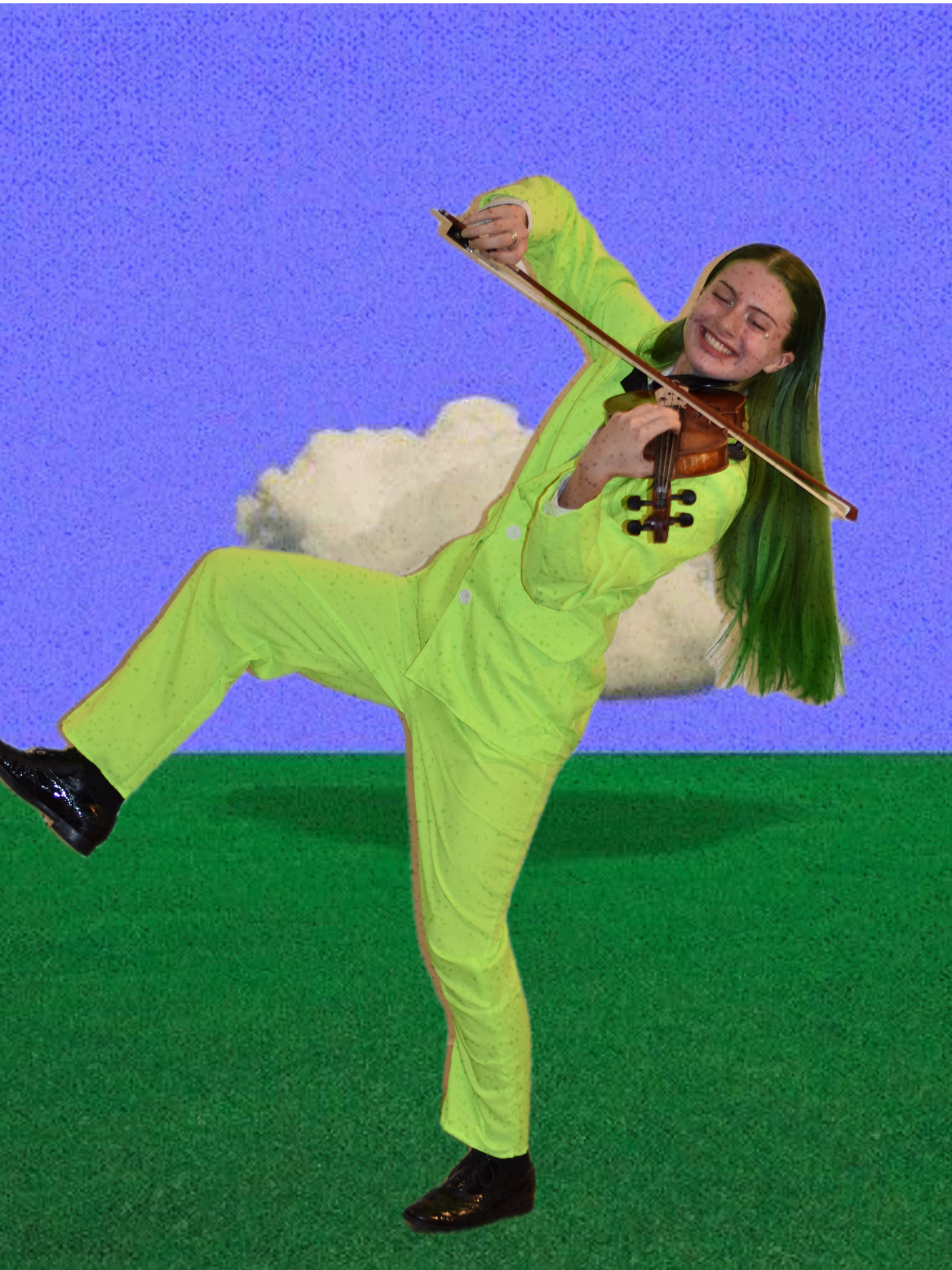
Music Is Still Everywhere
Since graduating from Frost, Coco has remained in Miami — and the music hasn’t stopped for a single day. She works at Young Musicians Unite, a music education nonprofit in the city, where she is in the Arts Access department, a system that connects art and music non-profits to provide free arts programming to Miami-Dade County students. She still teaches. She still gigs. And lately, she’s been arranging.
“I’ve been super into arranging music lately. I had my senior recital recently where I arranged funk and jazz songs for a 20-piece orchestra. My life is surrounded by music — whether it’s playing, my nine-to-five job, or teaching. I’m very open to seeing where my musical journey goes.”
She also performs in recitals for friends still finishing their degrees, sits in on jam sessions hosted by her former violin professors, and — in a fun departure from her classical roots — has a fiddle gig coming up. As someone who spent years exclusively in classical training, that’s no small thing.
“People usually ask me when they hear I play violin if I fiddle, and I’m like, no, I usually do classical. But now I get to say I do fiddling. I think once again, having that open mind is the key to getting these fun experiences that you might not have had otherwise.”
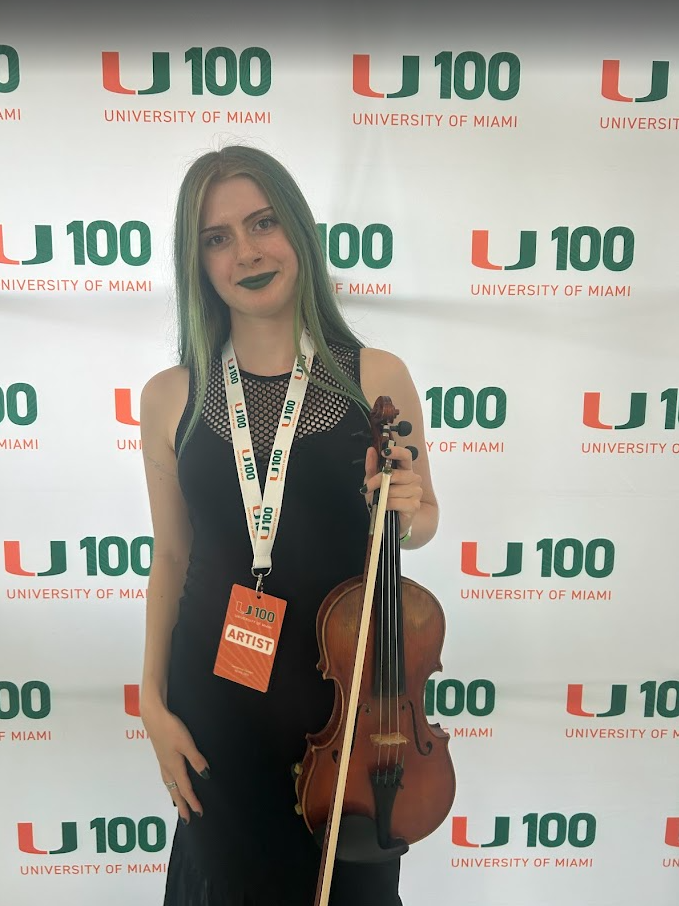
Performing at the University of Miami's Centennial Celebration Concert with the Henry Mancini Institute Orchestra
What She’d Tell Parents Considering a Rental Program
Having lived the full arc of the journey — from reluctant six-year-old to scholarship recipient to working musician — Coco has some genuinely considered advice for families standing at the threshold of that decision.
“They’re already on the right track with considering rental over buying, because buying is so permanent. If you don’t like your instrument, it’s harder to swap it out if you bought it rather than renting. I feel like renting is safer. There’s more flexibility. If you haven’t fully found which one matches your sound, you can experiment and mix and match.”
She’s also practical about the financial reality of a musical life, which tends to have more costs than people anticipate: strings, maintenance, accessories, lessons. The predictability of a rental program, she says, makes budgeting genuinely manageable.
Her most important piece of advice? Play it in person. And don’t just play through it once and call it done.
“An instrument may look one way online and you see the description of the sound, but there’s just no replacement for playing it in person. And when you’re testing instruments, don’t just play through it once in the shop. Let it sit with you for like a week or so. Practice on it. Play in different contexts. Because realistically, most of the time you’re going to be practicing. So if you don’t play the instrument when you’re practicing, you’re not evaluating the actual experience and value you’re going to get from it day to day.”
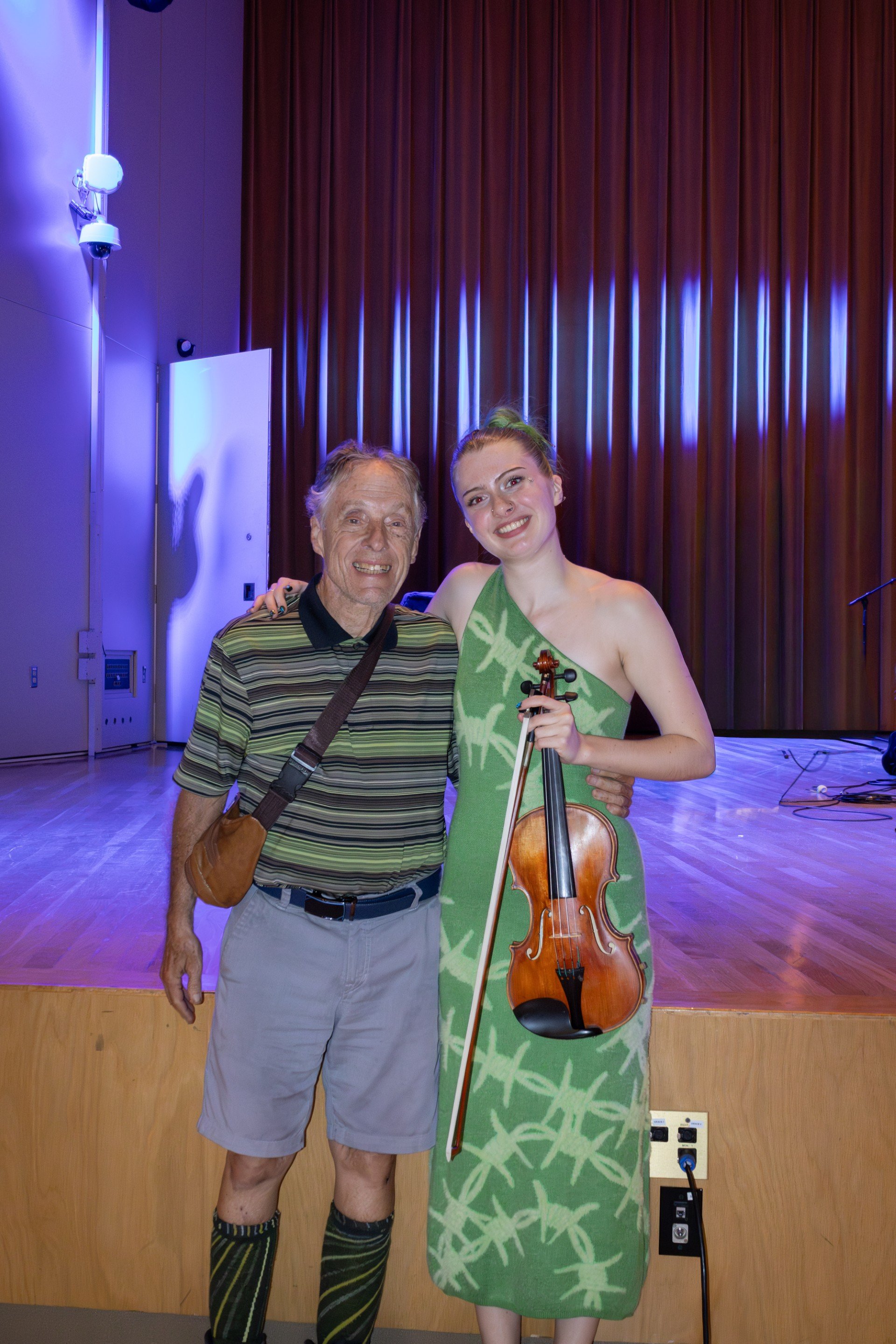
Coco with her Professor - Charles Castleman
Getting in the Room
There’s something Coco returns to again and again when she talks about the rental program, something that goes beyond sound quality or flexibility: access.
“Renting has really helped me financially be able to play at a high level and get into the room — basically rooms that would not prior have been available to me had I had a lesser grade instrument. It’s really unlocked accessibility for students and serious musicians who may not be able to afford or take that purchasing leap, but who still want to have their foot in the door for being considered as a serious musician. It’s really helped me become a more serious musician.”
Getting in the room. It’s a deceptively simple phrase for something that can take years to achieve — and that the right instrument can make possible sooner than you’d think.
What She Would Tell Her Younger Self
Asked what she would say to herself on the very first day she picked up the violin, Coco doesn’t hesitate.
“This is about joy. Enjoy yourself. Because I really started enjoying myself playing only fairly recently in my violin journey, and I think that’s really unfortunate — especially for classical players. Classical training is very rigid and it doesn’t allow much room for experimenting or inserting your own personality. It took me a lot of unlearning classical training to realize that experimentation is not sacrilegious. I just wish, I discovered sooner that I could actually play the music I listened to in my free time on my instrument. And I really wish I’d delved into improv earlier, because I think improv really can unlock your playing and help you express yourself in a way that traditional classical repertoire just can’t.”
There’s a lesson embedded in that, too, for any parent or student starting out: the goal isn’t just to produce a technically proficient musician. It’s to cultivate a person who genuinely loves what they do — who plays because it feeds something real in them. The right instrument, rented at the right time, is one small but meaningful part of making that possible.
Closing Notes
Interested in the Vermont Violins rental program? Visit us in-store or reach out to speak with our team about finding the instrument that’s right for you — whether you’re a six-year-old just starting out, or a serious musician ready to take the next step.