Two Words: Do It
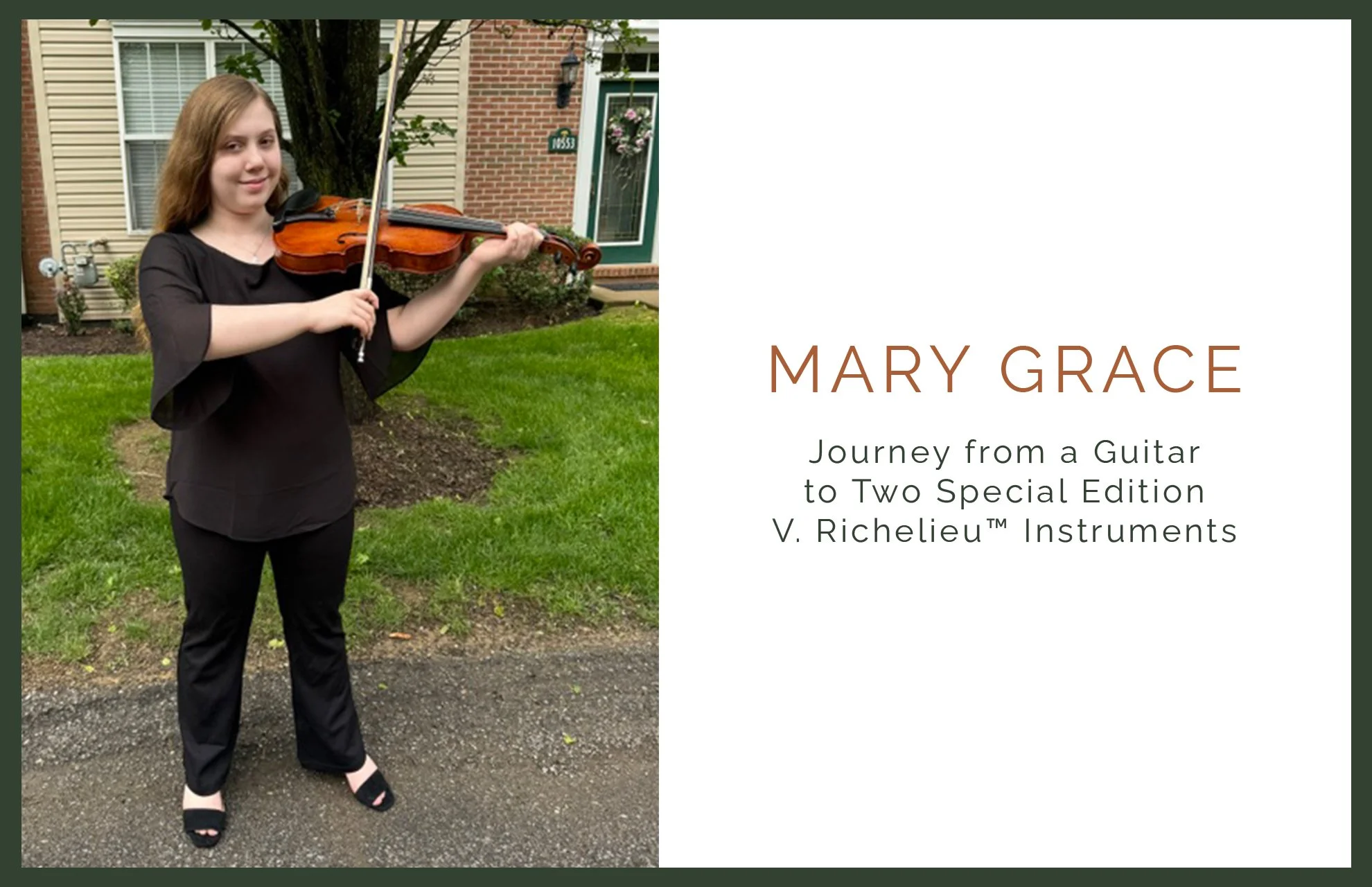
How Mary Grace Found Her Voice with Her 2 Special Edition V. Richelieu™ Onyx & Wren
Meet Mary Grace, a passionate young multi-instrumentalist whose musical journey spans from rocking out on the electric guitar to commanding the orchestra stage with her V. Richelieu™ instruments. Accompanied by her mother, Belinda, Mary Grace shares how finding an instrument designed with purpose changed everything—from her tone quality in symphonic halls to her daily joy in making music.
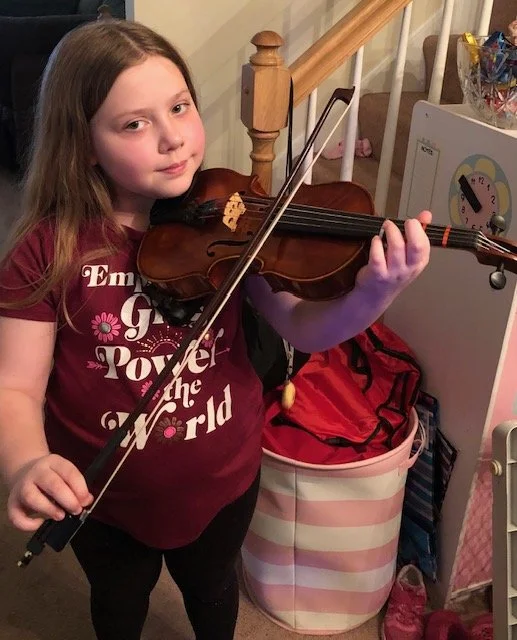
When Mary Grace first heard the C string of a viola through a laptop speaker during remote learning, she didn't know she was hearing the sound that would define the next chapter of her life. She was in second grade, choosing an orchestra instrument the only way her school district would allow that year: online, sight unseen, string by string.
Today, Mary Grace plays two Special Edition V. Richelieu™ instruments — a 14-inch viola named Onyx and a violin named Wren — alongside guitar, piano, flute, and voice. She's a second-degree black belt in taekwondo, a first-chair-caliber orchestra musician, a member of her school's folk fiddling ensemble, and a songwriter who hopes to build an entire career around music. Her mother, Belinda, is the reason she picked up an instrument in the first place — and the reason she never put it down.
Who Needs an E String? Finding Viola Through a Screen
Mary Grace's very first instrument wasn't a string instrument at all. In second grade, inspired by rock-and-roll icon Joan Jett, she asked her parents for a guitar.
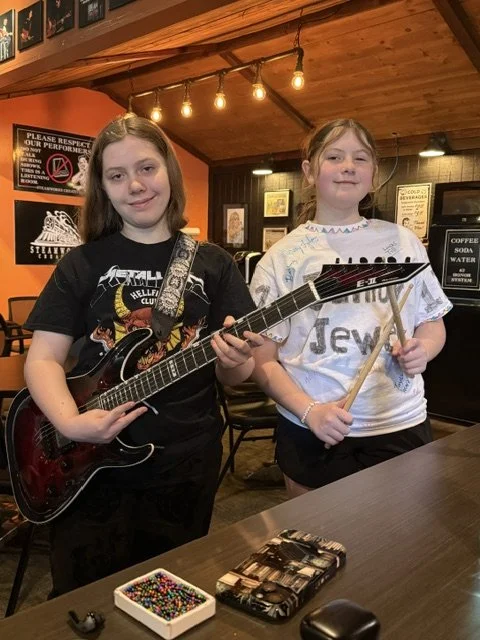
"My parents listen to a lot of rock and roll, and I just heard an artist named Joan Jett one day, and I was like, I want to be like her. So my parents just got me a guitar, and I sat down and just started playing it.”
She still plays guitar today — seven years and counting. But her school district's orchestra program, which lets students choose a string instrument at the end of second grade, was about to introduce her to the instrument that would become central to her identity. The timing, however, was anything but ordinary: it was 2020, and Covid had just shut down in-person instruction.
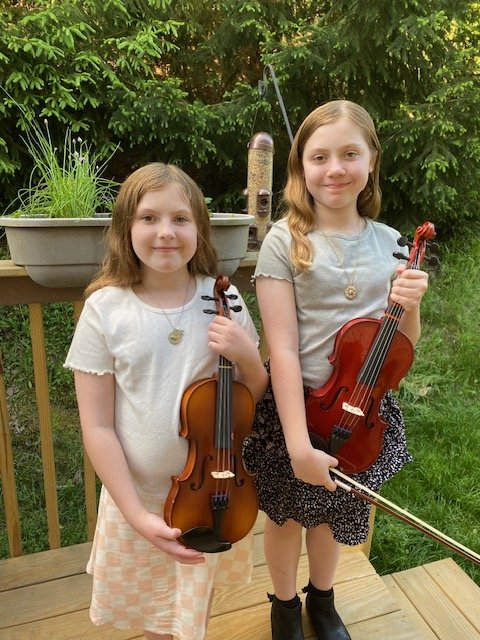
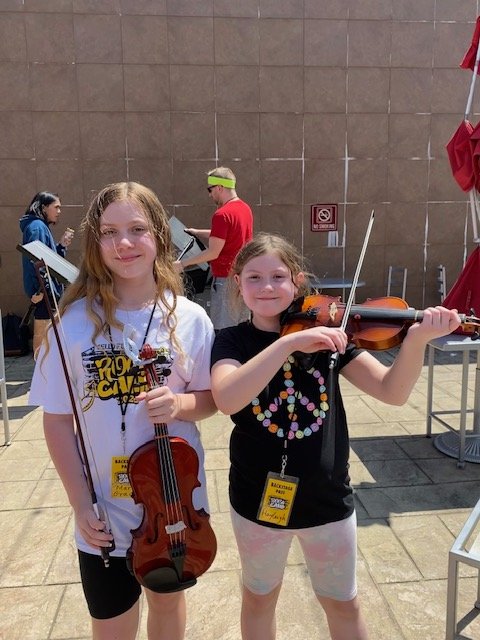
"Whenever Covid started, we were just doing online learning. We got sent links to hear the different instruments, and we couldn't actually pick it up and play it. At the time I was thinking, oh, I'm probably just going to do violin. However, listening to it online, whenever I heard the C string on the viola, I was like, okay, I'm doing that. Who needs an E string?”
Belinda still credits the school district's music program and its teachers for making that possible at all, even remotely.
"It's a really good program that the school district has, and we're very fortunate to live in a school district that has a strong orchestra program.”
Mary Grace's grade, she notes, ended up smaller than most in orchestra — a quiet testament to how many students who started remotely didn't stick with it.
"There were so many who did not stick with orchestra, you know... it's hard to learn an instrument for the first time online, especially a string instrument.”
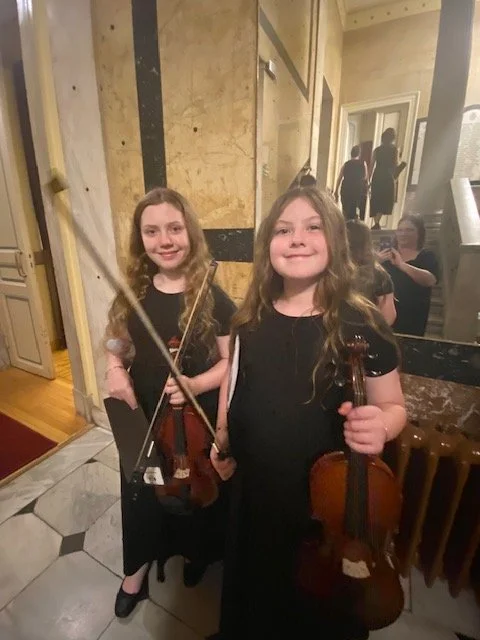
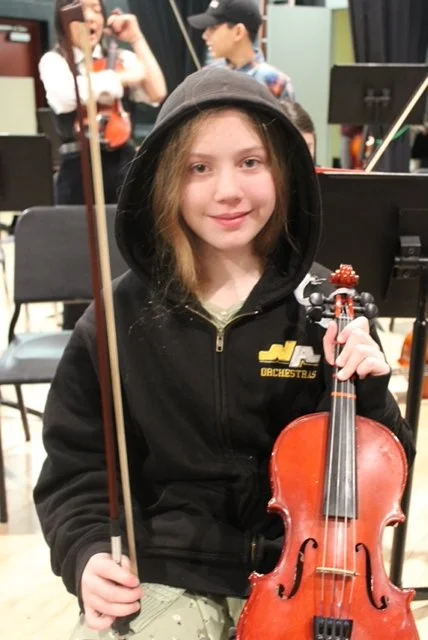
Mary Grace did stick with it — through a small starter viola, sized for a girl who describes herself as "a very short kid," and all the way through elementary and middle school with one of Pittsburgh's youth orchestra programs, moving up from its junior strings level into its chamber strings ensemble.
Outgrowing the Instrument, Not the Passion
By the time Mary Grace was preparing to audition for her youth orchestra's top ensemble, her youth orchestra director delivered a verdict every serious young violist eventually hears: the instrument had to grow with the player.
"We need to upsize Mary Grace to an actual viola — we need to get her measured, because she's playing wonderfully, but these smaller violas are not making the sound that we need for the symphony orchestra.”
recalling her daughter's youth orchestra director
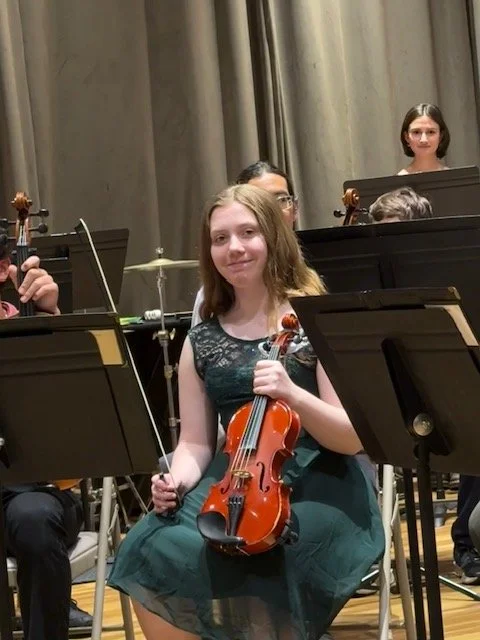
There was just one problem. Mary Grace measured for a 14-inch viola, but her school's rental program and local shops didn't carry one — everything on hand was a shrunken violin strung with a C string, not a true viola built for that voice.
The Search for a Real Viola
As a petite young musician—finding an instrument that fit physically without compromising depth of tone was a struggle. Standard student rentals in smaller body sizes often compromise on proportions, simply restringing scaled-down violin bodies.
"That's when we found you guys, and we saw that you could possibly custom size a viola to actually be a viola, and smaller.”
Belinda — an attorney by trade — approached the search the way she approaches everything: methodically.
"I'm an attorney, so I research everything before I decide on something. I hopped online and I told Mary Grace, we're going to find you a viola, something that you know is going to work. And that's whenever I came across some of the stories of students with V. Richelieu™ and how much they loved it — and I learned that Grace had been playing this whole time on a viola modeled from a violin, not from an actual viola, and how you need that lower width to make that deep, robust sound. I wish I had found V. Richelieu™ sooner.”
A conversation with the Vermont Violins team led to a Special Edition Viola, custom-built to Mary Grace's exact 14-inch size.
The First Time She Heard It
Mary Grace remembers unpacking her new viola on the living room floor, unsure what to expect.
"I was sitting on the floor, unpacking it, and I just picked it up. I said to myself okay, so how good do we think this is going to sound? Because I had heard the professionals playing, I was like, either I'm not going to play that well and it's going to sound like my other instrument, or this is going to go extremely well. It was the second option. Whenever I first played it, I thought wow, , this is so loud and clear, and I loved it. And then I switched over to the C string. I was so happy this was exactly what I wanted.”
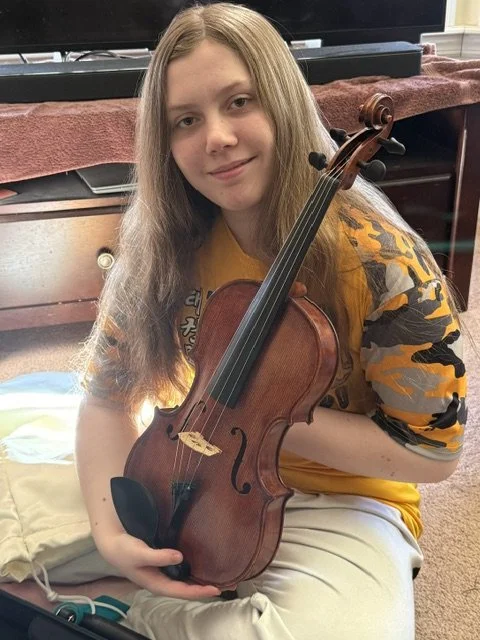
Belinda watched the moment unfold from across the room.
"Watching her get it all set up and then playing it, and just the clear, deep, beautiful sound that came out of the instrument — we were all just saying, wow, this is a really beautiful instrument. Mary Grace couldn't wait to show her private instructor, show anyone who would listen."
The timing lined up almost perfectly: the viola arrived just a week or two before Mary Grace's first performance with her junior high district orchestra, where she'd successfully applied for and been selected for a seat.
"Whenever I actually started playing my new V. Richelieu™ viola, I was just amazed at how different and better it sounded, actually, at a performance — versus how things had sounded with a rented viola, one that looked like a violin. That experience just amazed me at the difference between the violas - like the sound, tone and structure and just everything. ”
For Belinda, the difference wasn't abstract — it changed what she could hear from the audience.
"I used to struggle to hear her, but now I can hear her. I can pick her out, you know, whether it's a quartet or a little ensemble, and I can hear her every time now. That's important for a parent, but it's also important for her, so that the conductor knows she's playing."
That instrument — soon to be joined by a matching V. Richelieu™ violin — earned a name of its own: Onyx.
Building an Actual Violin Voice
Nearly a year later, Mary Grace found herself needing a second instrument. She'd joined her school's folk fiddling ensemble — a group that performs from memory, without sheet music, at everything from senior centers to church picnics — and a viola alone wasn't going to cut it for gigs built around a true violin sound.
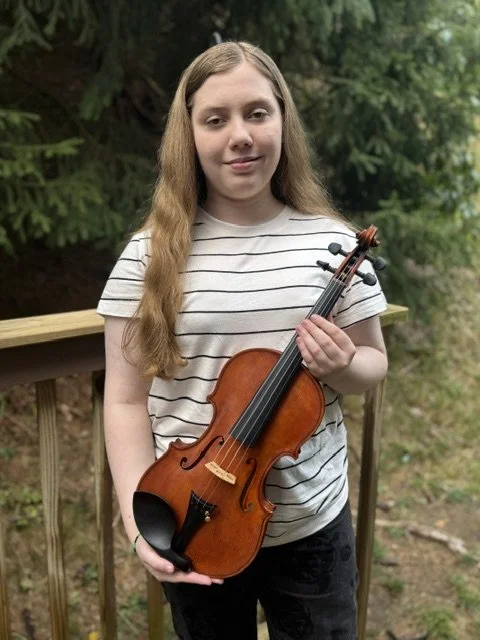
"This is going to get into the reason why we got the violin. I recently joined a group at my school called the Fiddlers. They do jamming sessions and gigs now. So I kind of needed a violin to actually do the jamming sessions and gigs, or else I was going to be playing sixth position on my viola.”
She'd borrowed a violin for one early rehearsal and immediately knew it wasn't right.
"She was not happy. She's like, I can't play a violin that doesn’t have that pure sound, especially the high E string— after being with her V. Richelieu™ viola and it’s pure sound, the violin had to match it."
There was no debate about where to look next.
"There was no question. And the sustainability — when I told her I found her a V. Richelieu™ violin and showed her everything you put into eco-friendly practices — that was very important to her as well, because ever since she was little, she’s always been someone who talks to people about protecting the earth, for the future, and taking care of animals."
Within days of unpacking her new violin — named Wren — Mary Grace was already playing by ear.
"I started immediately playing the V. Richelieu™ violin and a song the Fiddlers ensemble plays— "Boil Them Cabbage Down”
Belinda describes the sound as an entirely different category of experience from the family's earlier student rentals.
"There's always a lot of scratches and squeaks with student rentals — and I know some of that is user error, kids learning how to play. But even in songs Mary Grace could play really well, you'd get that little scratch on the string. We don't have that with the V. Richelieu™. They're just so clear and beautiful. The E string on the violin sounds like a true high string, and the C string on the viola sounds like a nice, deep C string. There's just — you can't compare it. Maybe if you found a hundred-year-old violin, or something that's thirty or forty thousand dollars, you might get that sound. But I feel like we're getting that quality of sound in a brand-new instrument."
A Family Value, Built Into the Wood
For Belinda, the decision to return to V. Richelieu™ for a second instrument wasn't only about tone — it was about what the instruments are made of, and how.
Mary Grace's Special Edition viola and violin are both built with rare, sustainably sourced tonewoods as part of V. Richelieu's FSC-certified sourcing program — a commitment that includes partnerships with American tonewood suppliers and the Coquille Indian Tribe's sustainable forests in Oregon, alongside the more traditional European sourcing common across the industry.
For a family that has always encouraged environmental awareness in their kids, the fit was immediate.
A Life Built Around Music
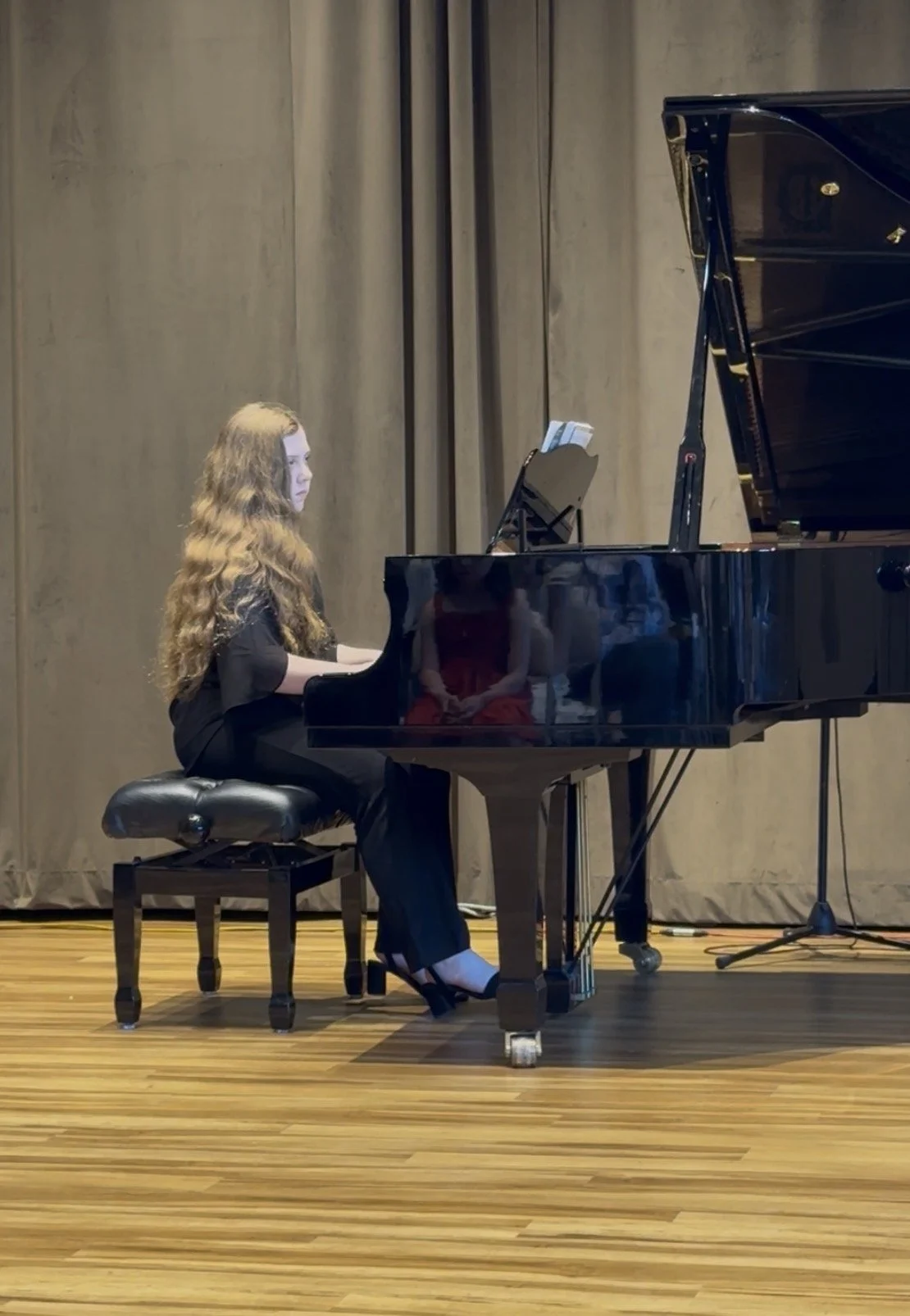
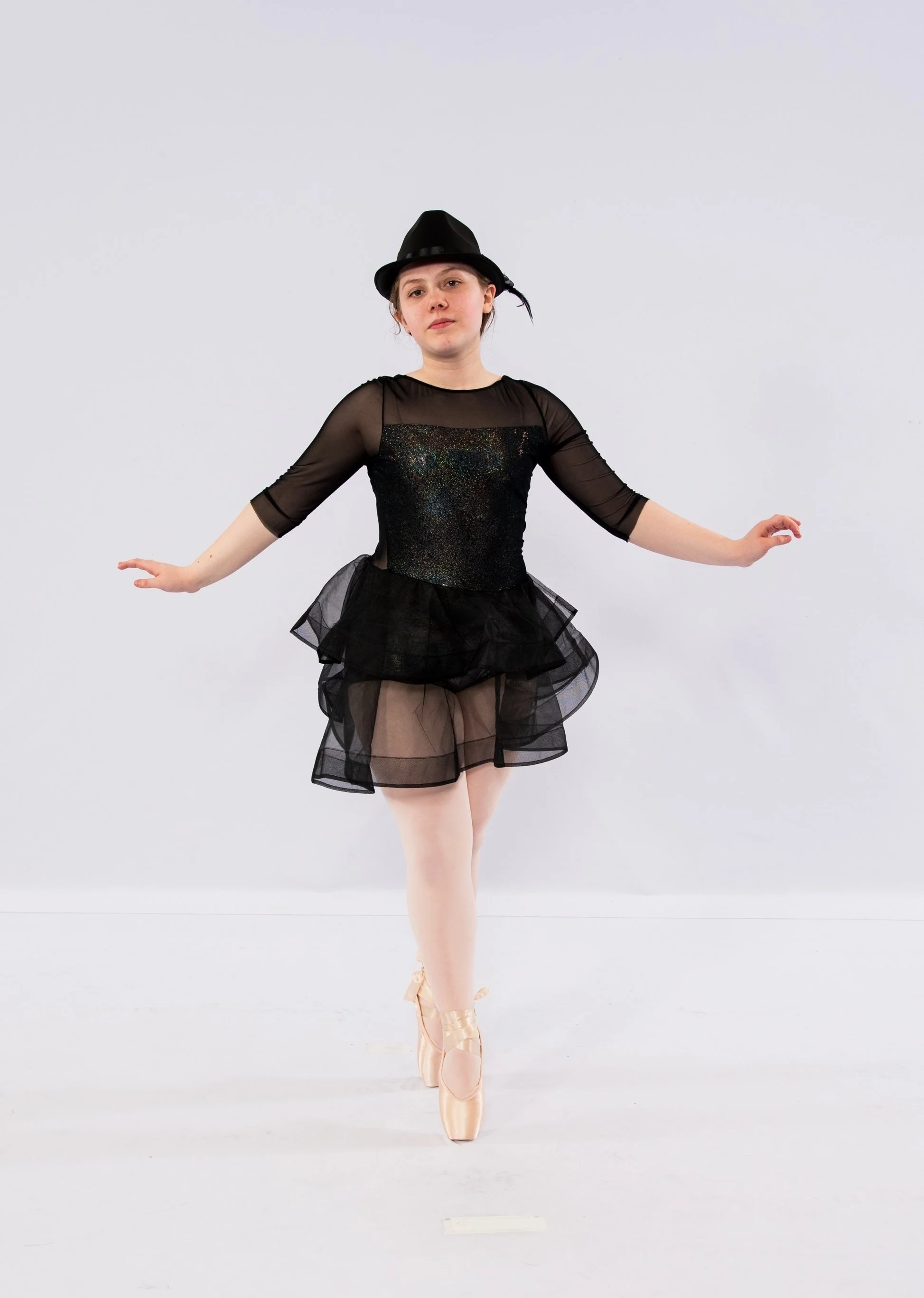
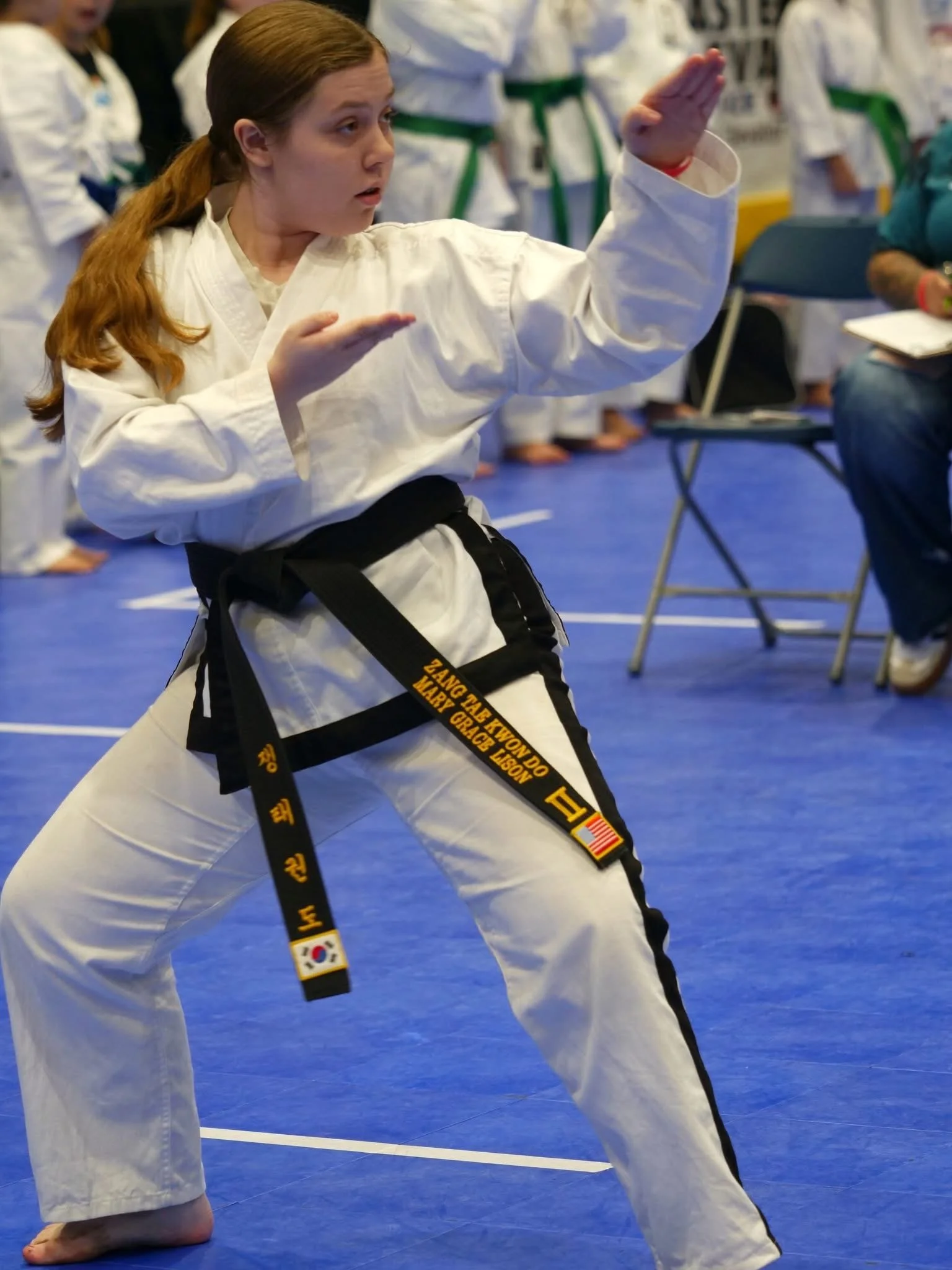
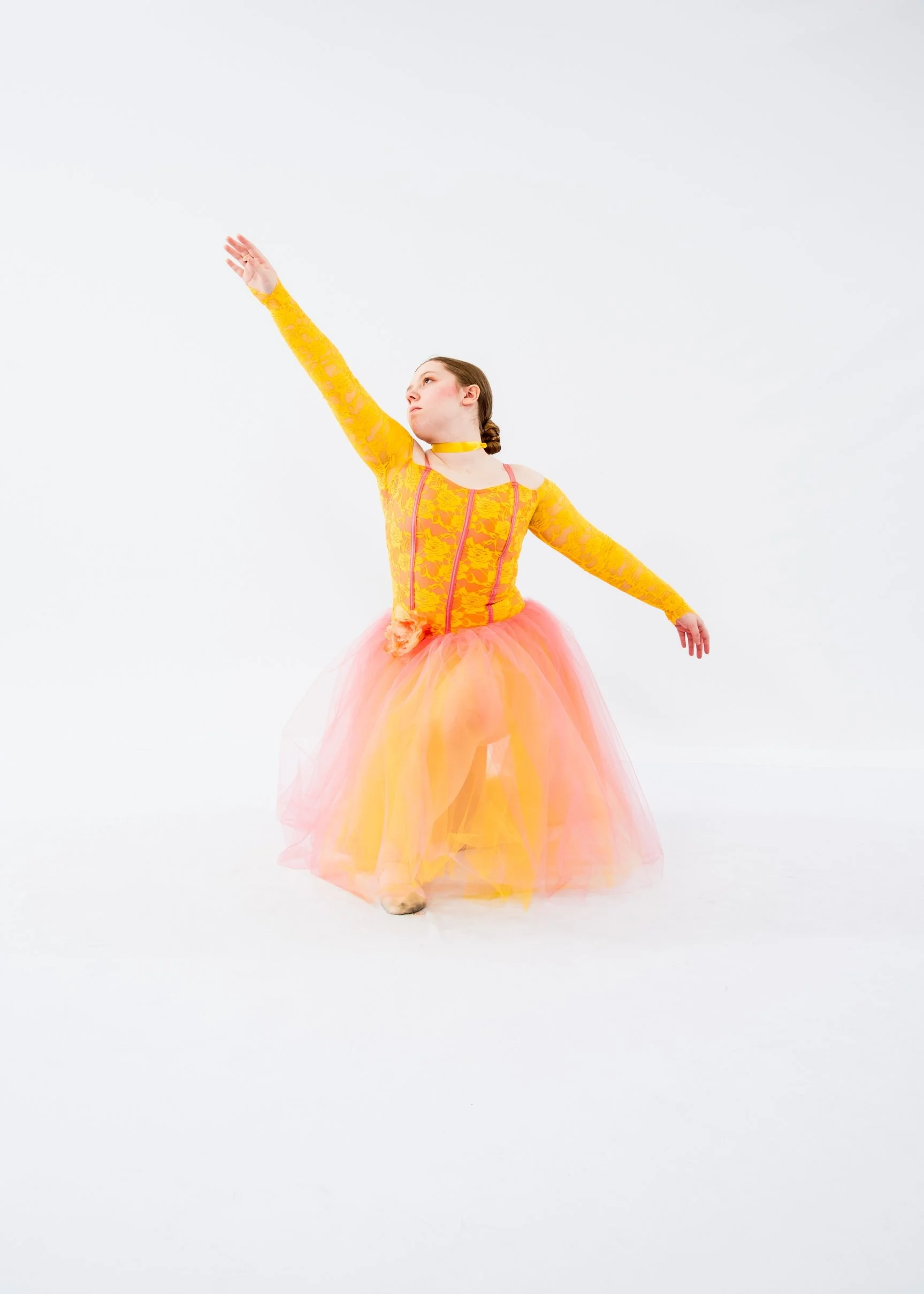
Between orchestra, private lessons, the school's folk Fiddlers ensemble, a rock-themed orchestra summer camp run by a local instrumental and classical rock orchestra band, piano, flute, and voice lessons — plus a second-degree black belt in taekwondo — Mary Grace's schedule reads like a full-time musical apprenticeship layered on top of a full-time education.
"A lot of my days are just about music. It'll be school, then I'll come home, sit down for like 30 or so minutes, pick up an instrument, play it, then head to dance class. And then sometimes it'll be different lessons — my flute lesson, piano lesson — and other times it's taekwondo.”
Her private teacher, described as encouraging in a way that pushes without instilling fear, keeps lessons memorable with playful comparisons — like comparing proper bow hold to the way a chicken walks. Mary Grace's friends, many of whom don't play instruments themselves, regularly text her requesting videos of her playing.
"I'll get texts every now and then saying, can you send me a video of you playing your viola or guitar? And from what I hear from friends sitting next to them, they'll just keep listening to it.”
One song has followed her since fifth grade — memorized so thoroughly it's become her default warm-up.
"The one that's been with me since fifth grade is Bad Romance by Lady Gaga. I just memorized the entire thing without even trying. If I pick up my instrument one day and want to try something, I just start playing Bad Romance and see how it goes.”
"Belinda laughs at the contrast between her daughter's classical training and her taste in warm-up material.
It's kind of humorous — you see children playing classical pieces, and she's over there strumming a rock song."
The Memory That Says It All
Asked about her most meaningful musical moment, Belinda didn't point to an audition or an accolade. She pointed to a wedding anniversary.
"For me, it's when Mary Grace and her sister played for my parents' 50th wedding anniversary. They were only in third and fourth grade, just starting out. There's a song from the '60s called Never My Love — that was my parents' song. And the two of them, for weeks, these two little girls who could barely play their instruments, sat and practiced together, because her sister plays violin and she plays viola.
They worked on it and worked on it, and they stood in that church and played it almost perfectly. That was probably one of the moments where I just knew — this is something she loved to do, that meant more to her than just something she was learning at school.
"

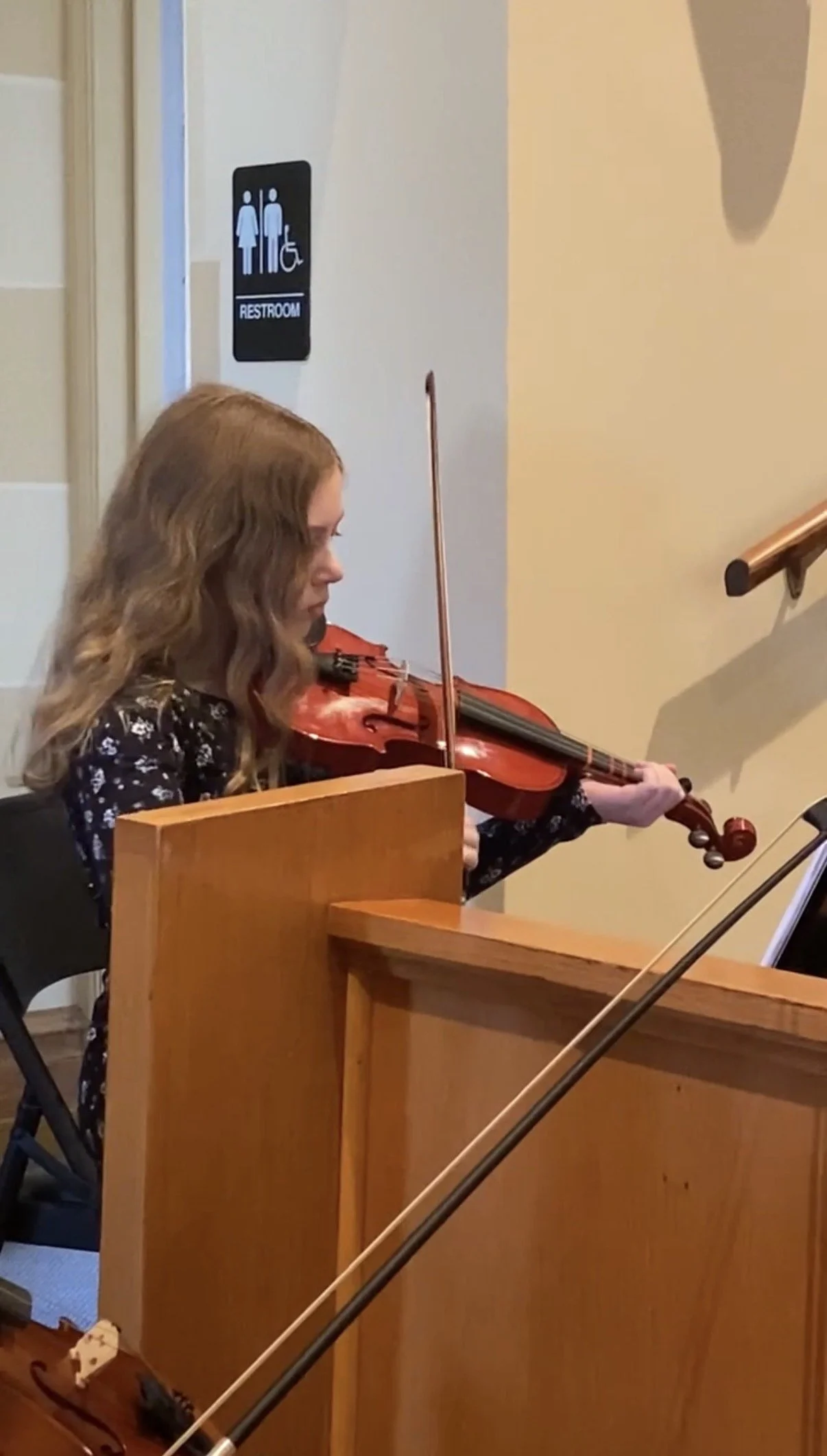
Mary Grace had converted the piece to viola herself, in fourth grade, working out the part with her younger sister until it was ready for the room.
What Success Sounds Like
For a teenager already juggling orchestra, a folk ensemble, five instruments, dance and a black belt, success isn't measured the way it might have been for her a few years earlier.
"Success for me is not exactly how much you're making in life, or how popular you get — it's how much happiness you have and what you give to others. And in that case, I'm fairly successful right now, because music in general makes me feel extremely happy.”
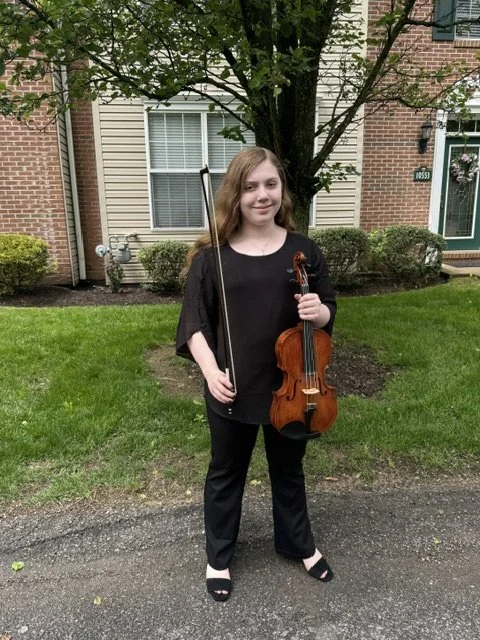
She traces that shift in perspective back to childhood assumptions about wealth and status.
"Especially when I was younger, I heavily thought that success was how good you're living — how much you're making, how big your house is. But honestly, I don't think that really matters now. It's just how happy you are.”
Asked what keeps her motivated — in music and in life — her answer was immediate.
"Definitely my mom. She's been my number one supporter since I was born.”
Looking Ahead
Mary Grace is already charting a future built entirely around music — college for a viola performance major, and a career path that could lead to teaching, performing, or music therapy.
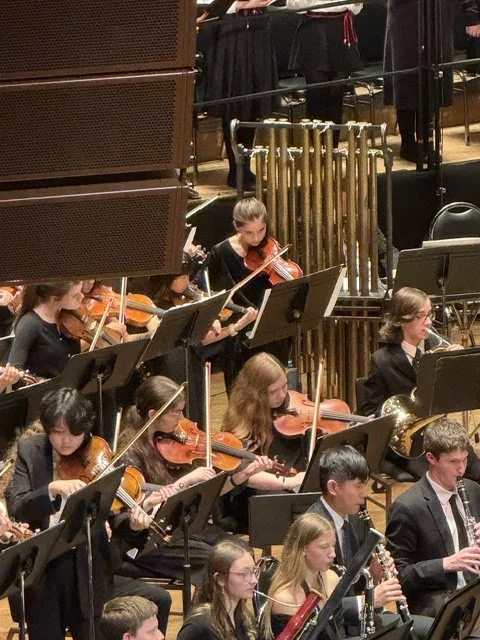

"I want to go to a college for music. I want to get a major in viola, something around that. Maybe become a music teacher, or perform in different theaters, or be a music therapist. Anything around a music career — that's what I want to pursue throughout my life.”
She's already writing her own songs on guitar, drawing inspiration from artists as varied as Joan Jett and newer names discovered through friends and online communities — a mix her mother says she couldn't have imagined at that age.
"Her dad and I have always encouraged her not to be afraid to listen to different styles of music. She's expanded well beyond what we listen to — to types of music and styles some of us have never even heard of. It's interesting, sometimes I look at her playlist and think, who is that?"
Advice for Musicians Just Starting Out
When asked what she'd tell a young musician just beginning their own string instrument journey, Mary Grace didn't hesitate.
"Even though it gets hard at some points, you should probably just keep going and keep learning. The quality of the instrument does matter. And if there are little squeaks, don't beat yourself up about it — it won't matter in the long run. You'll get over it fast. Just keep going. Do not quit.”
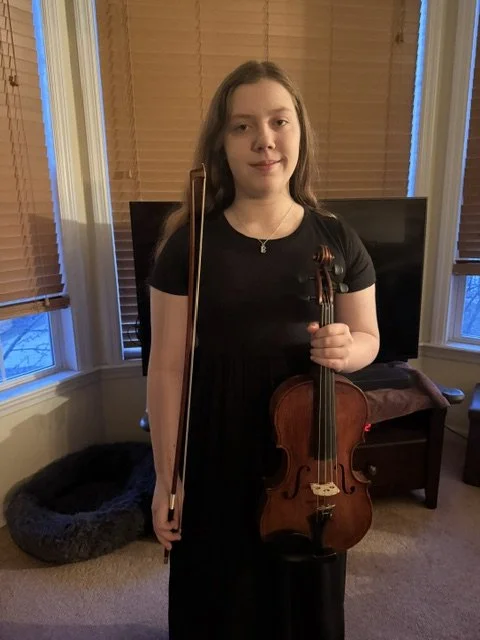
Belinda's advice is aimed squarely at parents navigating that same decision without a musical background of their own.
"Do your research. Don't just take the rental that they hand you at the desk, which is what we did at first. Even if you are going to do a rental, have the child play the instrument first — make sure they feel comfortable, and make sure you have the support you need from the school or the store, in case your child needs to upsize or switch instruments.
It's important for an adult to do their research and not be afraid to try out instruments first to find the best fit."
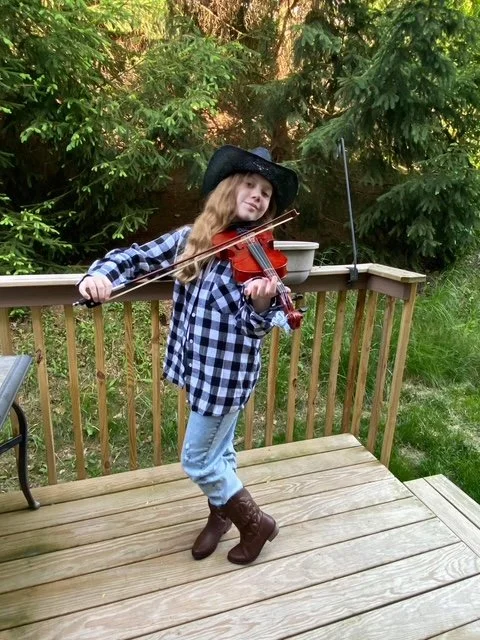
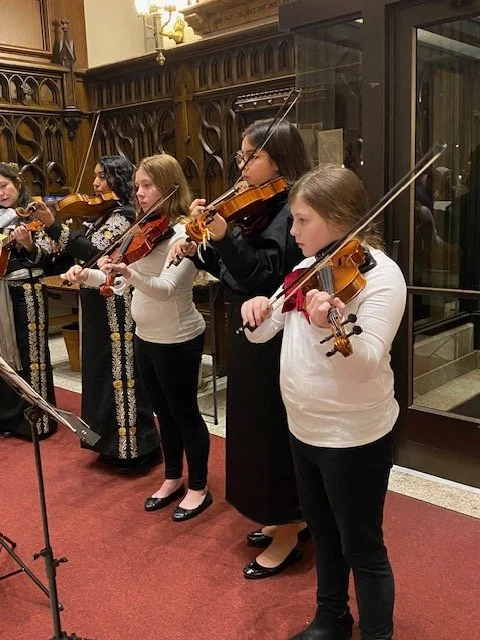

And when asked what she'd say to herself on the very first day of her musical journey — before she knew any of the joy or the growth that was waiting for her — Mary Grace's answer came down to two words.
"Do it.”
Reflecting on her daughter's transformation, Belinda put it simply:
"I can't express the difference that V. Richelieu™ has made in Mary Grace's playing. She's always been a good viola player — but this really transformed how she carries herself, not just in her private lessons, but in an orchestra setting. For any parent on the fence about buying one of these — they're absolutely worth it. They're worth every penny, over and over."
We would love to share some songwriting samples by Mary Grace
“In my head you think so wrong
In my head you think so right
Again, Again, Again
In my head you are so wrong
And I’ve been waiting for so long
Again, Again, Again
In my head you think you’re right
I don’t want another fight
Again, Again, Again
I tried to call you on the phone
But it’s clear you’re not alone
Again, Again, Again
Don’t you know I love you so
But my heart just won’t let go
Again, Again, Again”
“Did you see the sun drop
Did it all go dark
Did you see the sun drop
In the frosty air
Did you see the moon drop
Where oh where’d it go
Did you see the moon drop
Here comes all the light
The stars are running
The stars are fast
The stars are running
Look at them all go
Everything’s gone now
Nothing in the sky
Everything’s gone now
Makes me want to cry ”
Mary Grace plays two Special Edition V. Richelieu™ instruments: a 14-inch viola named Onyx and a violin named Wren, both crafted with sustainably sourced tonewoods. If you're supporting a young musician who's outgrowing their current instrument, or searching for a true 14-inch viola built for real viola tone, you can learn more about our offerings and rental programs at Vermont Violins.

V. Richelieu viola are 100% made in Vermont. Hand-split spruce tonewood is imported from Italy and Switzerland; maple comes to us from Bosnia. Together, these woods form a viola of unique distinction offering fine instrument quality at very affordable prices.Our child-sized violas are true violas: modeled after a 16” model, scaled down for children. Finally, a fractional viola that actually sounds like a viola! Most small violas are modeled after violins, and the resulting instruments never perform…our V. Richelieu violas sing with the resonance a viola is meant to have: from the soaring highs of the A string to the haunting lows of the C.Each instrument is hand-graduated by our senior luthiers. The oil-based varnish is hand painted by an accomplished oil portrait artist. Each instrument is unique, but each offers a tonal quality perfect for the advancing student, conservatory student or professional player.
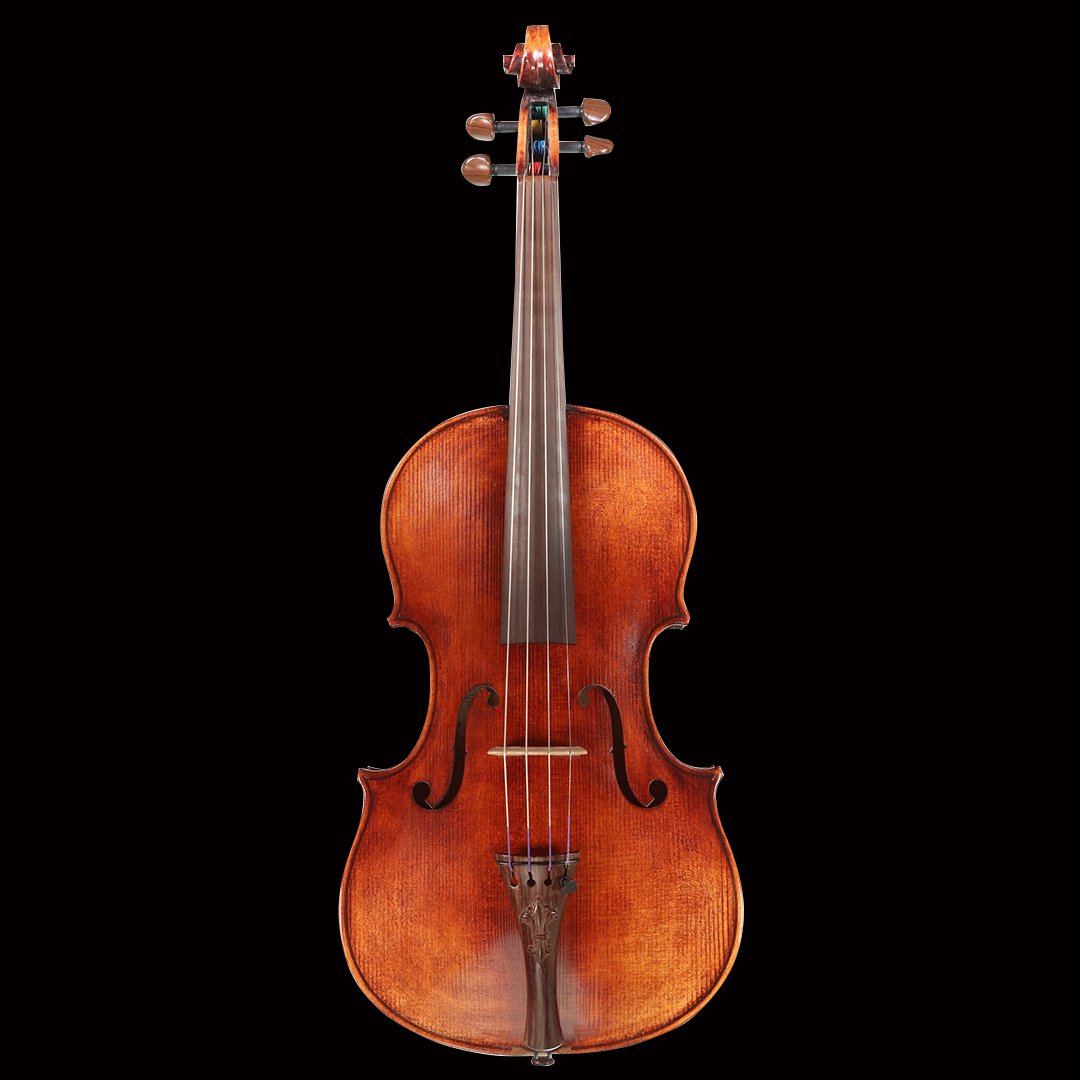
V. Richelieu viola are 100% made in Vermont. Hand-split spruce tonewood is imported from Italy and Switzerland; maple comes to us from Bosnia. Together, these woods form a viola of unique distinction offering fine instrument quality at very affordable prices.Our child-sized violas are true violas: modeled after a 16” model, scaled down for children. Finally, a fractional viola that actually sounds like a viola! Most small violas are modeled after violins, and the resulting instruments never perform…our V. Richelieu violas sing with the resonance a viola is meant to have: from the soaring highs of the A string to the haunting lows of the C.Each instrument is hand-graduated by our senior luthiers. The oil-based varnish is hand painted by an accomplished oil portrait artist. Each instrument is unique, but each offers a tonal quality perfect for the advancing student, conservatory student or professional player.
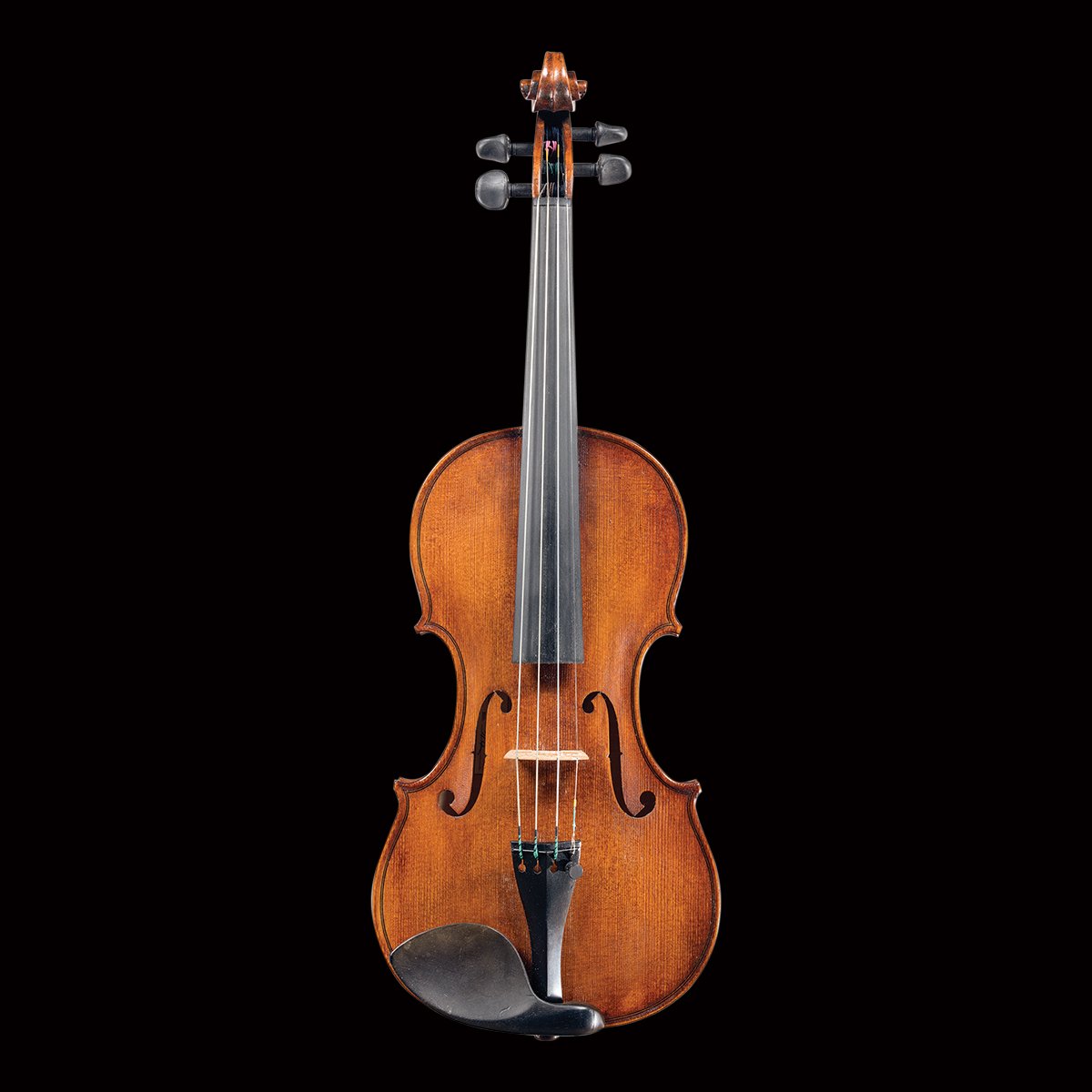
V. Richelieu violins are 100% made in Vermont. Hand-split spruce tonewood is imported from Italy and Switzerland; maple comes to us from Bosnia. Together, these woods form a violin of unique distinction offering fine instrument quality at very affordable prices.Each instrument is hand-graduated by our senior luthiers. The oil-based varnish is hand painted by an accomplished oil portrait artist. Each instrument is unique, but each offers a tonal quality perfect for the advancing student, conservatory student or professional player.