

VIOLINS & VIOLAS
Premium Tonewoods & Expert Craftsmanship
Introducing the Lumière Series
Stunning to see. Striking in sound.
Every player who has ever stood in a shop, instrument in hand, has felt some version of the same pull. The sound that stops you mid-breath. The instrument you can't stop looking at. Rarely both — and rarely from a shop small enough to give each one the attention it deserves.
V. Richelieu™ is not a factory line. We are a boutique violin shop, and every instrument that leaves our hands is like a snowflake, a one-of-a-kind — no two alike in grain, in voice, or in the story they go on to live with the player who chooses them.
Our goal was simple to state, yet incredibly difficult to build: give serious players and advancing students access to instruments defined by a single, uncompromising pursuit — extraordinary sound and beauty, held in equal regard — without asking them to wait a decade or spend beyond what the moment calls for. Every choice in this series, from the sustainably sourced wood we select to the price we set, exists to serve that goal.
Design & Sound
Every instrument at V. Richelieu™ begins with the same question: what is this instrument for?
A great instrument moves a room with its voice, and moves a person the moment they see it. We believe both deserve full, undivided pursuit — never one at the expense of the other.
So we built instruments taken to its fullest expression.
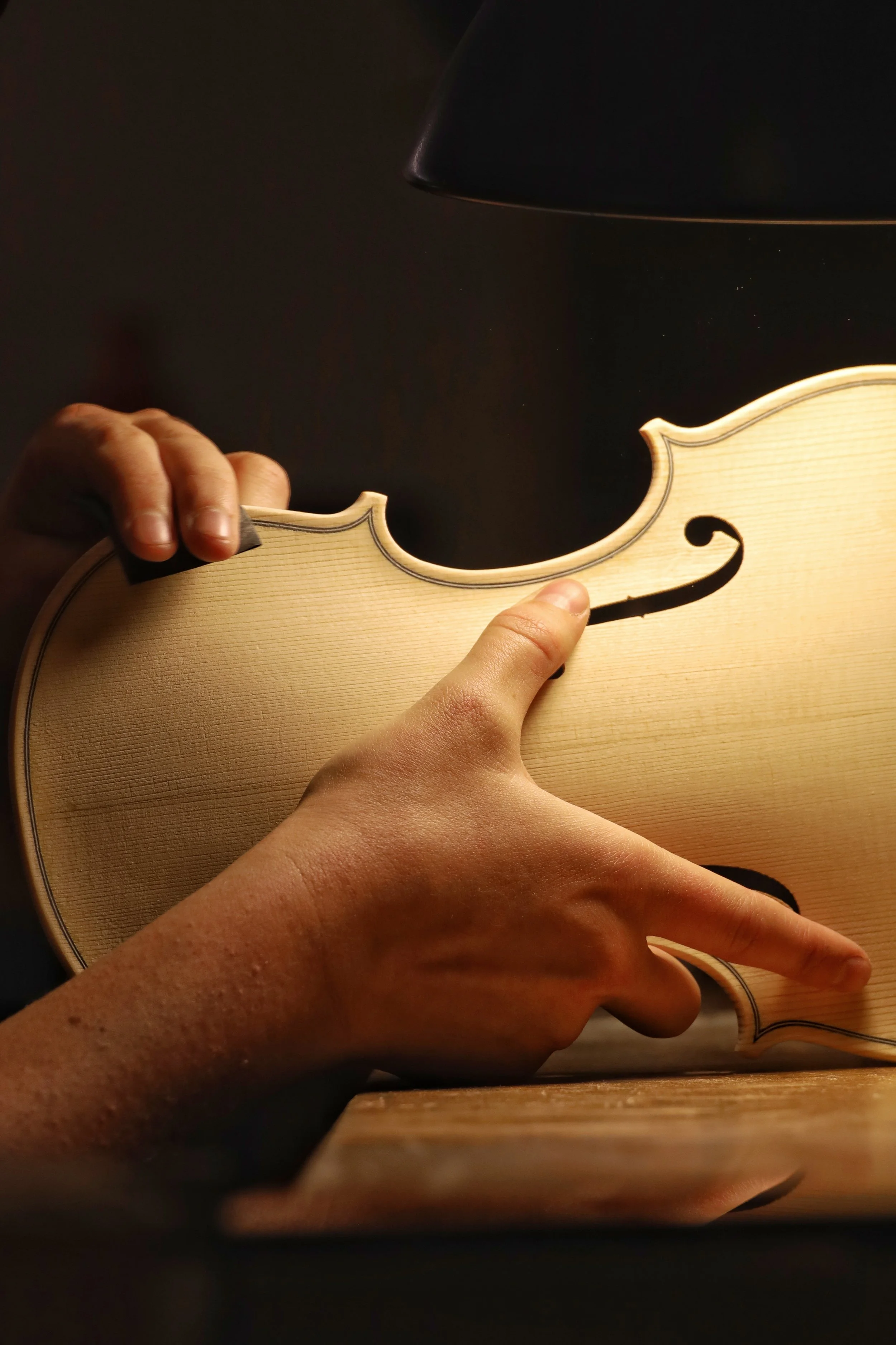
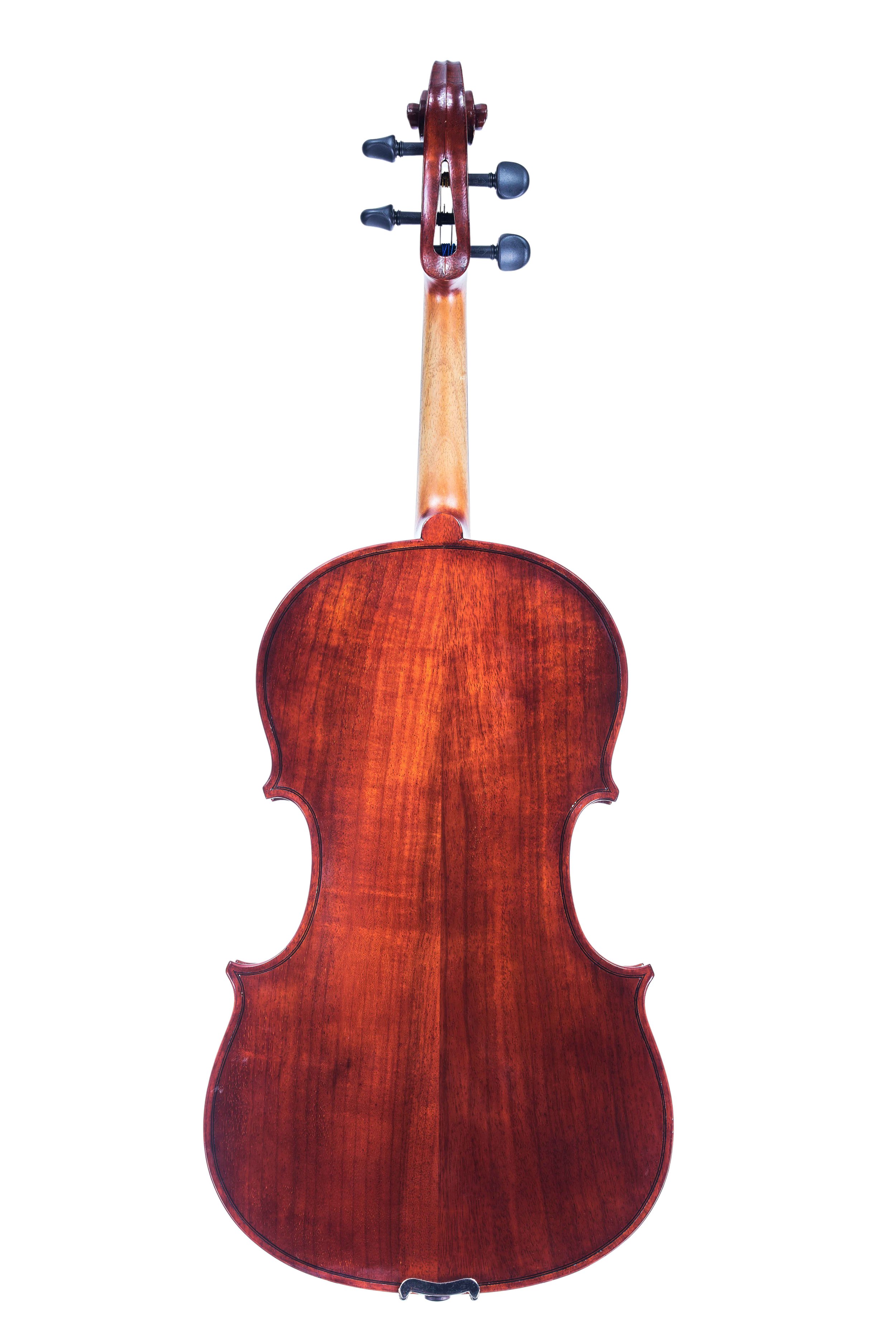
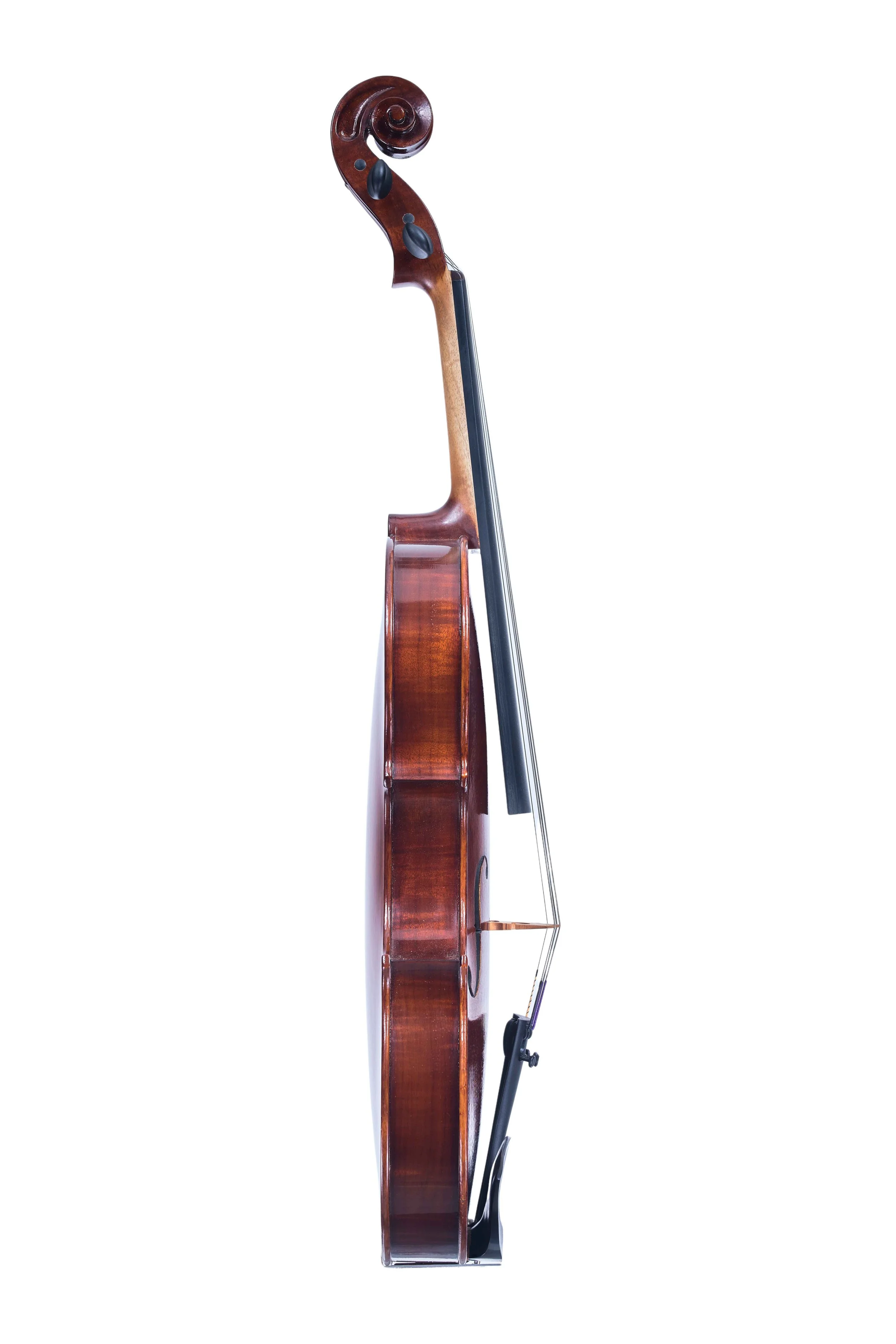
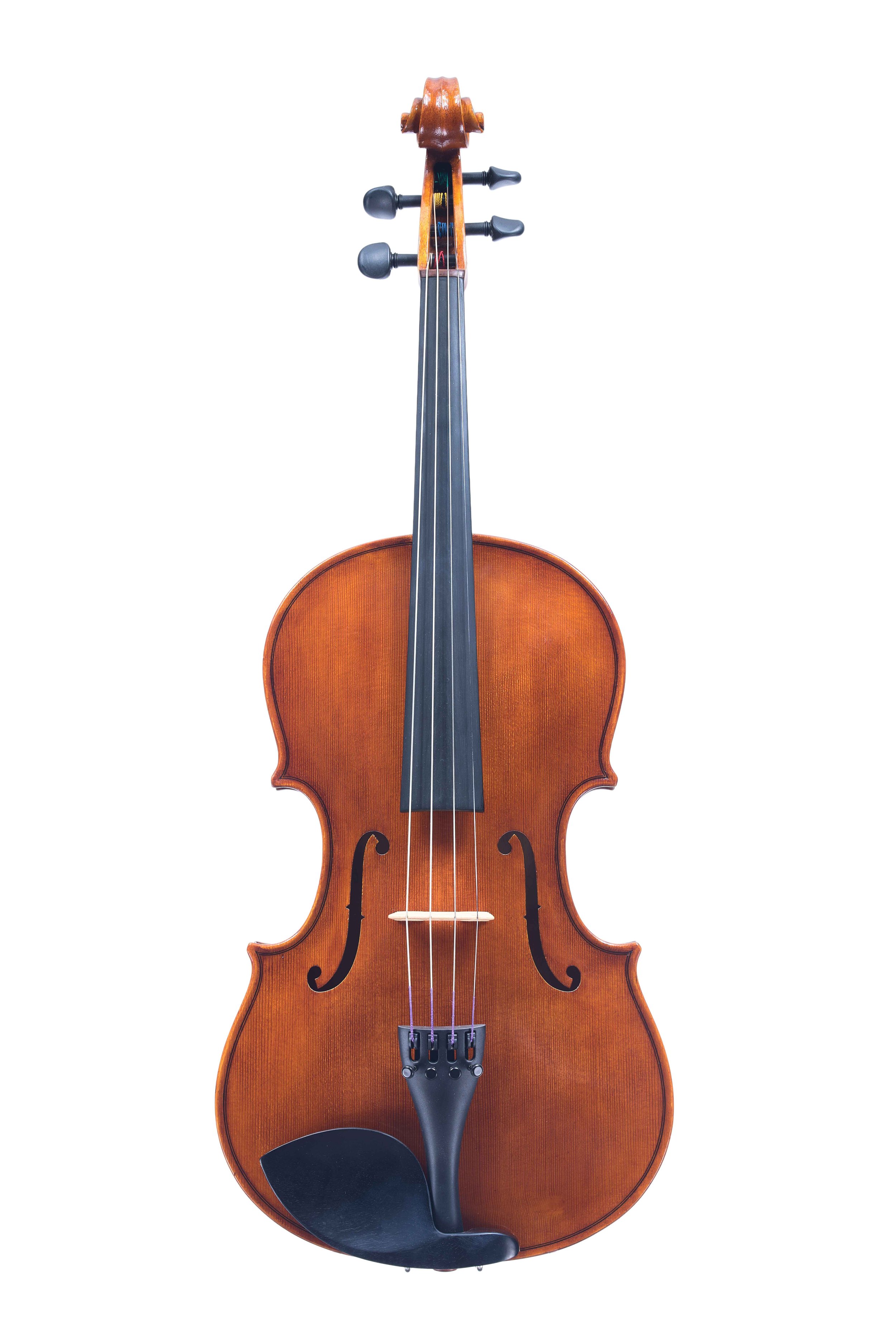
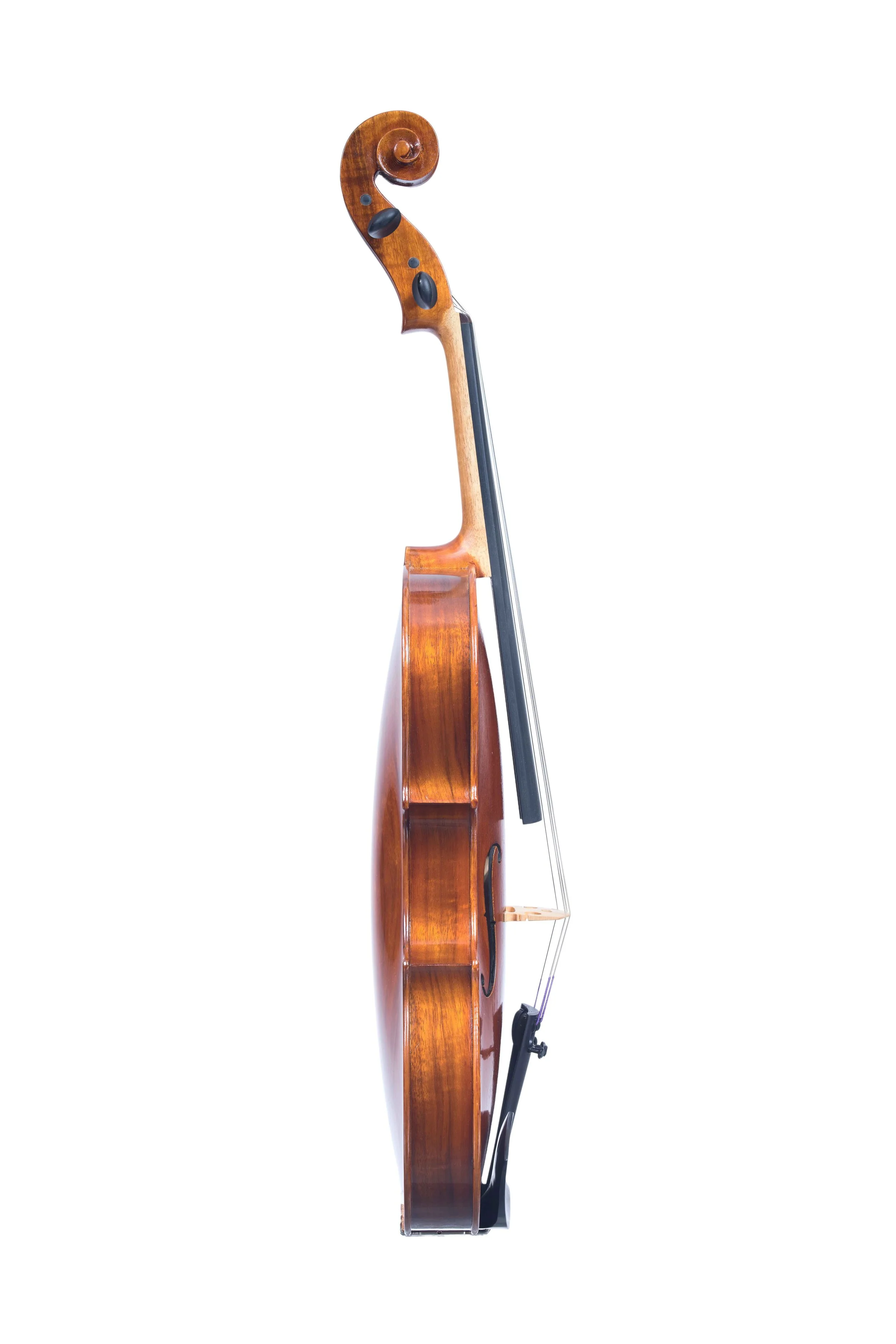
Lumière is built for design. The best sound is often achieved with woods that display outstanding character and are uniquely visually stunning in ways that complement the rich and beautiful tones; these are the Lumière crafted for tone, built for design.
They represent the two reasons a player falls in love with an instrument in the first place — and in our workshop, neither ever takes a back seat to the other.
Lumière
Where the wood speaks first.
Before a single note is played, Lumière has already made its impression.
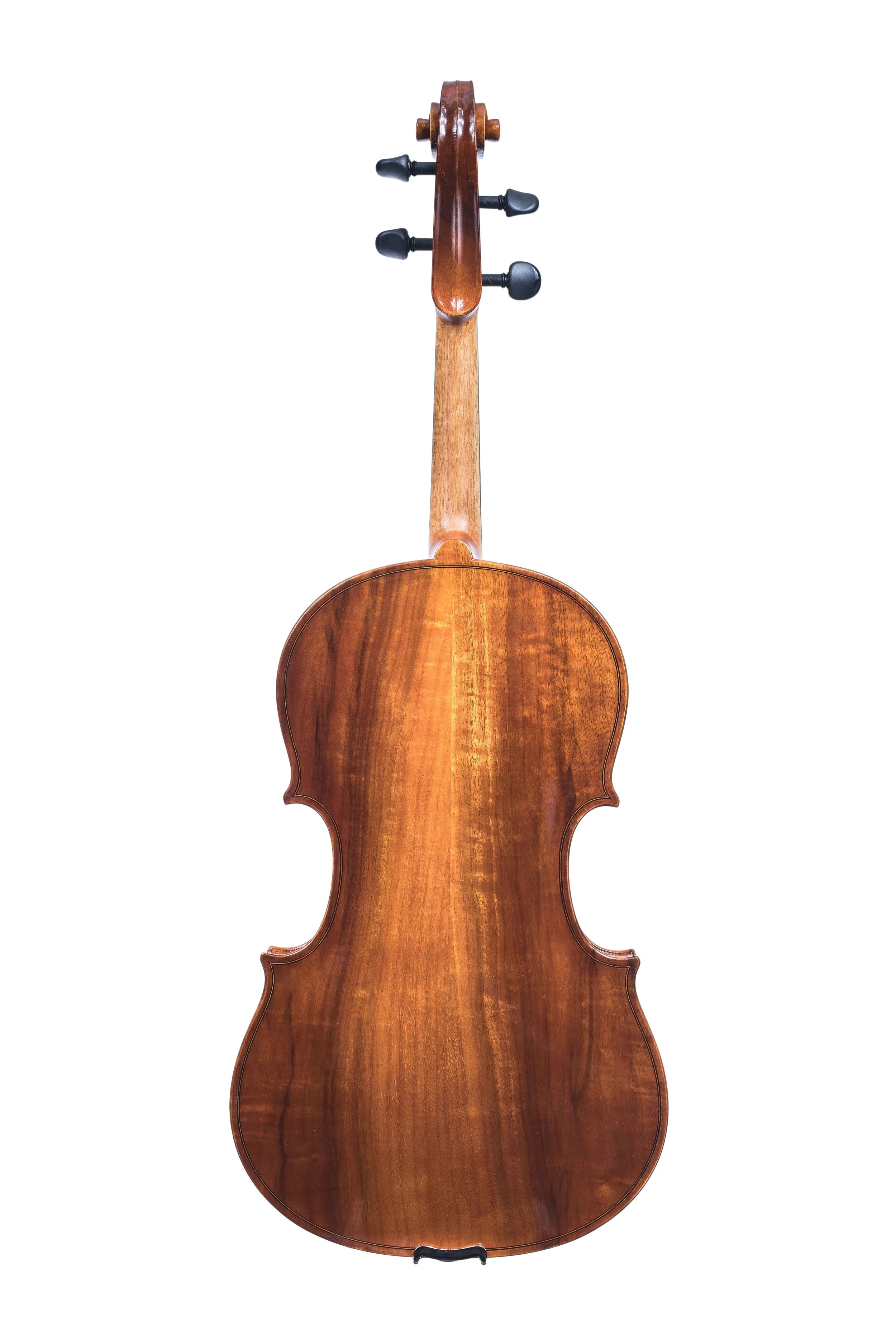
Every Lumière instrument begins with wood most makers will never touch — flamed maple so rare it accounts for less than one percent of what's responsibly harvested. Culled from the harvest of sustainably managed forests, the tonewood is found amongst the felled wood. We select the wood in the earliest hours of the process, when the tree is little more than a promise. The flame pattern, the depth of grain, the way light will eventually move across the surface — all of this is decided before the first cut is made. It cannot be added later. It can only be found.
Because we source this way, no two boards are identical. Every Lumière instrument is a snowflake. Each one carries a grain pattern that belongs to it alone, making the instrument a genuinely personal match for the player who plays it.
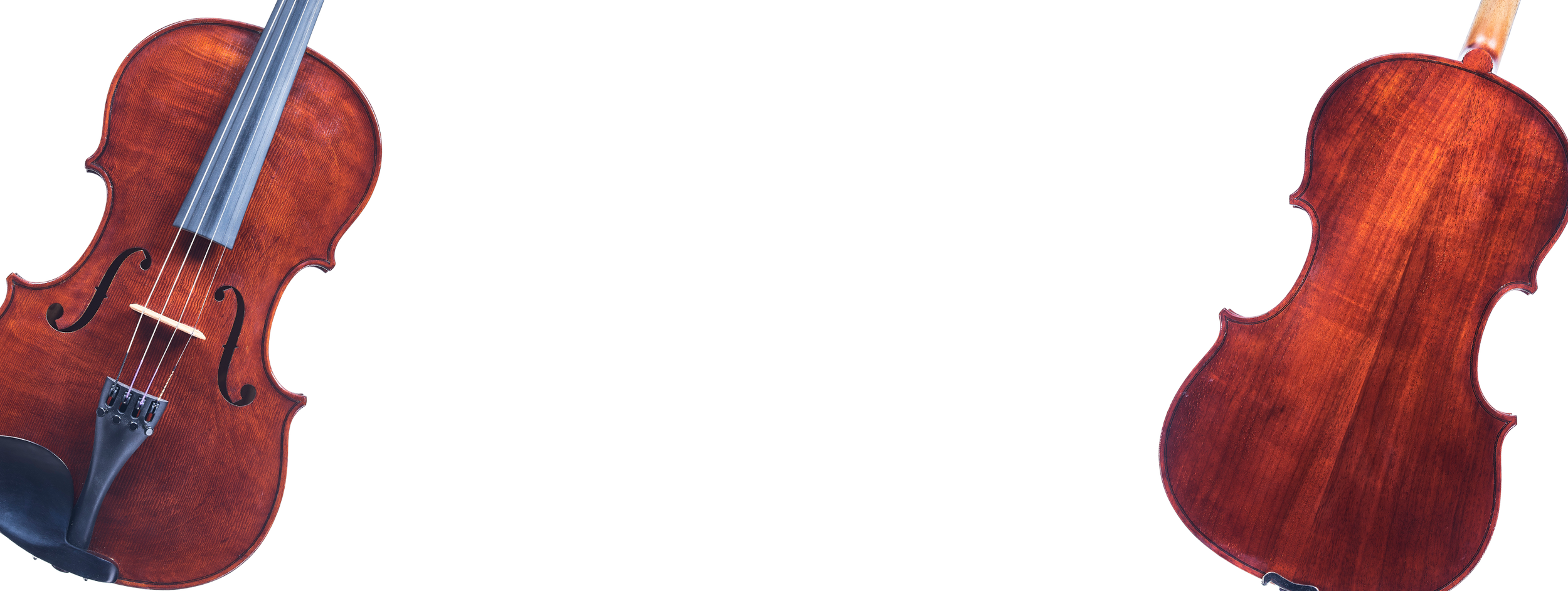
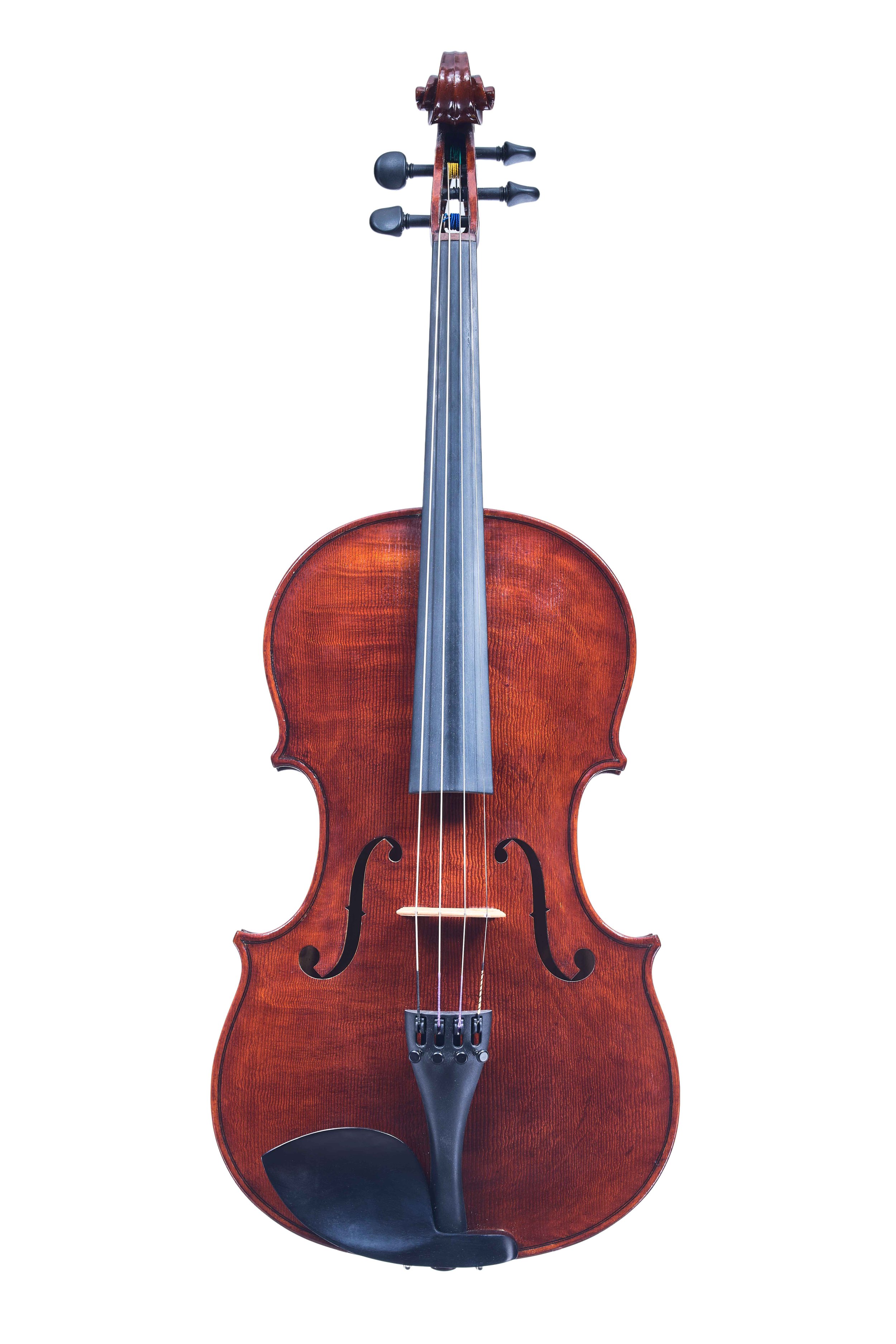
The result is a violin or viola finished to catch and return light the way a French evening does — warm, layered, alive at the edges. It is chosen by players and collectors who understand that an instrument is also an heirloom, an object held on stage, in photographs, and in memory.
Design Details
One-in-a-hundred maple. Curly, flamed maple selected for visual character at the sourcing stage — before construction begins — from forests managed for the long term.
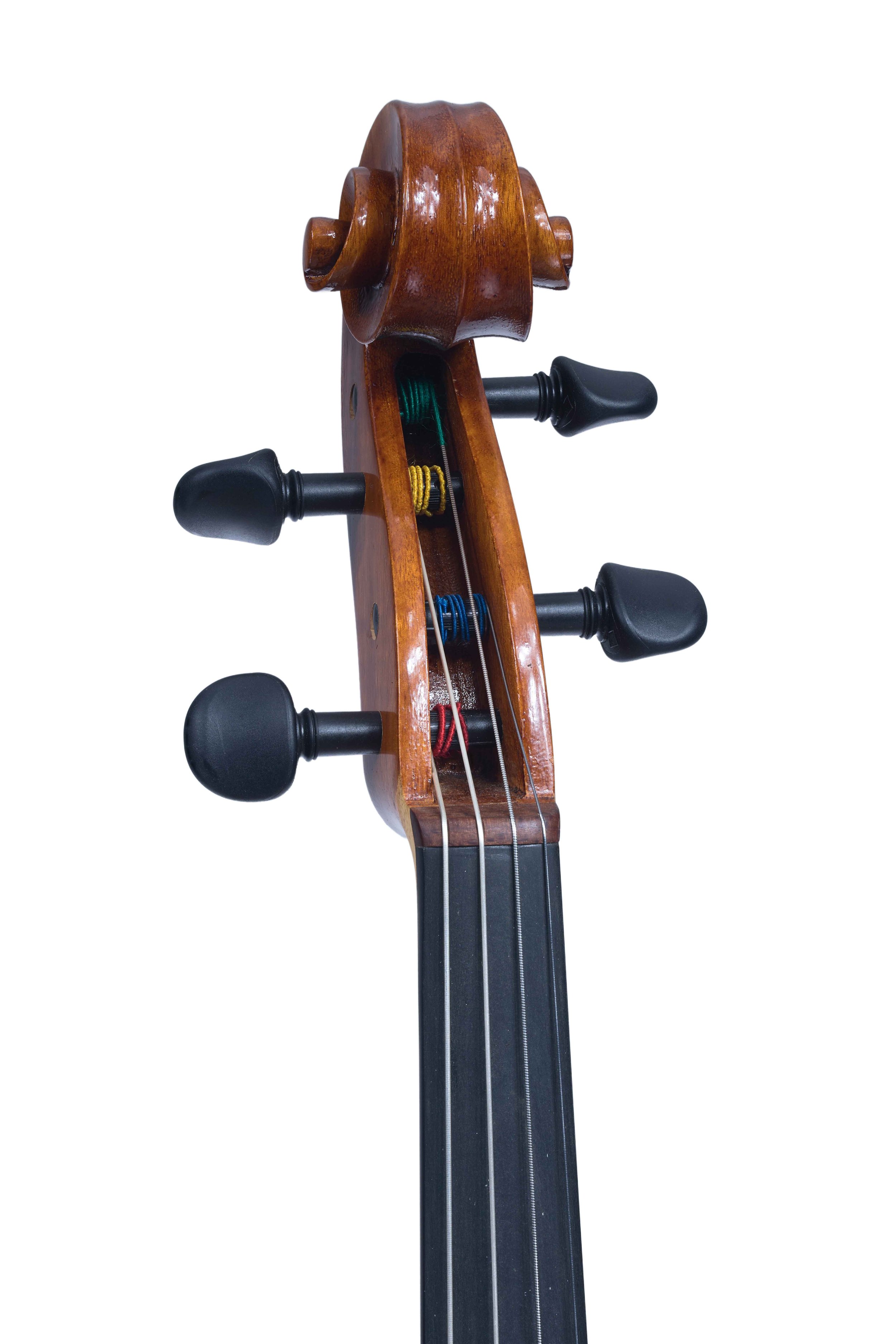
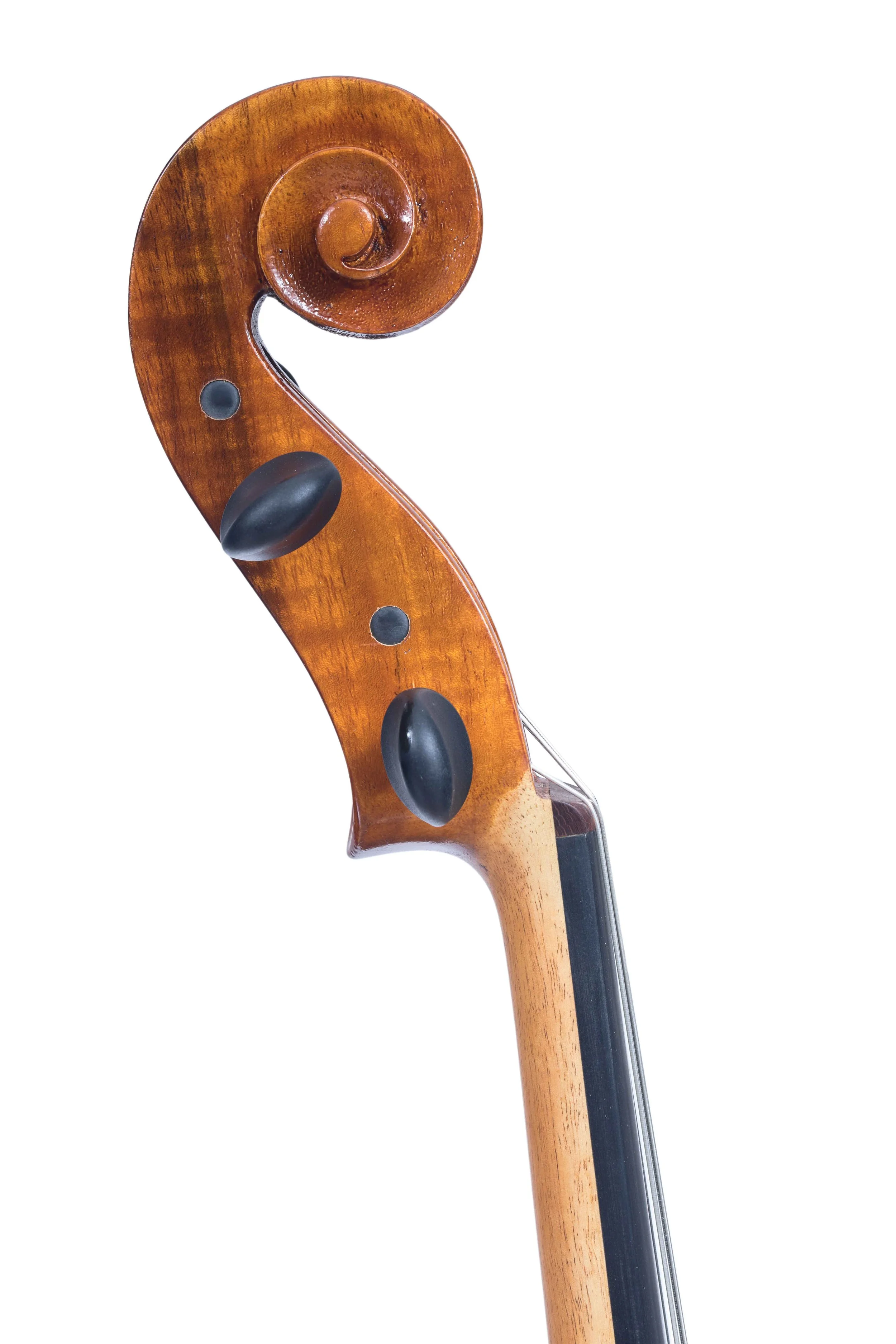
Hand-finished varnish. Built in painstakingly slow layers to enhance depth and reflectivity.
A unique fingerprint. A grain pattern entirely unique to each instrument; no two are alike, and no two ever will be.
Full tonal integrity. Lumière is never chosen at the expense of sound, only in addition to it.
This is the instrument you choose when the instrument itself is part of the story.

Craftsmanship
Uncompromised value. Traditional hands.
A boutique, not a production line.
The Lumière complement our V. Richelieu™ line and compete with instruments priced in the $10,000 to $20,000 range.
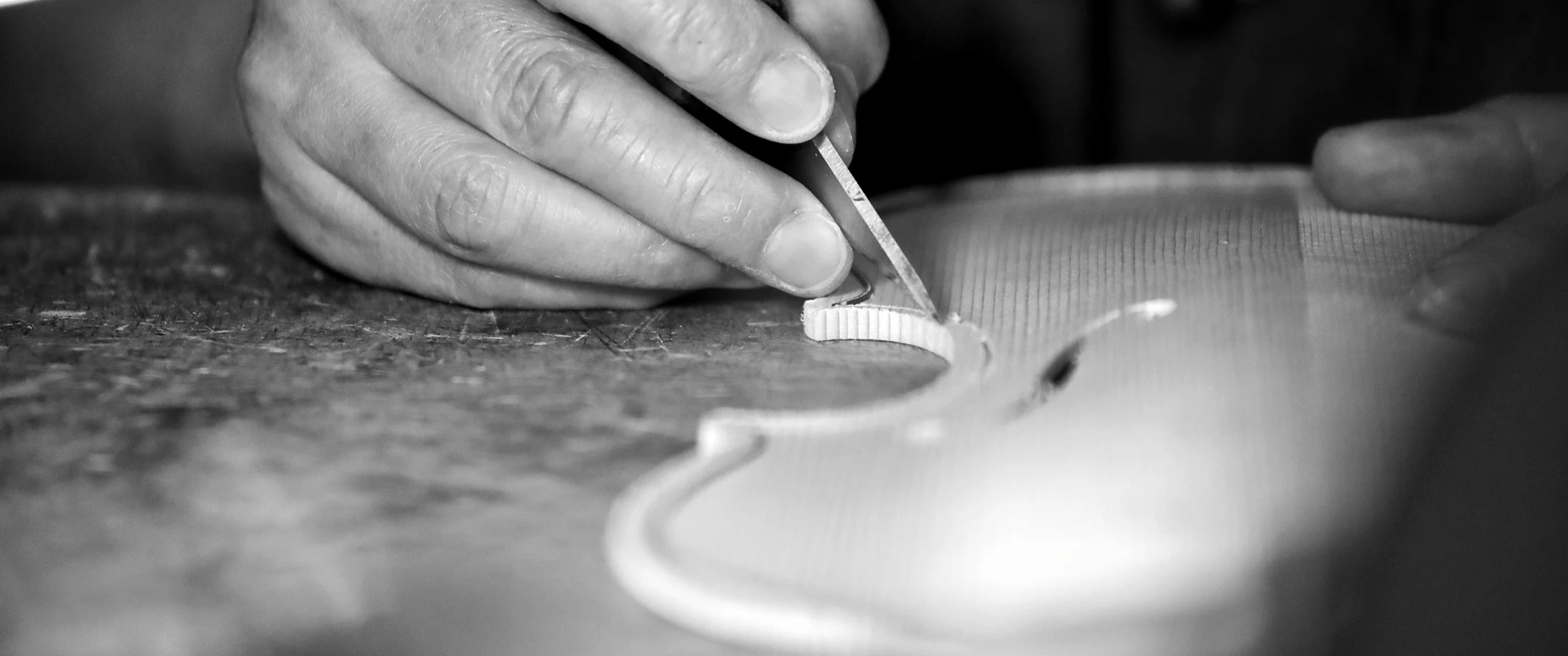
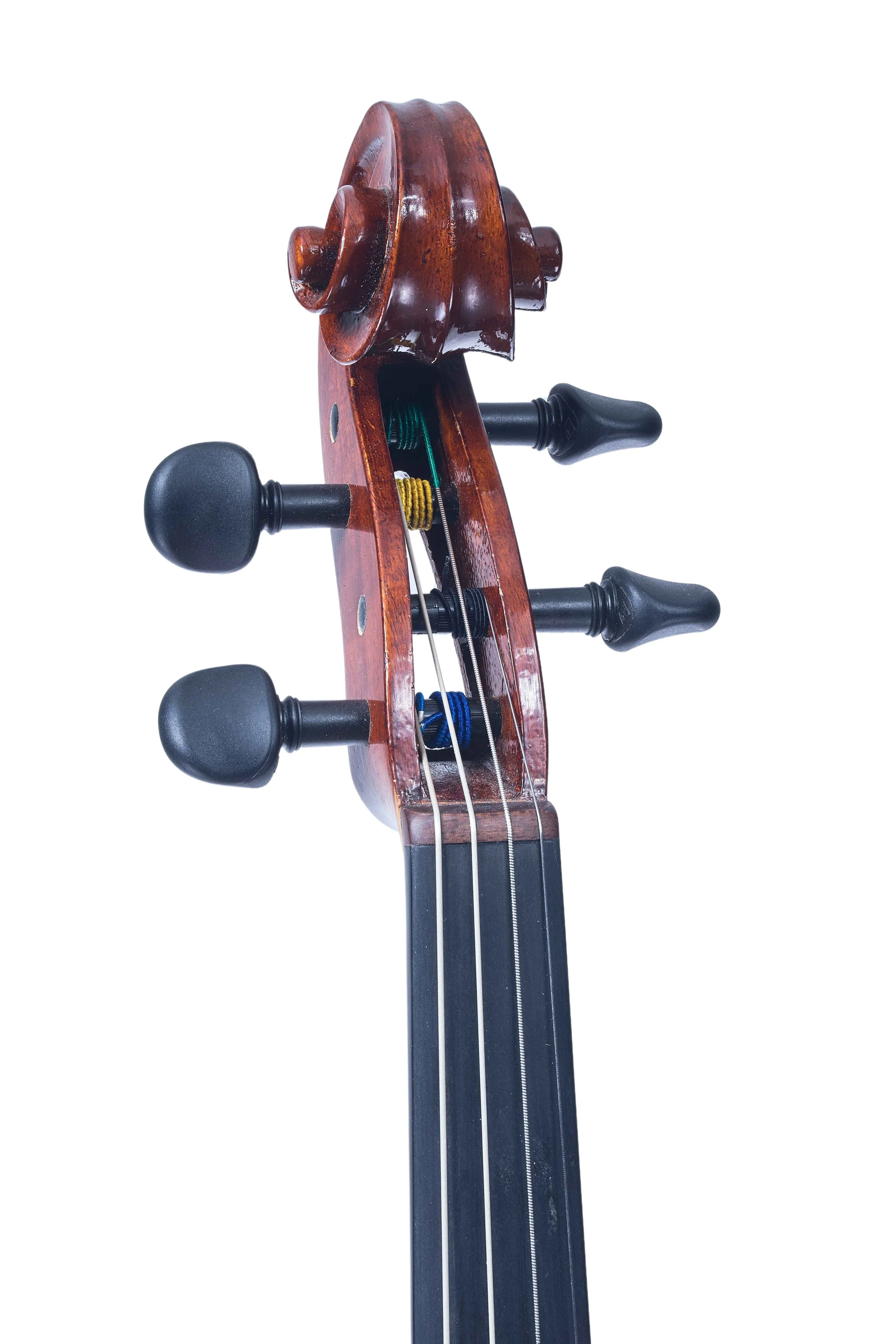
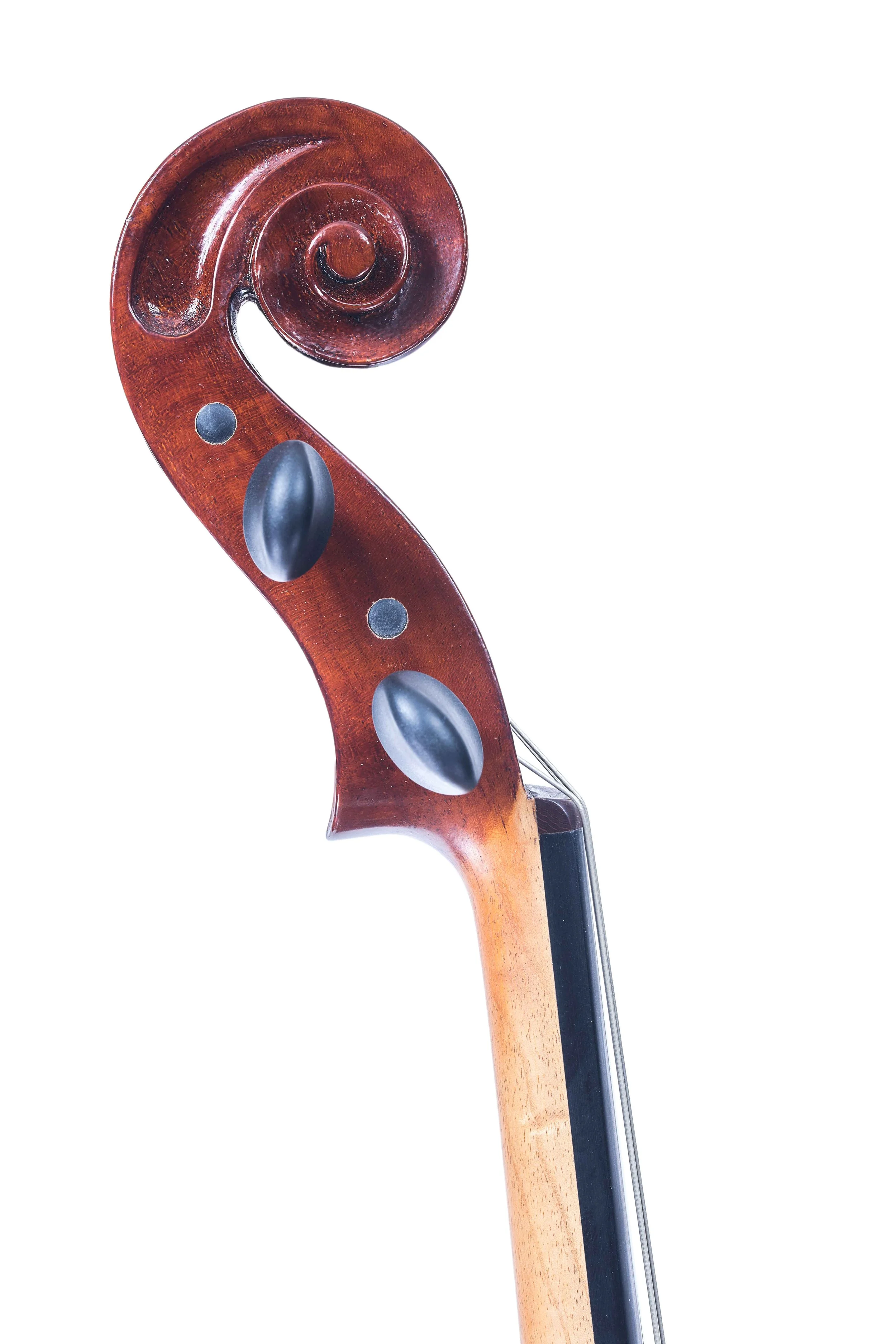
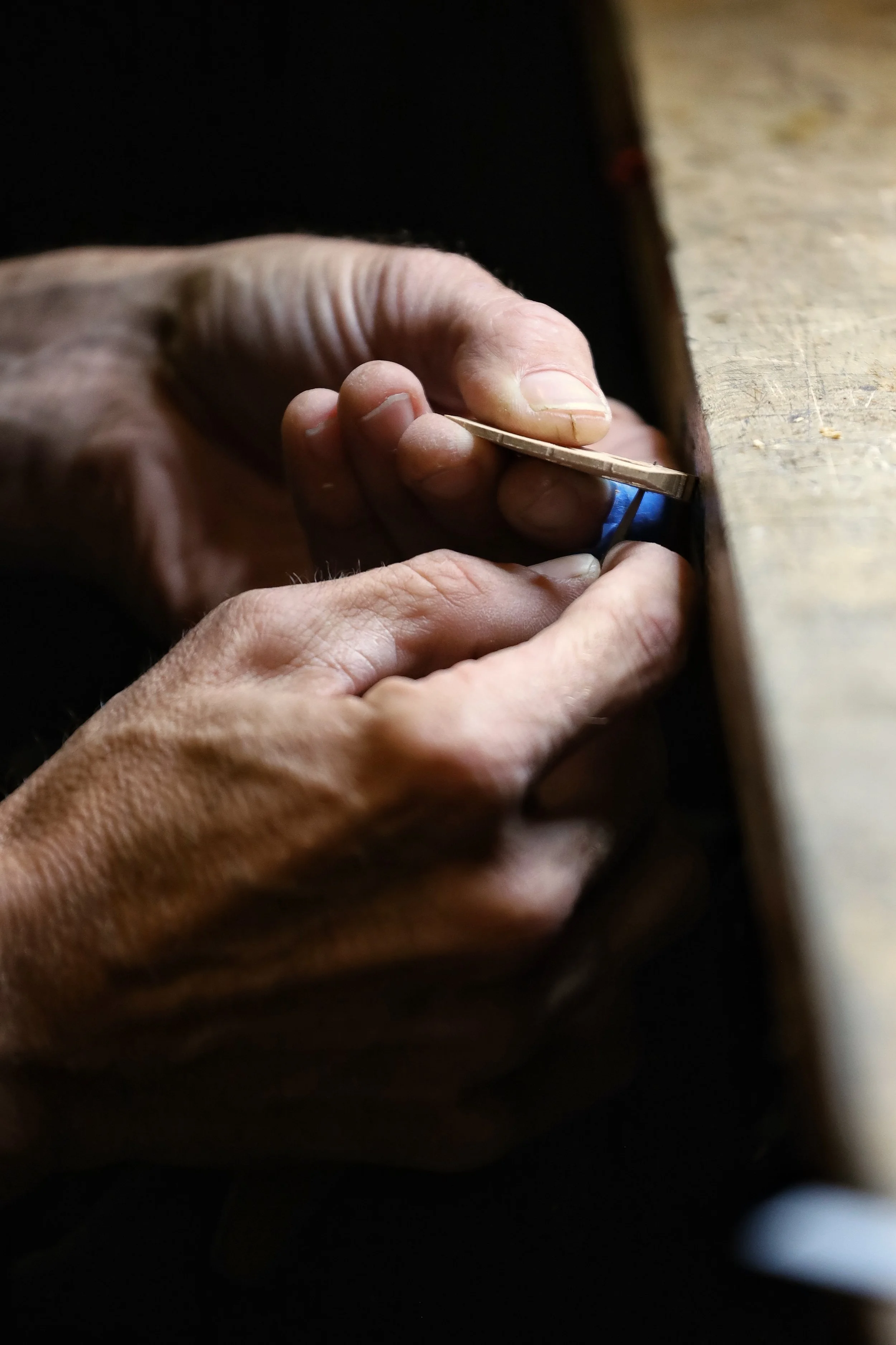
Every Lumière violin and viola is built in our workshop — crafted in small numbers, by luthiers trained in traditional old-world methods — using sustainably sourced tonewoods selected specifically for the edition they'll become. Nothing here is mass-produced, relabeled, or finished on a shortcut. As a boutique shop, we build to the instrument, not to a quota — which is why no two ever come out quite the same, and why each one is suited to find its own player. What we hope you will be playing is the manifestation of a vision shared by every member of our team and executed at every stage from wood selection to final set-up.
The Heart of Innovation
Our Luthiers' Passion. Your Unique Sound.
Our luthiers are a creative bunch and love to innovate. Each year they apply their creative juices to the creation of new designs that we offer as special editions. Whether they feature a new model or new materials, the attention to detail, quality, and performance never falters.


Expanding the Sound Palette
Sourcing Tonewoods from the American Landscape

A Symphony of Surprise
Discovering the Unique Voices of American Woods

We enjoy building a diversity of models using a range of woods that give players a broad choice of sound and color.

While developing new V. Richelieu™ models, we explored alternative tonewood sources. New England has exported spruce, maple and other woods for hundreds of years. The United States is currently one of the worlds largest timber suppliers. In Vermont where we work, neighbors, carpenters and a broader network of wood sources regularly stop by or contact us with a variety of North American spruce and maple species. We took advantage of the opportunity to compare these woods in violas with the standard European tonewoods we felt familiar with. Like violin makers in the 17th and 18th century, we expanded our wood selection and sound.
The selection of woods and sound surprised us. Red spruce from Maine feels and sounds different from red spruce from the Adirondaks. Sitka spruce that had been used as “soak logs” in rivers to hold salmon nets worked (and smelled) differently than new Sitka spruce. We compared red maple from the Catskills, red maple from Maine; big leaf maple from the Coquille reservation in Oregon, big leaf maple from parts of Washington State. We explored further with Myrtle, Sycamore and Cherry. We built over 300 instruments, collecting sound and density data for the different woods. Initial data collection suggests North American forests contain a diverse variety of potential tonewoods that would benefit the sound palette.
Find the Instrument that Resonates with You
